See how cold chain optimisation can reduce pharmaceutical logistics costs, emissions, and product risk by modelling uncertainty across storage and distribution.
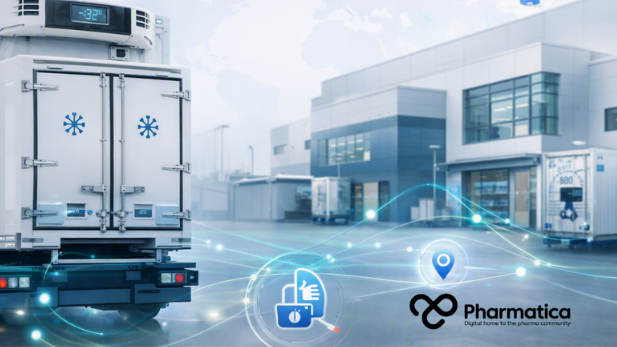
Cold chain optimisation is needed as pharmaceutical supply chains grow more complex, energy-intensive, and exposed to disruption. Cold chain optimisation models also show how better modelling can improve commercial performance, environmental impact, and supply chain resilience.
Temperature-sensitive medicines cannot be treated like other medicinal products. Their quality can depend on maintaining defined conditions across manufacturing, storage, transport, and delivery.
That creates a supply chain with very little room for error.
Refrigeration consumes energy; temperature-controlled packaging adds cost; delays can extend transit times, and equipment failures, extreme weather, traffic disruption, and power instability can increase the risk of temperature excursions.
Pharma is also handling an increasingly valuable portfolio of biologics, vaccines, and other temperature-sensitive therapies.
Pharmatica recently examined this vulnerability in pharmaceutical cold chain risk, highlighting how extreme weather can expose weaknesses in packaging, refrigeration, monitoring, and transport networks.
The challenge is therefore not simply keeping products cold.
It is maintaining product integrity while balancing cost, service, energy use, carbon emissions, and uncertainty.
Optimisation Needs to Look Across the Supply Chain Network
Looking beyond one isolated logistics decision, there are very specific cold chain optimisation models that can support different components of cold chains and there are still large areas where further research is needed.
This matters because pharma supply chain and manufacturing decisions are interconnected.
Changing a distribution centre can alter transport distances, changing a route can affect delivery time and refrigeration requirements, and increasing inventory can improve availability but also increase storage costs and energy consumption.
A more sophisticated approach considers these relationships together with cold chain optimisation that can support decisions around:
Network design: Where should storage and distribution capacity sit?
Routing: Which transport routes balance time, cost, and temperature requirements?
Inventory: How much product should be positioned at each node?
Energy: Where can refrigeration demand be reduced?
Risk: How should uncertainty affect logistics decisions?
Sustainability: Can emissions be reduced without compromising service?
This multi-dimensional perspective is an important direction for cold chain strategy.
Image
Uncertainty in Cold Chain Optimisation
A cold change optimisation route that looks great on paper may not remain optimal when conditions change.
Demand can fluctuate. Travel times can vary. Energy consumption can change. Weather can disrupt transport. Equipment can fail.
This is why cold chain optimisation models increasingly need to account for uncertainty rather than assuming that logistics conditions remain constant.
Research continues to show that optimisation models that consider demand uncertainty, travel-time reliability, energy-consumption reliability, and carbon emissions make better pharmaceutical distribution decisions.
Introducing temporary distribution centres alone could reduce transportation costs by 16% while also significantly lowering carbon emissions.
This demonstrates that resilience and efficiency do not always have to compete.
“This is one of the riskiest industries there is because you're dealing with human lives, you're dealing with experimental protocols, and you're dealing with regulatory bodies where you might not get another shot at that clinical trial."
Image
Sustainability Is Operational in Pharma Manufacturing
Cold chains have an environmental cost because refrigeration requires energy and temperature-controlled distribution can demand specialised infrastructure.
This means that there are potential commercial, environmental, and social benefits that are important outcomes of cold chain optimisation.
That changes everything. Sustainability cannot sit separately from logistics planning. Transport mode, route selection, facility location, inventory positioning, and refrigeration requirements can all affect emissions.
Other 2025 research supports this integrated approach. A pharmaceutical logistics network study found that redesigning distribution networks and using alternative transport modes could reduce both costs and carbon emissions under a carbon policy scenario.
For manufacturers facing increasingly demanding sustainability targets, carbon performance is also an important factor for optimisation.
Data Makes Cold Chains More Predictive
Cold chain optimisation also depends on the quality of the information feeding the model.
Temperature sensors, vehicle data, inventory systems, weather information, demand forecasts, and route data can create a much richer picture of cold chain performance.
This creates an opportunity to move from reactive management towards predictive decision-making.
Instead of discovering that a shipment experienced a problem after delivery, teams could identify emerging risks earlier and adjust routing, storage, or distribution decisions.
Machine-learning approaches and AI can also be used for detecting temperature outliers from transport data, using route information to identify potential cold chain failures.
The value is not simply more data. The value of cold chain optimisation comes from turning data into earlier and better operational decisions.
Cold Chain Optimisation Must Protect Product Quality
Operational efficiency cannot come at the expense of pharmaceutical quality.
The U.S. Food and Drug Administration (FDA) GMP guidance states that materials requiring controlled temperature and humidity should be stored under appropriate conditions, with records maintained where those conditions are critical to material characteristics. It also requires transport arrangements that do not adversely affect product quality.
This makes cold chain optimisation fundamentally different from ordinary logistics optimisation.
The objective is not to minimise cost at any price. It is to find the best achievable balance between quality, service, resilience, cost, and sustainability.
That requires Technical Operations, Quality, Supply Chain, Manufacturing, and logistics teams to work from shared data and shared risk assumptions.
Cold Chain Optimisation as a Strategic Capability
Cold chain optimisation is moving towards increasingly integrated models that consider multiple operational, environmental, and social factors together.
Cold chain performance should not be measured only by whether a shipment arrived within its required temperature range. We need to understand why the network performs as it does, where its vulnerabilities sit, and which interventions produce the greatest improvement.
That means combining optimisation models with real operational data, scenario planning, and continuous monitoring.
The result could be a cold chain that is not only more efficient, but more resilient to the disruptions that increasingly define global pharmaceutical logistics.
At Pharmatica, we focus on the systems, strategies, and technologies shaping pharmaceutical Technical Operations. Our Insights connect manufacturing, logistics, sustainability, and supply chain innovation to the decisions that can turn operational improvements into measurable impact.
Pharmatica: Insight. Connection. Impact.
Image
Frequently Asked Questions
What is cold chain optimisation in pharmaceutical logistics?
Cold chain optimisation is the use of data, modelling, and operational planning to improve the movement and storage of temperature-sensitive medicines. It seeks to balance product quality, cost, reliability, energy use, and environmental impact across the supply chain.
Why is cold chain optimisation important for pharmaceutical manufacturing?
Pharmaceutical cold chains can involve complex storage and transport networks where temperature excursions, delays, equipment failures, and energy costs can threaten product integrity. Optimisation helps manufacturers identify more efficient and resilient ways to manage these risks.
How can data improve pharmaceutical cold chain management?
Data from temperature sensors, transport systems, inventory platforms, weather information, and demand forecasts can help teams identify risks earlier. This can support predictive rather than purely reactive cold chain management, including better routing, inventory positioning, and distribution planning.
How can cold chain optimisation reduce pharmaceutical emissions?
Optimisation can assess transport routes, distribution networks, facility locations, refrigeration requirements, and transport modes together. This can help identify options that reduce energy consumption and carbon emissions while maintaining required service and product conditions.
What are the main challenges in pharmaceutical cold chain optimisation?
Key challenges for pharmaceutical cold chain optimisation include demand uncertainty, variable transport times, temperature control, energy consumption, infrastructure reliability, cost, and sustainability. Models also need reliable operational data and must ensure that efficiency improvements never compromise pharmaceutical product quality.
Nicole (BSc Molecular Medicine, Honours Medical Biochemistry) has many years of pharmaceutical experience, having worked for top CROs and biopharma companies for more than a decade.
Did you enjoy the content?
2
Why not support
Nicole Dale
by giving this content a like
Anthropic's new drug discovery programme marks a strategic shift from sole AI software provider to active R&D participant. Here's what it means for pharmaceutical innovation.
Anthropic’s Gates Foundation Partnership and Healthcare AI
See how Anthropic's Gates Foundation partnership and Long-Term Benefit Trust could lead the way in shaping responsible AI governance across healthcare innovation.
AI in Healthcare: OpenAI and Epic Integration Connects EHRs
OpenAI and Epic integration brings AI healthcare into EHR workflows, connecting patient records with ChatGPT for Healthcare to advance research and patient care.
<p>Founded in 2004, Ametris (formerly ActiGraph) is a global digital health solutions provider transforming real-world patient data into validated clinical evidence. Our end-to-end platform combines advanced wearables, regulatory-aligned analytics, and expert scientific support across every phase of a clinical trial. We serve leading pharmaceutical, biotech, and public health research organizations worldwide, backed by two decades of experience and a collaborative, science-first approach.</p><p>In 2026, Ametris joined Signant Health, uniting wearable-derived digital outcome measures with industry-leading eCOA solutions to give sponsors a single partner for integrated evidence generation, combining continuous sensor data with patient-reported outcomes.</p>
Image
Clinical Development
<p><a href="https://www.medidata.com/en/">Medidata </a>has been powering smarter treatments and healthier people by supporting clinical trials through groundbreaking technological innovations for over 25 years. Medidata is a leader in AI-powered solutions across the entire trial lifecycle to accelerate clinical breakthroughs, reduce patient and site burden, and bring new therapies to market faster. Supported by one of the largest clinical datasets in the industry of more than 38,000 trials and 12 million patients, Medidata's <a href="https://www.medidata.com/en/experiences/study-experience/">Study</a>, <a href="https://www.medidata.com/en/experiences/patient-experience/">Patient</a>, and <a href="https://www.medidata.com/en/experiences/data-experience/">Data</a> Experiences are trusted by more than 1 million registered users across approximately 2,300 customers. A Dassault Systèmes brand (Euronext Paris: FR0014003TT8, DSY.PA), Medidata is headquartered in New York City and is recognized as a leader by Everest Group and IDC. Discover more at <a href="https://www.medidata.com/">www.medidata.com</a><strong>. </strong>Listen to our latest podcast, <a href="https://www.medidata.com/en/from-dreamers-to-disruptors-podcast/"><em>from Dreamers to Disruptors</em></a>,<strong> </strong>and follow us at @medidata-solutions on LinkedIn.</p>
Image
Clinical Development
<p>Caidya is a global, therapeutically focused drug development partner helping biotech and biopharma sponsors make smarter decisions, move faster, and advance together. Our connected teams combine scientific insight, operational expertise, and local knowledge across critical markets to generate actionable evidence and keep complex development programs moving forward.</p>
Image
HealthTech & AI
<p>We are rebuilding biotech for the AI era. When a breakthrough is delayed, the world waits.</p><p>Getting a molecule from discovery to patients, or a crop from lab to field, involves thousands of slow, manual, disconnected steps. AI has the potential to change this, compressing decades of R&D work into years. But that only happens when clean, structured scientific data and AI are built into how science gets done. </p><p>Benchling is the AI platform for biotech R&D. Scientists use Benchling to design experiments, capture structured data, and run AI agents and models directly in their workflows. Over 200,000 scientists around the world trust Benchling to power their most important work, from academic labs to Sanofi, Moderna, and more than half of the world's top 50 biopharma.</p>





















Comments (0)