
Ready to Deliver With Continuous Pharmaceutical Manufacturing

Continuous pharmaceutical manufacturing cuts production time by up to 90% and is now backed by ICH Q13. Here’s what manufacturing leaders need to know about the shift to CM.
Continuous pharmaceutical manufacturing (CM) is proving successful, responsible for the production of at least 15 currently approved products.
CM cuts production time by up to 90% and is backed by a harmonised global regulatory framework under ICH Q13.
Yet adoption across the broader industry remains hampered by capital investment barriers, legacy infrastructure, and heavy regulatory demands.
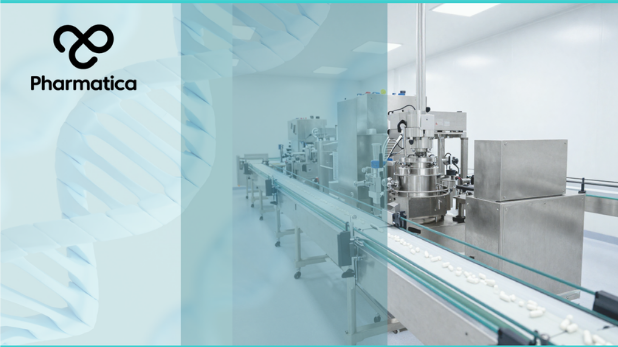
Continuous Pharmaceutical Manufacturing Delivers
Continuous pharmaceutical manufacturing produces drug substances and drug products through an uninterrupted, integrated process. Materials flow through linked unit operations without the stopping and starting that defines batch production.
The quantified efficiency gains from CM in pharma are remarkable.
CM reduces production time by close to 90% and improves product quality by 40%. Overall production efficiency is improved by a whopping 90% compared with conventional batch methods.
The resource savings are equally astounding. Energy and water consumption fall by 25% to 50%, and manufacturers require 30% to 50% less floor space.
For a sector under sustained pressure to reduce cost-of-goods while maintaining quality standards, these are significant improvements.
Consequently, CM represents a structural change in how manufacturing economics work in pharma.
The supply chain case is equally strong for CM.
Continuous processes are inherently more responsive to demand surges than batch systems, as demonstrated during the COVID-19 pandemic, when manufacturers running CM platforms were better placed to scale rapidly without the lead times associated with batch changeovers.
The strategic value of flexibility offered by CM in pharma, both for commercial supply and public health preparedness, is a clear reason for sustained investment.

Maximise Pharma Innovation With Quality-by-Design
Find out how Quality-by-Design improves reliability and compliance in pharma and how you can maximise innovation through quality-based pharma development systems.
The ICH Q13 Regulatory Framework for Continuous Pharma Manufacturing
The International Council for Harmonization (ICH) quality standards ICH Q13, adopted by the U.S. Food and Drug Administration (FDA) in March 2023 and given legal effect by the European Medicines Agency (EMA) in July 2023, is the primary global regulatory framework governing continuous manufacturing of drug substances and drug products.
ICH Q13 builds on the existing ICH Quality guidelines (Q8 through Q11) and provides specific scientific and regulatory guidance for CM development, process control, batch definition, and lifecycle management.
The most consequential element of ICH Q13 for manufacturing leaders is its requirement for a fully integrated control strategy.
In a batch process, quality is typically confirmed through end-product testing. However, in a continuous process, quality must be assured throughout production.
This means the control strategy, the process analytical technology (PAT) framework, and the real-time release testing (RTRT) approach must all be designed together and documented in the submission as a coherent system.
The FDA's CDER Emerging Technology Programme has been a significant enabler of this transition, providing a structured pre-submission pathway for manufacturers bringing novel CM technologies to regulatory review.
CM submissions processed through this programme have demonstrated approval timelines up to three to eight months faster than comparable batch submissions, with products reaching market four to 12 months sooner.
That speed advantage, and the longer period of market exclusivity it creates, is increasingly part of the commercial case for CM investment.
What ICH Q13 requires in practice
For manufacturing and regulatory affairs teams preparing a CM submission, ICH Q13 sets expectations across five areas:
- Batch definition: CM requires manufacturers to define what constitutes a batch within a continuous process — by time, mass of input material, or output quantity — and to justify that definition scientifically.
- Residence time distribution (RTD): The movement of material through continuous unit operations must be characterised to understand mixing, traceability, and the potential impact of a process disturbance on product quality.
- Disturbance management: The submission must demonstrate how the system detects, responds to, and recovers from process deviations without stopping the process or compromising the product.
- Process models: Mathematical and computational models used to monitor or control the process must be validated and maintained across the product lifecycle under the same rigour applied to analytical methods.
- Stability data: ICH Q13 addresses how traditional stability study designs need to be adapted for products manufactured continuously, particularly where process parameters can vary within a validated design space.
Process Analytical Technology: The Technical Backbone of Continuous Manufacturing
Process analytical technology (PAT) is the operational foundation that makes continuous manufacturing scientifically and regulatorily viable.
PAT encompasses the instruments, models, and monitoring systems that measure critical quality attributes (CQAs) and critical process parameters (CPPs) in real time as material flows through the process.
Without a functioning PAT framework, the continuous process cannot provide the in-line quality assurance that the ICH Q13 control strategy requires.
The analytical tools most commonly deployed in CM include near-infrared (NIR) spectroscopy, Raman spectroscopy, and acoustic emission sensors. Each generates high-frequency data that is fed into multivariate models, which translate sensor readings into real-time assessments of blend uniformity, content uniformity, particle size, and moisture (the attributes that would otherwise require laboratory testing of batch samples after the fact).
When PAT is fully implemented, it enables real-time release testing (RTRT): The practice of releasing product based on in-process quality data rather than post-production end-product testing.
The FDA and EMA have both explicitly supported RTRT as a goal of the Quality-by-Design and CM frameworks.
AI-enabled PAT systems that integrate machine learning with sensor data streams can further improve predictive accuracy, reduce manufacturing variability, and support dynamic process control.
These AI capabilities are increasingly relevant as manufacturers extend CM platforms to biologics and advanced therapies.
The Looming Threat of Geopolitical Risk in Clinical Supply Chains
Geopolitical risk is reshaping how clinical supply chains are managed, demanding resilience and foresight. Learn why building supply chain resilience is the key for clinical trial success.

The Barriers That Are Slowing CM Adoption in Pharma
Despite the tremendous improvements in efficiency offered by CM, as well as the supporting regulatory framework and growing number of approved products, CM adoption across the pharmaceutical industry remains concentrated among large innovator companies.
The key barriers for CM adoption in pharma are clearly not just technical and include the following:
Capital investment and legacy infrastructure
Most existing pharmaceutical facilities are designed around batch processing.
Converting them to continuous operation requires capital investment in new equipment, facility redesign, and utility infrastructure, alongside the qualification and validation work required to demonstrate that the new process meets GMP requirements.
For mid-size manufacturers and generics producers operating on thin margins, the upfront cost is a huge deterrent, particularly when the existing batch process is already approved and running.
Integration complexity with batch legacy systems
Many manufacturers operate in environments where continuous and batch processes must coexist, either because some products cannot practically be converted to CM or because the conversion is being staged over multiple product generations.
Integrating CM unit operations with upstream or downstream batch steps creates process interfaces that are not addressed by ICH Q13, and where the control strategy, quality system, and batch record architecture need custom design work.
Regulatory submission demands
The ICH Q13 framework is comprehensive, but the requirement to document residence time distribution, process models, disturbance management strategies, and a fully validated PAT framework in a single integrated submission package is a substantially higher documentation burden than a conventional batch NDA or MAA.
First-time CM submissions routinely require close collaboration between manufacturing science, regulatory affairs, quality, and analytical development teams. This is cross-functional resource that not all organisations have in place simultaneously.
Biologics and advanced therapy extension
The approved CM product base is still dominated by small-molecule solid oral dosage forms.
Extending continuous manufacturing to biologics, cell and gene therapies, and injectables introduces additional complexity: Living cell systems, sterile manufacturing requirements, and the inherent variability of biological processes all create control challenges that PAT tools designed for small molecules do not fully address.
ICH Q13 includes an annex on continuous biomanufacturing, but the evidence base for CM biologics submissions is still limited.

Continuous Manufacturing is Full of Promise and Ready to Deliver
The efficiency gains provided by continuous pharma manufacturing are significant, and now the regulatory framework is in place. The FDA's own submission data confirms that CM does not introduce approval delays — it removes them.
The question for manufacturing and supply chain leaders is not whether to pursue CM, but how to sequence the transition given capital limits, legacy infrastructure, and the regulatory submission demands that come with a first-time CM programme.
The strategic answer, consistent with both the ICH Q13 framework and the FDA's CDER Emerging Technology Programme guidance, is to start with a product where the process science is well understood, the PAT toolset is established, and the regulatory pathway has precedent.
Use the established programme to build the cross-functional capability and organisational knowledge that makes subsequent CM transitions faster and lower-risk.
At Pharmatica, we provide insight into the manufacturing innovation, regulatory frameworks, and supply chain strategies shaping pharmaceutical production. Our analysis connects evidence and research, regulatory guidance, and industry practice to give manufacturing and R&D leaders the intelligence they need to make strategic decisions.
Pharmatica: Insight. Connection. Impact.
Frequently Asked Questions
What is continuous pharmaceutical manufacturing?
Continuous pharmaceutical manufacturing is a production method in which drug substances or drug products are manufactured through an uninterrupted, integrated process, with materials flowing through linked unit operations without batch stops.
Unlike batch manufacturing — where a fixed quantity of material is produced, tested, and released before the next batch begins — continuous manufacturing operates as a steady-state system, with in-process monitoring and real-time quality assurance built into the process itself.
The FDA and EMA both support CM through the ICH Q13 regulatory framework, and more than 15 products have received FDA approval using continuous manufacturing processes.
What does ICH Q13 require for continuous manufacturing submissions?
ICH Q13 requires manufacturers to define the batch within a continuous process, characterise residence time distribution, establish a validated control strategy using process analytical technology, and demonstrate how the system manages process disturbances without compromising product quality.
The guideline also addresses process models, stability data requirements adapted for CM, and lifecycle management.
It was adopted by the FDA in March 2023 and the EMA in July 2023, providing a harmonised submission framework across the two largest regulatory jurisdictions.
The FDA's CDER Emerging Technology Programme provides a pre-submission pathway for manufacturers bringing novel CM technologies to regulatory review for the first time.
How does continuous manufacturing compare with batch manufacturing?
Continuous manufacturing reduces production time by up to 90%, improves product quality by 40%, and increases production efficiency by 90% compared with conventional batch methods, according to published evidence.
Energy and water consumption fall by 25 to 50% and floor space requirements are 30 to 50% lower.
CM also reaches market faster: FDA data shows CM submissions have approval timelines three to eight months shorter than comparable batch programmes, with products reaching market four to 12 months sooner.
The primary disadvantages are higher upfront capital investment and the more intensive cross-functional regulatory submission process required under ICH Q13.
What is process analytical technology and why does it matter for continuous manufacturing?
Process analytical technology (PAT) is the framework of instruments, analytical methods, and process models used to monitor critical quality attributes and process parameters in real time during pharmaceutical manufacturing.
PAT is the operational foundation of continuous manufacturing: Without in-line measurement of content uniformity, blend uniformity, particle size, and moisture — typically using near-infrared or Raman spectroscopy — the continuous process cannot generate the real-time quality assurance data that the ICH Q13 control strategy requires.
When fully implemented, PAT enables real-time release testing (RTRT), allowing product to be released based on in-process data rather than end-product laboratory testing.
What are the main barriers to continuous manufacturing adoption in pharma?
The main barriers to continuous manufacturing adoption are capital investment costs, legacy batch infrastructure, the regulatory documentation demands of a first-time CM submission, and the limited evidence base for CM in biologics and advanced therapies.
Most existing pharmaceutical facilities are designed around batch processing, and converting them requires significant equipment, facility, and qualification investment.
The ICH Q13 submission framework, while comprehensive, is more resource-intensive than a batch NDA or MAA, requiring integrated documentation of residence time distribution, process models, disturbance management, and a validated PAT framework.
Adoption is currently concentrated among large innovator companies with the capital and cross-functional capacity to absorb those demands.
About the author
Did you enjoy the content?
Why not support Nicole Dale by giving this content a like







Comments (0)