Digital health technologies in clinical drug development need more than data. Explore validation, standards, digital endpoints, patient value, and regulation.
Digital health technologies in clinical drug development are moving from promising add-ons to potential sources of clinical evidence. The next challenge is not simply collecting more digital data, but building the standards, validation, governance, and collaboration needed to make that data usable in clinical development.
Image
Why Use Digital Health Technologies In Clinical Drug Development?
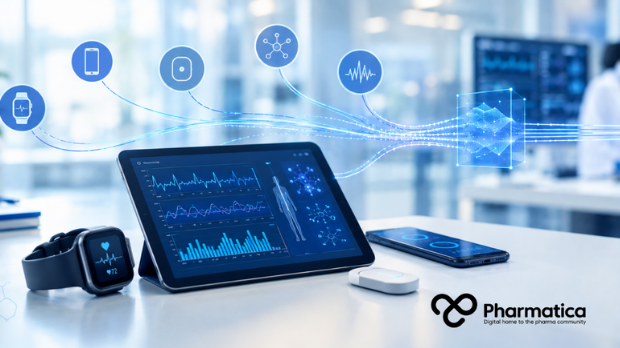
Wearables, sensors, smartphones, and connected devices can capture health information more frequently and in more natural settings than traditional study visits.
Activity, sleep, symptoms, physiological signals, and other measures can be monitored over time, potentially giving researchers a richer view of how patients feel, function, and respond to treatment.
But the research value is larger than convenience. DHTs can expose changes that periodic assessments may miss. Passive monitoring can also capture patterns in daily life that are difficult to reconstruct from a patient's memory or a scheduled visit.
That creates an important development question: What should sponsors measure, and how can they demonstrate that a digital measure actually matters to patients and regulators?
“This is one of the riskiest industries there is because you're dealing with human lives, you're dealing with experimental protocols, and you're dealing with regulatory bodies where you might not get another shot at that clinical trial."
Image
Clinical Evidence Problems Starts with the Digital Device
Data verification and validation remain major bottlenecks for DHT use in clinical drug development.
A digital measure may depend on the device, sensor location, software version, processing method, population, and context in which it is used.
Technology also changes quickly. A device can be updated or replaced while the underlying clinical concept remains the same. That creates a risk that evidence becomes tied to a particular product rather than to the health measure itself.
This requires a greater focus on derivable metrics in response, where the underlying physical construct remains consistent even if different technologies or algorithms are used to measure it. Counting daily steps provides a simple example. Cameras, accelerometers, or pressure sensors can all estimate the same physical activity construct.
If every technology change requires the evidence base to start again, digital endpoints become difficult to scale across programmes.
The importance of meaningfulness cannot be understated. A highly precise sensor output has limited value if its relationship to a patient’s experience or clinical outcome is unclear. Patient involvement is therefore vital. It can help determine whether a digital measure reflects something that matters.
Image
Data Standards Are the Building Blocks of Clinical Trial Infrastructure
The volume and complexity of DHT data create another clinical development challenge. Sensors can generate high-frequency information across different devices, body locations, and measurement types.
Without common structures, that data becomes harder to combine, reuse, or compare.
This requires consensus-driven data standards that can adapt to different contexts of use. Modular data-standard suites can allow teams to select requirements relevant to a particular biomarker, clinical outcome assessment, or model.
This has a direct implication for clinical trial strategy. Data standards should be considered during study design, not treated as a technical clean-up exercise after data collection.
The same principle applies when multiple DHTs are used together. Activity data may become more informative when combined with respiratory, cardiac, medication, lifestyle, or environmental information.
The opportunity is to create a more complete picture of health rather than another isolated digital endpoint.
On the regulatory side, the U.S. Food and Drug Administration’s (FDA’s) DHT programme highlights continuous or frequent measurement, novel clinical features, and remote data acquisition as potential advantages. Its current programme also includes work on digitally derived endpoints and data standards.
The regulatory picture is also developing in Europe. The European Medicines Agency (EMA) qualification pathway provides a route for assessing novel methodologies intended for use in medicine development, including approaches applied to clinical studies.
Digital Trial Integration Needs More Than Technology
There is a very strong case that DHT integration cannot sit with IT or technology teams alone because it spans clinical development, data management, biostatistics, regulatory science, patient engagement, device development, and clinical care.
Four areas stand out:
Ethical use: Sponsors need clear approaches to consent, privacy, data access, and the management of safety signals detected remotely.
Interoperability: Different devices and data streams need to work together without creating unnecessary duplication or technical burden.
Context of use: Teams need to define what a measure is intended to demonstrate and what evidence supports that use.
Cross-sector collaboration: Pharma, technology developers, researchers, regulators, clinicians, and patient groups need shared frameworks.
The ethical issue becomes particularly important when monitoring moves beyond the clinic. A device may identify a fall, cognitive change, or potential adverse event, but the trial still needs a defined response pathway.
Who reviews the signal? Who contacts the participant? What happens when a device detects something outside the trial's primary objective?
These are protocol and governance questions, not simply software questions. That ethical frameworks and appropriate training need to develop alongside DHT adoption.
Image
Closer alignment between clinical care and drug development is also needed. Digital monitoring used in routine care can help characterise disease and generate evidence about meaningful measures. That knowledge can then inform clinical development.
Breaking down the separation between the two settings could reduce duplicated effort and improve the relevance of digital measures.
AI in Pharma: Why the Future of Healthcare Starts With Patients, Not Tech
Kate O’Reilly, President & Chair of the Healthcare Businesswomen’s Association (HBA) Dublin-Ireland Chapter & Healthcare Transformation Partner at Roche, discusses AI in pharma, patient engagement, and the future of healthcare innovation.
Image
The Clinical Compass: Build The Evidence Before Scaling The Technology
DHT adoption needs infrastructure that is as mature as the technology itself.
Sponsors should therefore think about digital measures across the full development pathway:
Technology → Measure → Meaning → Evidence → Regulatory Use
A wearable or sensor is only the starting point. The clinical development value comes from demonstrating that the resulting measure is reliable, meaningful, fit for its intended context, and capable of supporting a decision.
The winners in digital clinical development will not necessarily be those with the most devices or the largest datasets. They will be the organisations that can connect technology, evidence, standards, and clinical meaning into a repeatable development model.
Digital health technologies in clinical drug development therefore represent more than a route to remote monitoring.
They could become part of the evidence architecture of future clinical trials, but only if the industry solves the validation, standardisation, ethical, and governance problems that sit underneath the technology.
At Pharmatica, we provide the Insights needed to understand the systems, technologies, and clinical strategies shaping pharmaceutical development, focusing on what moves beyond technical promise into measurable development impact.
Pharmatica: Insight. Connection. Impact.
Frequently Asked Questions
What are digital health technologies in clinical drug development?
Digital health technologies in clinical drug development include wearable sensors, smartphones, connected devices, software, and other digital tools used to collect health information during clinical research. They can support continuous, frequent, and remote measurement of participants outside traditional study visits.
How are digital health technologies used in clinical trials?
Digital health technologies can collect physiological, behavioural, and patient-generated data throughout a clinical trial. They may support remote monitoring, decentralised trial activities, digital endpoints, and longitudinal assessment of changes that are difficult to capture during occasional site visits.
What are digital endpoints in clinical trials?
Digital endpoints are trial measures generated using digital health technologies. They may reflect physical activity, sleep, physiological signals, symptoms, or other clinically relevant characteristics, but require appropriate validation and a clearly defined context of use before they can reliably support drug development decisions.
How are digital health technologies validated for clinical drug development?
Validation requires developers to establish that the technology reliably measures the intended construct and that the resulting measure is meaningful for the target population and clinical context. Device performance, algorithms, data processing, clinical validity, and context of use can all influence the evidence required.
What are the main challenges of using DHTs in clinical trials?
Key challenges include verification and validation, rapidly changing technologies, inconsistent data standards, interoperability, privacy, patient access, ethical responsibilities, and demonstrating that digital measurements represent outcomes that are clinically meaningful.
Nicole (BSc Molecular Medicine, Honours Medical Biochemistry) has many years of pharmaceutical experience, having worked for top CROs and biopharma companies for more than a decade.
Did you enjoy the content?
3
Why not support
Nicole Dale
by giving this content a like
Phenotypic drug discovery is reshaping how pharma finds first-in-class drugs. This analysis covers the methods, AI integration, and strategic decisions R&D leaders face in 2026.
Learn how drug discovery scientists are evolving alongside AI, computational biology, and multidisciplinary research to accelerate therapeutic innovation.
Collaboration in drug discovery can shape pharma R&D success. Explore the evidence on pharma partnerships, knowledge sharing, governance, and innovation.
Find out how q-CAR drug discovery moves beyond static protein structures by linking protein dynamics, ligand activity, and AI to precision drug design.
FDA 2026 Draft Guidance on Alternatives to Animal Testing
The FDA's March 2026 draft guidance on alternatives to animal testing marks a pivotal shift in preclinical drug development. Here's what pharma R&D teams need to know.










Comments (0)