Find out how the Dyson CameraJet brings AI-powered oral care to everyday brushing, combining computer vision and precision fluid delivery for targeted care.
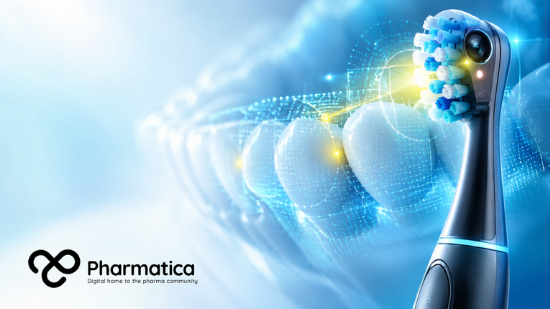
The AI-powered Dyson CameraJet combines real-time imaging, machine learning, and precision fluid delivery to identify interdental gaps and target them while a user brushes.
The more significant story is the technology architecture, with a consumer device turning a routine health behaviour into a machine-perception problem, with potential applications for personalised care, longitudinal data, and connected health.
Image
How Dyson CameraJet Uses AI to See Where Brushing Misses
The central technology of the CamerJet toothbrush is Gap Optical Targeting, Dyson’s machine-learning system for detecting, tracking, and predicting gaps between teeth.
A 100,000-pixel macro camera captures 28 live images per second, while stroboscopic illumination helps compensate for the movement of the brush head. When the system identifies a gap, the device can trigger a targeted burst of mouthrinse.
Dyson says the response occurs within 100 milliseconds of detecting a gap.
The model was developed using more than 470,000 dental images, while the complete device runs on 16 million lines of code. These numbers show that the product is not simply an electric toothbrush with a camera attached, but, rather, it’s a tightly integrated sensing, inference, and actuation system.
This architecture is important from a HealthTech perspective.
The camera generates a visual signal and machine learning interprets that signal in context. A physical actuator then responds to the model output.
This is a closed loop in which perception leads directly to an intervention.
That pattern is increasingly relevant across healthcare. Connected devices can move from collecting data to responding to it.
The same principle appears in passive health monitoring, where sensors capture routine biological signals and software interprets them over time. Pharmatica has explored this shift through its Insights into Throne Science and other digital health technologies.
Precision Engineering Makes AI Useful
The machine-learning layer is only one part of CameraJet. Dyson has paired it with fluid dynamics, brushing mechanics, imaging, and connectivity.
The precision jet uses a broad conical spray rather than a narrow, needle-like stream.
Dyson says its engineers developed a proxy plaque system with the National University of Singapore’s Faculty of Dentistry to test plaque removal during development. This allowed repeated engineering iterations without requiring a clinical trial for every design change.
This is important because AI does not create the health outcome by itself. Its value depends on the physical system that converts a prediction into an action.
CameraJet also uses an anti-gravity tank and diaphragm pump to maintain fluid delivery when the toothbrush is tilted.
Its variable sonic oscillation is designed to reduce brush-head stalling, while a target lens expands the camera’s field of view, and the brush head contains Radio Frequency Identification (RFID) technology to recognise the head and track its use.
This is a useful model for pharma leaders assessing connected health technologies. The intelligence layer cannot be separated from the sensing and intervention layers.
A highly capable algorithm has limited clinical value if the sensor produces poor data or the intervention cannot be delivered consistently.
“This is one of the riskiest industries there is because you're dealing with human lives, you're dealing with experimental protocols, and you're dealing with regulatory bodies where you might not get another shot at that clinical trial."
Image
A Consumer Device to Connected Health Platform
CameraJet also illustrates how health technology can be built into ordinary every-day routines.
The toothbrush connects through Wi-Fi and Bluetooth to the MyDyson app. Users can access guided cleaning, coverage mapping, brushing and flossing insights, and personalised feedback.
Dyson says the camera is active only during live viewing or automatic jetting, and images are not stored on the device or in the cloud.
This approach is significant because it places a form of computer vision inside a highly repetitive health behaviour. Instead of asking users to remember what they did, the system observes a defined task and provides feedback during or after it.
That resembles the wider evolution of passive and near-passive monitoring. Throne Science, for example, uses optical and acoustic sensing to capture bathroom-related health signals without requiring continuous manual logging.
Pharmatica’s broader Insights into digital health technologies in clinical drug development similarly highlights the growing importance of data collected outside conventional clinical settings.
The implication for pharma is not that a toothbrush provides a clinical endpoint. Instead it’s that consumer devices can create new channels for real-world behavioural and physiological data.
The strategic question is whether those data can be made reliable, interpretable, and relevant to a defined clinical or research purpose.
Image
Oral Health Creates a Large Digital Health Opportunity
The potential scale of the problem gives this technology a broader context.
The World Health Organization estimates that oral diseases affect nearly 3.7 billion people globally. Oral conditions are largely preventable, yet access to prevention and treatment remains uneven, particularly in low- and middle-income countries.
Dyson’s technology addresses a narrower behavioural problem in that people often do not clean effectively between teeth. The company cites research indicating that nine in ten people do not floss as regularly as recommended, while average brushing time is only around 45 seconds.
CameraJet therefore targets an important gap between what people know they should do and what they consistently do. The technology attempts to reduce that gap by making the device responsive to the user’s actual brushing environment.
That is a broader healthtech pattern worth watching. Digital systems can make adherence less dependent on memory, motivation, or manual reporting by embedding guidance into the activity itself.
This could eventually matter in areas such as patient support, adherence monitoring, remote intervention, and decentralised research.
But the evidentiary threshold changes when a consumer wellness technology demonstrates medical use.
Data generated during everyday behaviour must be assessed for accuracy, reproducibility, bias, privacy, and clinical relevance before it can support regulated decisions.
Image
The Real Opportunity: The Closed-Loop Model
CameraJet is particularly interesting because it demonstrates a closed-loop model at consumer scale.
Its sequence is straightforward:
A camera captures the oral environment.
Machine learning identifies and predicts an interdental gap.
The device triggers a targeted fluid jet.
The app provides feedback on cleaning behaviour and coverage.
Each step creates an opportunity for engineering optimisation. It also creates a potential failure point.
Computer vision must work across different mouths, lighting conditions, brushing angles, and movement patterns.
Therefore, the training data must represent the population in which the technology is deployed. Additionally, the system must distinguish meaningful anatomical features from artefacts created by motion or fluid. And the physical response must remain safe and reliable when the device is used repeatedly.
These issues are familiar to organisations developing AI-enabled products.
Model performance is only one component of system performance. Data provenance, representativeness, human factors, cybersecurity, privacy, and post-market monitoring can become equally important as the technology matures.
Dyson says 661 engineers worked on CameraJet and that the company filed 38 patents during development. It also says 30 dental professionals contributed globally.
Those impressive figures illustrate the multidisciplinary nature of the system, spanning machine learning, optics, mechanical engineering, fluid dynamics, and dental science.
AI in Pharma: Why the Future of Healthcare Starts With Patients, Not Tech
Kate O’Reilly, President & Chair of the Healthcare Businesswomen’s Association (HBA) Dublin-Ireland Chapter & Healthcare Transformation Partner at Roche, discusses AI in pharma, patient engagement, and the future of healthcare innovation.
Image
Building Every-day Sensing and Machine Learning
CameraJet shows that sophisticated sensing and machine learning can be structured well enough to operate inside everyday products.
That creates a new healthtech layer between traditional medical devices and consumer electronics. The device can sense a biological or behavioural context, interpret it through connected software, and provide an immediate response.
This could influence how future patient engagement and evidence strategies are designed.
Connected devices could potentially support treatment adherence, symptom tracking, patient-reported outcomes, or remote monitoring, provided the intended use and evidence requirements are clearly defined.
However, more data does not automatically mean better evidence. The clinical usefulness of a digital signal depends on whether it measures something meaningful, whether it performs consistently across relevant populations, and whether it can be connected to an outcome that matters.
Pharmatica understands that the next phase will be defined by technologies that connect sensing, algorithms, human behaviour, clinical evidence, and responsible data governance into one coherent system.
Pharmatica: Insight. Connection. Impact.
Frequently Asked Questions
What is the Dyson CameraJet?
Dyson CameraJet is a connected electric toothbrush that combines a macro camera, machine learning, and a precision fluid jet to identify and target gaps between teeth while brushing.
How does the Dyson CameraJet use AI?
Its Gap Optical Targeting system analyses live camera images to detect, track, and predict interdental gaps. The device can then trigger a targeted jet of mouthrinse.
How many images can the Dyson CameraJet analyse?
Dyson says the camera analyses 28 live images per second. Its machine-learning system was trained using more than 470,000 dental images collected during development.
Does Dyson CameraJet store camera images?
Dyson states that the camera is active during live viewing or automatic jetting and that images are not stored on the toothbrush or in the cloud.
Why does the Dyson CameraJet matter for HealthTech?
CameraJet demonstrates how imaging, machine learning and physical intervention can operate as a closed loop inside an everyday health routine. The technology provides a useful example of how connected devices could eventually support personalised monitoring, adherence and real-world health data.
Nicole (BSc Molecular Medicine, Honours Medical Biochemistry) has many years of pharmaceutical experience, having worked for top CROs and biopharma companies for more than a decade.
Did you enjoy the content?
0
Why not support
Nicole Dale
by giving this content a like
Cell Therapy for Solid Tumours: Current Challenges and New Advances
Cell therapy for solid tumours faces unique biological barriers. This analysis unpacks the engineering strategies pharma leaders must understand for R&D success in 2026.
Why Gynaecological Cancers Are Some of Pharma’s Most Important Challenges
Gynaecological cancers remain a major pharma challenge. Explore how disease burden, access, tumour biology, and precision medicine are shaping oncology R&D.
Can Deep Learning Survive the Precision Medicine Paradox?
As precision medicine narrows patient cohorts to rare‑disease scales, deep learning models face a paradox of data scarcity and overfitting that threatens the future of clinical AI.
Precision logistics in clinical trials is transforming global study execution through real-time tracking, cold-chain management, and advanced operational visibility.
Digital Twins in Clinical Trials: Simulating Success Before Enrolment
Digital twins in clinical trials simulate patient outcomes to reduce risk and accelerate timelines. Learn how sponsors use them for predictive trial design.







Comments (0)