The clinical evidence on GLP-1 drugs and vision loss shows conflicting safety findings for semaglutide and NAION, requiring more safety monitoring and label changes.
GLP-1 drugs and vision loss have become an important safety question as semaglutide and other glucagon-like peptide-1 receptor agonists gain wider use.
The evidence suggests a possible association with a rare condition that can cause sudden, permanent vision loss. However, conflicting clinical findings, differences in study design, and uncertainty about causation make the risk difficult to quantify.
Image
Why Are GLP-1 Drugs Linked to Sudden Vision Loss?
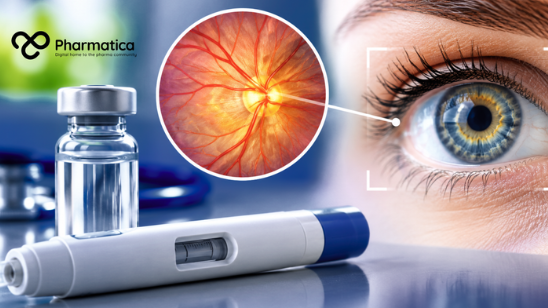
The main concern involves non-arteritic anterior ischaemic optic neuropathy (NAION).
This condition occurs when reduced blood flow damages the optic nerve, potentially causing sudden, painless vision loss in one eye.
Their September 2026 assessment highlights a possible association between semaglutide and an approximately two-fold increase in the relative risk of NAION.
However, the absolute risk remains low. NAION affects approximately 2.3 to 10.2 people per 100,000 annually. A relative increase does not mean that large numbers of patients taking semaglutide will develop the condition.
The evidence also remains inconsistent. Several large observational studies, including an analysis involving 1.2 million patients in the U.S. Military Health System, found no increased risk.
The distinction between association and causation is central to interpreting these findings.
The Approval 3: Pharmatica Intelligence examines three major FDA approvals in oncology, cardiovascular medicine, and nephrology, highlighting pivotal clinical evidence and treatment advances.
What Does the Clinical Evidence Say About GLP-1 Drugs and Vision Loss?
Researchers examined 28 observational studies, including six investigating semaglutide and 22 evaluating GLP-1 receptor agonists more broadly.
The analysis focused on patients with type 2 diabetes and assessed several ocular outcomes.
The findings did not demonstrate a statistically significant increase in:
NAION: Relative risk (RR) 1.01, with a 95% confidence interval (CI) of 0.62–1.64.
New-onset diabetic retinopathy: Hazard ratio (HR) 0.96, with a 95% CI of 0.85–1.08.
Diabetic retinopathy progression: HR 0.97, with a 95% CI of 0.83–1.14.
The researchers also found no increased glaucoma risk compared with other antidiabetic treatments.
However, the results require careful interpretation. Statistical heterogeneity was high across several analyses, indicating considerable variation between the included studies.
One particularly important finding emerged from the sensitivity analysis. When researchers removed one influential study from the semaglutide NAION analysis, the estimated relative risk increased to 1.68 (95% CI 1.10–2.57).
This suggests that the overall findings are sensitive to individual studies and that the available evidence cannot definitively exclude a potential risk.
The absence of a statistically significant association is not proof of an absence of risk.
Image
Why Do Clinical Studies Reach Different Conclusions?
Several methodological challenges complicate the assessment of GLP-1-associated ocular adverse events.
Most available evidence comes from retrospective observational research rather than prospective clinical trials designed specifically to investigate vision-related outcomes.
Researchers must also account for underlying disease. Diabetes, obesity, hypertension, and sleep apnoea can independently influence vascular and ocular health. These conditions may complicate attempts to isolate the contribution of medication exposure.
The rarity of NAION creates another challenge. Individual clinical trials may record too few cases to detect a meaningful difference between treatment and control groups.
A further consideration is the potential relationship between rapid improvements in blood glucose control and diabetic retinopathy progression. This is a recognised clinical concern in patients with pre-existing retinal disease and should be distinguished from NAION.
The U.S. Food and Drug Administration (FDA) has also recently reviewed safety evidence across 126 randomised clinical trials involving 134,253 participants. Its analysis identified 15 probable NAION cases, with 10 occurring among GLP-1 receptor agonist recipients and five in comparator groups.
The findings prompted FDA safety labelling changes addressing the potential risk.
Image
What Does This Mean for Clinical Development and Patient Safety?
The evolving evidence highlights the importance of integrating rare adverse events into clinical development and post-marketing surveillance.
For pharmaceutical companies, NAION presents several challenges:
Safety signal detection: Rare ocular events require sufficiently large datasets and consistent diagnostic criteria to establish meaningful risk estimates.
Long-term monitoring: Real-world evidence and pharmacovigilance remain essential after regulatory approval.
Risk communication: Product information and clinical guidance must distinguish established adverse events from suspected associations.
Patient stratification: Researchers need to investigate whether particular patient characteristics increase susceptibility to ocular complications.
The FDA’s labelling action reinforces the importance of communicating emerging safety signals without overstating what the evidence establishes.
For clinicians, sudden, painless vision loss or new visual disturbances require immediate ophthalmological assessment. Patients should not independently discontinue treatment because of concerns about potential ocular risks.
The AAO and NANOS favour individualised risk-benefit discussions involving the patient’s wider medical team.
This careful approach recognises that discontinuing GLP-1 therapy can also carry significant consequences for patients managing diabetes, obesity, and cardiovascular disease.
FDA Clarifies Rules for Prescription Drug-Linked Software
FDA clarifies labelling and evidence requirements for prescription drug-related software, helping sponsors manage digital health tools and regulatory submissions.
Image
The Clinical Compass Guiding GLP-1 Development
The relationship between GLP-1 drugs and vision loss illustrates a wider challenge in pharmaceutical safety research: Identifying rare adverse events while distinguishing genuine treatment-related risks from associations influenced by underlying disease.
Current evidence supports continued investigation, particularly through larger observational datasets, improved adverse-event classification, and long-term safety monitoring.
The priority is generating reliable evidence that supports informed prescribing decisions without compromising access to therapies with established clinical benefits.
At Pharmatica, we examine the clinical evidence, development strategies, and safety considerations shaping pharmaceutical innovation. Our Insights and Clinical Compass connect emerging research with the decisions that influence clinical development, patient outcomes, and the future of medicine.
Pharmatica: Insight. Connection. Impact.
Frequently Asked Questions
Can GLP-1 drugs cause vision loss?
A possible association exists between semaglutide and non-arteritic anterior ischaemic optic neuropathy (NAION), a rare condition that can cause sudden vision loss. However, researchers have not established a direct causal relationship.
What is NAION and how does it affect vision?
NAION occurs when reduced blood flow damages the optic nerve. It typically causes sudden, painless vision loss in one eye and can result in permanent visual impairment.
Does semaglutide increase the risk of NAION?
Some observational studies suggest an increased relative risk, while others report no significant association. The available evidence remains inconsistent, and the absolute risk is low.
Do GLP-1 drugs increase the risk of diabetic retinopathy?
Current evidence does not demonstrate a statistically significant overall increase in new-onset diabetic retinopathy or disease progression among patients receiving GLP-1 receptor agonists compared with other antidiabetic treatments.
Should patients stop taking semaglutide because of vision loss concerns?
Patients should not discontinue semaglutide without consulting their healthcare professionals. Sudden vision loss requires urgent ophthalmological assessment and an individualised discussion about treatment options.
Nicole (BSc Molecular Medicine, Honours Medical Biochemistry) has many years of pharmaceutical experience, having worked for top CROs and biopharma companies for more than a decade.
Did you enjoy the content?
2
Why not support
Nicole Dale
by giving this content a like
How Has the New AlphaGenome 2 Wowed Genetic Scientists?
Discover how Google DeepMind’s AlphaGenome 2 uses AI and 107 million cell profiles to predict DNA effects, identify genetic variants, and advance disease research.
AI Creates New Viruses? Not Quite. AI-Designed Bacteriophages
AI-designed bacteriophages show how genome models could create new antibacterial therapies while forcing pharma to rethink biological AI governance and biosecurity.
Corpus Healthy Human Protein Atlas Gives AI a Better Map
The healthy human protein atlas from Ambitious Bio could sharpen target safety checks in AI drug discovery. Explore the claims, the gaps, and the questions to ask.
Europe’s biotechnology IPCEI aims to scale bio-based chemicals, materials, and food ingredients, backed by Germany’s proposed €400 million contribution.
Ketryx and Accenture Build Regulated AI MedTech at Scale
Ketryx and Accenture are combining AI-native compliance infrastructure and transformation expertise to help MedTech scale regulated AI without slowing development.
AI Breast Cancer Screening Moves From Trials to Policy
AI breast cancer screening finds more cases and cuts radiologist workload, but recall risks remain. See what MASAI, AITIC, and EDITH mean for MedTech teams.








Comments (0)