Non-animal testing has moved from a regulatory aspiration to a working part of drug discovery, including in assessing preclinical toxicity. But does the evidence actually show these methods can replace, rather than simply supplement, animal models to test preclinical toxicity?
Why Pharma Is Reassessing Animal Models
Animal models have anchored preclinical safety testing for decades, but their track record is patchy. Roughly 30% of drugs fail during human trials because of toxicity that animal screening missed entirely.
That gap between preclinical prediction and clinical reality has become the central argument for change.
The FDA's roadmap to reducing animal testing rests on the long-standing 3Rs principle: Replace, reduce, and refine.
What has shifted recently is the willingness of regulators to treat non-animal testing data as a genuine substitute, not just a supporting exhibit, in a regulatory submission.
The Evidence Behind Non-Animal Testing Methods for Toxicity
Several classes of New Approach Methodologies (NAMs) now carry a measurable evidence base.
The strongest data sit with organ-chip and liver-toxicity platforms, where performance has been benchmarked directly against known clinical outcomes rather than against animal results alone.
Organ-on-chip and liver-chip platforms
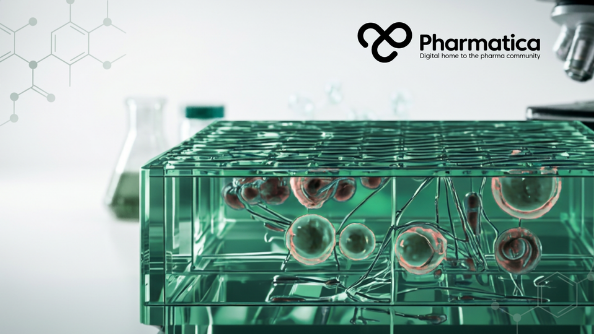
A peer-reviewed performance analysis examined 870 liver-chip runs against benchmark compounds defined by the Innovation and Quality consortium, offering one of the first systematic, quantitative looks at how well an organ-chip predicts drug-induced liver injury (87% sensitivity and 100% specificity).
A separate analysis found that a human liver-chip platform identified 87% of clinically significant liver-toxic drugs that had already passed animal testing before harming patients.
In one widely cited case, researchers retrospectively tested TAK-875, a drug withdrawn in phase III trials for liver injury, on a human liver-chip and reproduced the toxicity signal that animal models had missed.
Computational and in silico modelling
AI-enabled models can now forecast pharmacokinetics and flag likely toxicity before a compound ever reaches a lab bench and are increasingly built into structured, non-animal development strategies for monoclonal antibody and antibody-drug conjugate programmes.
A 2025 review took a systematic look at how artificial intelligence is reshaping this space. The authors argue that conventional toxicity testing is held back by high cost, low throughput, and the uncertainty of extrapolating animal results to humans.
Deep learning models trained on structured toxicity databases can now flag acute toxicity, carcinogenicity, and organ-specific risks, including liver and heart damage, before a compound reaches the lab bench.
The 2025 review is candid about the catch, too: Data quality, model design, and a lack of real-world translational validation still limit how far these predictions can be trusted in practice.
View interview How Should Pharma Companies Audit AI Vendors?
How Should Pharma Companies Audit AI Vendors?
“This is one of the riskiest industries there is because you're dealing with human lives, you're dealing with experimental protocols, and you're dealing with regulatory bodies where you might not get another shot at that clinical trial."
Where Regulators Stand on Non-Animal Testing
Regulatory movement has been the clearest signal that the evidence is being taken seriously. In 2026, the FDA issued draft guidance setting out how developers can validate NAMs for use in drug applications, rather than treating them as exploratory extras.
Where the Evidence Still Falls Short
The evidence is genuinely encouraging, but it is not yet complete.
Only a handful of areas, such as skin irritation testing, currently have fully validated non-animal replacements.
For most other safety endpoints, non-animal methods remain a complement to animal data rather than a wholesale replacement, and each method still needs its own validation, standardisation, and regulatory sign-off before wider adoption follows.
Determining Preclinical Toxicity Can Benefit from Non-animal Testing
Organ-chip data benchmarked against real clinical toxicity outcomes and growing regulatory acceptance all point toward a preclinical toolkit that leans less on animal models for testing toxicity.
The honest picture, though, is one of steady validation rather than sudden replacement.
At Pharmatica, we track the systems, strategies, and technologies shaping the future of pharmaceutical R&D, including where drug discovery innovations like non-animal testing are proving themselves and where the evidence still has ground to cover. Explore our Insights hub for more analysis built for pharmaceutical professionals.
Pharmatica: Insight. Connection. Impact.







Comments (0)