AI drug discovery is moving into strategy at Novo Nordisk. See its 2026 AI milestones, what they prove, and the questions R&D teams should ask before copying them.
AI drug discovery has become part of corporate strategy at Novo, the maker of GLP-1 obesity and overweight treatments Wegovy and Ozempic.
Novo executives now cite measurable gains in target selection, trial planning, and reporting. Yet the industry still awaits a landmark AI-designed medicine, and Novo faces patent pressure on its GLP-1s.
Image
What Does Novo Say About AI Drug Discovery?
On 22 September 2026, Novo leaders briefed reporters on how the company uses artificial intelligence in research.
Novo, which recently shortened its corporate name from Novo Nordisk, cited more than 30 strategic AI partnerships.
It also employs more than 600 AI and digital specialists who work beside its scientists.
Chief scientific officer Martin Holst Lange made the central claim. Novo has found new targets, and new drugs, with AI support, he said.
He added that conventional pharmacology and chemistry still run in parallel.
That second point is actually the more important part. Novo does not frame AI as a replacement for the laboratory.
It does frame AI as an amplifier of existing science, which is a more credible stance for a regulated industry.
The hybrid model also reflects how discovery works in practice.
Computational teams propose targets and compounds. Medicinal chemists and pharmacologists then test them.
Each loop teaches the models something new, and each failure narrows the search. Scale matters in that loop, and 600 specialists give Novo the people to run it.
Why the claim deserves scrutiny
The same Axios report noted that the sector has not yet delivered a major AI-driven breakthrough. The coverage does not name an AI-derived candidate either.
R&D teams should therefore read the briefing as a signal of process maturity, not proof of a clinical win.
This careful approach protects decision-makers from hype. A company can build excellent AI infrastructure and still wait years for a candidate to clear the clinic.
“This is one of the riskiest industries there is because you're dealing with human lives, you're dealing with experimental protocols, and you're dealing with regulatory bodies where you might not get another shot at that clinical trial."
Image
The Milestones Behind the GLP Headlines
Novo’s investor presentation lists several 2026 milestones from its AI programmes. They span discovery and development. Each one is a distinct claim, so it helps to separate them:
Threefold improvement in target rate: Novo prioritised genes in virtual assays to reach this gain.
90 per cent less time spent selecting trial sites and analysing patient populations.
10-fold faster generation of clinical study reports.
Discovery gains versus development gains
Two of the three gains sit in development, not discovery.
Trial site selection and report writing are operational tasks. They deliver real savings, but they do not show that AI designs better molecules. Only the target rate speaks to early research.
That specific metric deserves the closest attention, because early choices shape every later cost. A weak target can consume years of work before a trial exposes the flaw.
But, the pattern of gains is still sensible. Development tasks rely on structured, repeatable data, so AI tools perform well there. Discovery depends on biology that is noisy and incomplete. You have to transfer data somewhere between the two.
R&D teams should expect gains to arrive first where the data is clean. Trial planning, for example, draws on site histories, enrolment records, and epidemiology. Models can rank those inputs quickly and explain their choices. Early biology offers fewer such anchors.
Target selection is also becoming an ever-increasingly crowded field. Pharmatica’s Insights into target prioritisation shows how fast ranking tools are maturing. Novo’s virtual assays sit in the same movement.
What do virtual assays change?
Virtual assays test hypotheses in software before anyone reaches for a pipette. They help rank genes by their likely role in disease.
Teams then send only the strongest candidates to wet-lab validation.
If the approach holds, it saves time and reagents, and it frees scientists for harder molecule questions.
The key test is predictive accuracy.
A virtual assay earns trust only when its rankings match laboratory results again and again. Novo has not yet shared their validation record in public.
Questions to ask before copying Novo
How does Novo define and measure the target rate?
Which virtual assays drive the gene ranking, and who validated them?
Does faster trial site selection change trial quality or cost?
Do shorter report cycles shorten the path to regulators?
Novo did not publish answers to these points in the coverage. Peers should ask them before they set similar internal targets.
Without shared definitions, one company’s threefold gain may mean little to another. Benchmarks only help when the underlying measures match.
Image
Why Does Patent Pressure Raise the Drug Discovery Stakes for Novo?
Novo faces the expiry of key GLP-1 patents in the early 2030s.
Wegovy and Ozempic carry much of the company’s growth. A thin pipeline would leave that growth exposed.
AI offers one route to a wider portfolio, and potentially a faster one.
Speed matters because patent clocks keep running. A 10-fold gain in report writing helps only if molecules reach the clinic. Novo therefore needs AI to add candidates, not just to tidy paperwork.
The next two years will show whether the discovery side keeps pace with the development side.
Investors will watch for named candidates, not slide decks. Competitors will watch for evidence that virtual assays cut the attrition that hurts pipelines.
Three partners, one platform strategy
Novo has built its AI position through several alliances in 2026:
OpenAI (April): A partnership with OpenAI covers discovery, manufacturing, supply chain, and commercial work.
Amazon Web Services (August): An AWS agreement created a London hub that applies agentic AI and cloud tools to discovery.
Anthropic (September): A collaboration with Anthropic tests Claude Science for scientific reasoning and agentic software engineering.
Novo says the Anthropic work runs with data governance and human oversight.
The multi-vendor approach also limits dependence on any single model provider and it lets Novo compare tools on real tasks, from biological reasoning to software development, and move work to whichever performs best.
Three signals will show whether the strategy works.
First, Novo may name programmes that began with an AI-identified target. Second, the company may report how many of those programmes reach the clinic.
Lastly, the company may share how human reviewers check model outputs. Each disclosure would turn a promising narrative into evidence that peers and investors can test.
Image
The workforce question
Novo CEO Mike Doustdar said AI will change the company’s workforce, as reported by Axios.
Some tasks will become automated, and the skills mix will shift. His remark that Novo should be honest about this stands out, because few pharma leaders say it so plainly.
Decision-makers should plan reskilling alongside tool rollout.
Faster science still needs people who can judge model outputs, challenge assumptions, and own the results.
Companies that invest early in these skills will adopt tools with fewer errors. Those that delay may find the gap hard to close.
Training budgets, clear role definitions, and honest communication all help teams adapt without losing trust.
Regulators will ask for credibility
The U.S. Food and Drug Administration (FDA) has issued a draft guidance with a risk-based credibility framework for AI models that support regulatory decisions.
The guidance centres on the context of use and on evidence that a model performs reliably for that purpose. The recommendations are non-binding.
Scope matters here. The guidance focuses on AI outputs that inform safety, effectiveness, or quality decisions. Teams should check whether each use case falls inside it, especially as trial planning and reporting tools mature.
Early engagement with the agency also helps.
Documented validation, clear human review, and traceable data will matter whichever way the final text lands.
AI in Pharma: Why the Future of Healthcare Starts With Patients, Not Tech
Kate O’Reilly, President & Chair of the Healthcare Businesswomen’s Association (HBA) Dublin-Ireland Chapter & Healthcare Transformation Partner at Roche, discusses AI in pharma, patient engagement, and the future of healthcare innovation.
Image
What Should Drug Discovery Teams Take From Novo’s AI Drug Discovery Push?
Novo’s briefing shows where AI drug discovery stands in late 2026.
The gains are real, but they cluster in structured, operational work. The target rate is the one metric that touches early science, and it needs more detail.
Patent pressure explains the urgency, and a multi-partner strategy explains the method.
Four lessons follow for pharma executives:
Separate discovery gains from development gains when you benchmark.
Demand definitions for every AI metric before you adopt it.
Diversify AI partners, and keep human oversight in every workflow.
Prepare for regulatory scrutiny and workforce change at the same time.
At Pharmatica, we focus on the systems, strategies, and technologies shaping Pharmaceutical R&D. Our Insights connect data, Regulation, and market dynamics, so decision-makers can judge AI claims with confidence and act where impact is measurable.
Pharmatica: Insight. Connection. Impact.
Frequently Asked Questions
What is Novo doing with AI drug discovery?
Novo uses AI to identify targets, plan trials, and draft reports. It works with more than 30 strategic partners and has more than 600 AI and digital specialists beside its scientists. Conventional pharmacology and chemistry continue alongside these tools.
Which AI milestones has Novo reported for 2026?
Novo reports a threefold gain in target rate, a 90 per cent cut in time spent on trial site selection, and 10-fold faster clinical study reports.
Has AI produced a new drug at Novo?
Novo’s Chief Scientific Officer says AI helped identify new targets and drugs. However, the coverage names no AI-derived candidate or clinical result.
Why is Novo investing in AI now?
Key GLP-1 patents expire in the early 2030s. Novo needs a wider pipeline, and AI promises faster discovery and development. Several partnerships in 2026 show a deliberate, multi-vendor push.
How does the FDA view AI in drug development?
The FDA’s draft guidance proposes a risk-based credibility framework. Sponsors define the context of use, then show evidence that the model performs reliably for that purpose. The recommendations remain non-binding, and the scope excludes some operational uses.
Nicole (BSc Molecular Medicine, Honours Medical Biochemistry) has many years of pharmaceutical experience, having worked for top CROs and biopharma companies for more than a decade.
Did you enjoy the content?
0
Why not support
Nicole Dale
by giving this content a like
Anthropic's new drug discovery programme marks a strategic shift from sole AI software provider to active R&D participant. Here's what it means for pharmaceutical innovation.
Anthropic’s Gates Foundation Partnership and Healthcare AI
See how Anthropic's Gates Foundation partnership and Long-Term Benefit Trust could lead the way in shaping responsible AI governance across healthcare innovation.
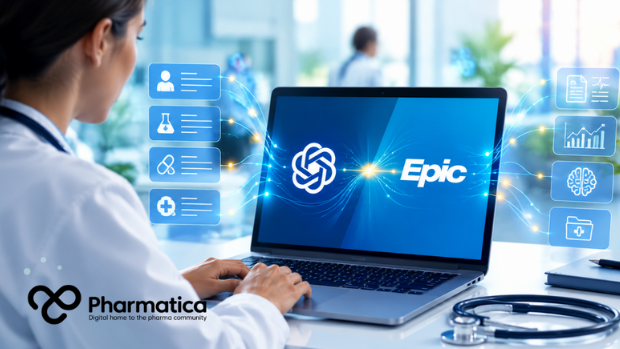
AI in Healthcare: OpenAI and Epic Integration Connects EHRs
OpenAI and Epic integration brings AI healthcare into EHR workflows, connecting patient records with ChatGPT for Healthcare to advance research and patient care.
<p>Founded in 2004, Ametris (formerly ActiGraph) is a global digital health solutions provider transforming real-world patient data into validated clinical evidence. Our end-to-end platform combines advanced wearables, regulatory-aligned analytics, and expert scientific support across every phase of a clinical trial. We serve leading pharmaceutical, biotech, and public health research organizations worldwide, backed by two decades of experience and a collaborative, science-first approach.</p><p>In 2026, Ametris joined Signant Health, uniting wearable-derived digital outcome measures with industry-leading eCOA solutions to give sponsors a single partner for integrated evidence generation, combining continuous sensor data with patient-reported outcomes.</p>
Image
Clinical Development
<p><a href="https://www.medidata.com/en/">Medidata </a>has been powering smarter treatments and healthier people by supporting clinical trials through groundbreaking technological innovations for over 25 years. Medidata is a leader in AI-powered solutions across the entire trial lifecycle to accelerate clinical breakthroughs, reduce patient and site burden, and bring new therapies to market faster. Supported by one of the largest clinical datasets in the industry of more than 38,000 trials and 12 million patients, Medidata's <a href="https://www.medidata.com/en/experiences/study-experience/">Study</a>, <a href="https://www.medidata.com/en/experiences/patient-experience/">Patient</a>, and <a href="https://www.medidata.com/en/experiences/data-experience/">Data</a> Experiences are trusted by more than 1 million registered users across approximately 2,300 customers. A Dassault Systèmes brand (Euronext Paris: FR0014003TT8, DSY.PA), Medidata is headquartered in New York City and is recognized as a leader by Everest Group and IDC. Discover more at <a href="https://www.medidata.com/">www.medidata.com</a><strong>. </strong>Listen to our latest podcast, <a href="https://www.medidata.com/en/from-dreamers-to-disruptors-podcast/"><em>from Dreamers to Disruptors</em></a>,<strong> </strong>and follow us at @medidata-solutions on LinkedIn.</p>















Comments (0)