Synthetic genetic codes have moved from painstaking genome engineering towards automated prototyping.
A new study published in Nature shows that researchers can run an engineered genetic code alongside the standard code in a cell-free system, opening a faster route to test new biological chemistries.
AGENTEX Turns Genetic Code Design Into a Testable Workflow
The human genetic code normally uses 64 codons to direct the production of proteins from 20 standard amino acids. Reassigning those codons can give biology access to non-standard amino acids and entirely new chemical functions.
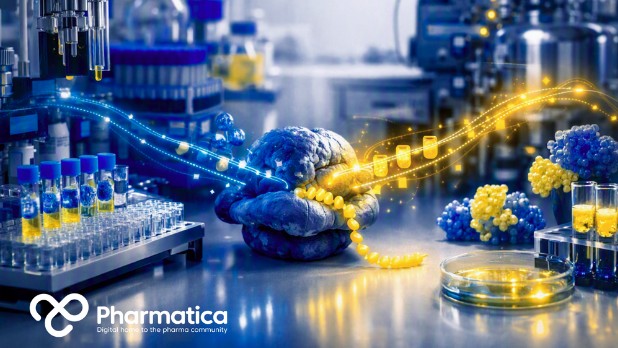
Researchers have now developed automated genetic tRNA expansion, or AGENTEX, to make that redesign easier to test. The system combines engineered ribosomes, synthetic transfer RNAs (tRNAs), cell-free translation, robotics, sequencing, and analytical chemistry.
Instead of rebuilding an organism for every design, researchers can create and screen alternative codes outside living cells. That matters because whole-genome recoding remains technically demanding.
AGENTEX therefore changes the development model, allowing designing, building, testing, and refining of the translation system before committing to genome-scale engineering.
Two Genetic Codes Can Operate At the Same Time! Without Detectable Crosstalk
The most striking result is the separation of two translation systems.
The team engineered ribosomes that recognise tRNAs with an altered three-base sequence at one end.
These engineered tRNAs worked with the modified ribosomes while avoiding detectable interference with the natural translation machinery in the cell-free system.
Using this approach, the researchers:
- demonstrated a compressed genetic code alongside the standard code;
- reassigned up to three codons; and
- incorporated a non-standard amino acid into produced polypeptides.
The research also further points towards a theoretical code with 14 codons available for non-standard building blocks.
This builds on earlier genetic-code engineering. A 2025 Nature study created an Escherichia coli strain using one stop codon and reassigned two others for non-standard amino acids with more than 99% accuracy.
View interview How Should Pharma Companies Audit AI Vendors?
How Should Pharma Companies Audit AI Vendors?
“This is one of the riskiest industries there is because you're dealing with human lives, you're dealing with experimental protocols, and you're dealing with regulatory bodies where you might not get another shot at that clinical trial."
Pharma Should Watch the Underlying Chemistry, Not the Headline
The near-term value of such synthetic genetic code research is not a living cell running two fully independent genetic systems. These experiments were cell-free, and translating the approach into organisms will introduce far harder biological interactions.
The opportunity is actually the expanded molecular design space.
Genetic code engineering could eventually support proteins and sequence-defined polymers containing chemistry that biology does not normally use.
Previous genetic-code expansion research has already demonstrated how engineered translation systems can introduce non-canonical amino acids into proteins.
For pharmaceutical R&D, that could create new routes to therapeutic proteins, biomaterials, biocatalysts, and engineered modalities.
It also gives researchers a more automated way to evaluate which biological designs deserve further investment.
That reflects the broader move towards increasingly programmable R&D explored in Pharmatica’s Insights on digital organisms, predictive modelling, and AI infrastructure.
The important distinction is that AGENTEX is not AI. Instead it makes radical biological designs faster to prototype and easier to reject early.
Programmable Biology as an Engineering Discipline
Synthetic genetic codes remain an early research capability, not a near-term pharmaceutical manufacturing platform. Yet AGENTEX changes how researchers can explore them by moving more design choices into a controlled, automated test environment.
That could make genetic code engineering more iterative, scalable, and useful to pharmaceutical R&D.
At Pharmatica, we track the technologies changing how pharma can design, test, and develop new therapeutic possibilities. We know that the next frontier may not simply be discovering better molecules, but will be expanding the biological language available to build them.
Pharmatica: Insight. Connection. Impact.










Comments (0)