SynthID Bio embeds hidden watermarks in AI-designed proteins. See how Google DeepMind’s tool could strengthen biosecurity and what pharma R&D should do next.
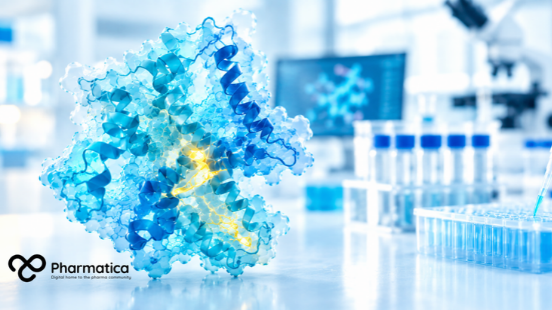
Google DeepMind has launched SynthID Bio, a watermarking system for AI-designed proteins. It hides a signature inside the biological code itself, so the mark survives synthesis in the lab.
For teams who buy or build AI-designed biologics, this could change how provenance, screening, and trust work.
Image
How Does SynthID Bio Hide a Signature in Biological Code?
The project extends the company’s SynthID tool from images, text, and video into synthetic biology. Chief Scientists and Google DeepMind’s Pushmeet Kohli, David Stutz, Ali Cowen-Rivers, and Jeremy Ratcliff authored the announcement.
The core idea is simple. A watermark should travel with the molecule, not only with the digital file.
Most AI watermarks live in digital outputs. SynthID Bio writes its signal into the biology, so a protein made in the lab still carries it.
The method is a family of techniques. Each one suits a different type of data.
Watermarking amino acid sequences
For sequence design, the method gently steers which amino acids a model selects.
The shifts are small and statistical. Together, they form a pattern that a detector can recognise. DeepMind reports that these changes did not harm protein function in laboratory tests.
Watermarking predicted 3D structures
For structure prediction, the method adjusts atomic coordinates.
The Google DeepMind team fine-tuned a small part of the diffusion network inside AlphaFold 3. The watermark therefore sits in the model weights. Every user who runs the model produces structures that carry the signature.
DeepMind says prediction accuracy holds. It also reports near-perfect detectability. The mark survives digital noise and minor coordinate changes.
“This is one of the riskiest industries there is because you're dealing with human lives, you're dealing with experimental protocols, and you're dealing with regulatory bodies where you might not get another shot at that clinical trial."
Image
What Do the Wet-Lab Results Show?
The Google DeepMind team tested the approach on protein binders. Binders are molecules built to latch onto a chosen target protein.
DeepMind paired its AlphaProteo design method with a SynthID Bio version of ProteinMPNN, a widely used sequence generator.
The wet-lab tests covered three targets:
VEGF-A
The SARS-CoV-2 spike protein receptor-binding domain
PD-L1
Across all three, watermarked designs matched unwatermarked ones on hit rate, binding affinity, and natural sequence diversity.
DeepMind calls them the first watermarked, biologically functional protein binders.
Pharma teams will ask one question first. Does the mark cost potency? On this evidence, it does not.
Three targets is still a small panel, though. DeepMind itself frames the work as a proof of concept.
The company also published a methods paper in Nature. Additionally, it is open-sourcing the code and in vitro data, and releasing the weights to the research community.
That openness lets independent groups test the claims.
Early work on whole genomes
Google DeepMind is also extending the method to larger biological objects.
With the Hie lab at Stanford University and Arc Institute, it added SynthID Bio to Evo 2, a genomic model. The team watermarked the genome of an Evo 2-designed bacteriophage. Early tests in bacterial cultures confirmed that these phages still work.
A technical manuscript on this work is due soon. Until then, the genome results remain preliminary.
Image
Why Do Screening and Databases Need Provenance?
Google DeepMind describes biosecurity as layered defence.
Think of Swiss cheese slices. Each safeguard has holes, but the holes rarely line up. Model-level mitigations and customer vetting are two such layers.
SynthID Bio adds a verification layer inside the design itself.
DNA synthesis screening
Turning a digital protein design into a physical molecule means placing an order with a DNA synthesis provider. Providers screen each order against databases of known threats.
Manual review of unfamiliar orders is slow and can stall legitimate research. A watermark offers an automated signal that an order came from a trusted model with built-in safeguards.
Two outside voices back this view. Sarah Carter, a biosecurity policy expert at Science Policy Consulting, reviewed the work. She says watermarks link designs to their developer, which lets developers lead on safety. James Diggans of Twist Bioscience says watermarking could help screeners focus on sequences that deserve closer review.
Public sequence and structure databases
The Protein Data Bank, UniProt, and GenBank are vital to science. Many accept public submissions.
SynthID Bio could help flag synthetic entries at the point of submission.
What Does SynthID Bio Mean for Pharma R&D Teams?
No single tool solves biosecurity, and DeepMind says so plainly.
The biggest open challenge is robustness.
The Google DeepMind team wants the watermark to resist deliberate tampering. It also expects to pair watermarks with provenance metadata, similar to C2PA for digital media.
A watermark only works where developers adopt it. A missing mark does not prove a design is safe. It may simply come from a model that never applied one in the first place.
Therefore, screeners will need watermark checks and conventional screening together.
The evidence base is also narrow. It covers three binder targets, one structure model, and early phage tests. Pharma teams should read it as a highly credible first step though.
Practical steps for R&D teams
Teams can act before standards settle. Four moves stand out:
Ask AI design vendors whether they plan to watermark outputs or keep provenance records.
Check your DNA synthesis suppliers. Find out how they screen AI-designed sequences and whether they will accept watermark signals.
Add provenance rules to data governance before AI-generated structures enter internal databases.
Watch the Nature methods paper and the upcoming phage manuscript for independent replication.
AI in Pharma: Why the Future of Healthcare Starts With Patients, Not Tech
Kate O’Reilly, President & Chair of the Healthcare Businesswomen’s Association (HBA) Dublin-Ireland Chapter & Healthcare Transformation Partner at Roche, discusses AI in pharma, patient engagement, and the future of healthcare innovation.
Image
Watermarking Proteins with Google DeepMind’s SynthID Bio
SynthID Bio embeds an imperceptible signature in AI-designed proteins and predicted structures.
Early wet-lab data show no loss of function across three targets. The method could speed up DNA synthesis screening and protect shared databases. Tamper resistance, adoption, and wider validation remain open.
At Pharmatica, we track the AI tools reshaping pharmaceutical R&D, and the safeguards that keep them trustworthy. Our Insights help pharma teams judge where AI-designed biology creates value and where it creates exposure.
Pharmatica: Insight. Connection. Impact.
Image
Frequently Asked Questions
What is SynthID Bio?
SynthID Bio is a family of watermarking methods from Google DeepMind for synthetic biology. It embeds an imperceptible signature in AI-designed protein sequences and predicted 3D structures. The aim is to strengthen biosecurity and protect the integrity of scientific data.
How does SynthID Bio watermark a protein?
For sequences, it subtly guides which amino acids a model chooses. For 3D structures, it adjusts atomic coordinates through a fine-tuned part of AlphaFold 3. A detector then looks for the resulting statistical pattern. The signal remains in the synthesised, physical protein.
Does watermarking change how well a protein works?
In DeepMind’s wet-lab tests, no. Watermarked binders for VEGF-A, the SARS-CoV-2 spike protein receptor-binding domain, and PD-L1 matched unwatermarked designs on hit rate, binding affinity, and sequence diversity. The panel is small, so wider testing is still needed.
Why does SynthID Bio matter for biosecurity?
AI can design sequences that resemble no known threat, which weakens traditional DNA synthesis screening. A watermark gives providers an automated signal that an order came from a trusted model. It adds one layer to a wider, multi-layer defence.
What are the limitations of SynthID Bio?
Deliberate tampering is the main open challenge. The watermark also protects only models that adopt it. DeepMind plans to pair it with provenance metadata and central repositories of AI-generated biological data. It calls the work an important first step, not a silver bullet.
Nicole (BSc Molecular Medicine, Honours Medical Biochemistry) has many years of pharmaceutical experience, having worked for top CROs and biopharma companies for more than a decade.
Did you enjoy the content?
0
Why not support
Nicole Dale
by giving this content a like
The Looming Threat of Geopolitical Risk in Clinical Supply Chains
Geopolitical risk is reshaping how clinical supply chains are managed, demanding resilience and foresight. Learn why building supply chain resilience is the key for clinical trial success.
Healthcare Supply Chains in Africa: Lessons from COVID-19
COVID-19 exposed major weaknesses in pharmaceutical supply chains. In this episode of Chain Reaction, Trisha Pillay and Émile Malan explore how AI, regulatory reform, and local manufacturing could strengthen healthcare resilience.
Regulatory leadership is no longer just compliance. In this episode of Chain Reaction, Dineshree Naiker explains why early regulatory strategy, supply chain governance, and value-based thinking are critical to improving patient access and healthcare outcomes.
Why Europe's Heatwave Is an Important Pharma Cold Chain Risk
Europe's 2026 heatwave is pushing pharmaceutical cold chain risk to the limit. Here is what supply chain leaders must do to protect drug integrity now.
Strait of Hormuz Closure Threatens Pharma Supply Chains
Closures around the Strait of Hormuz create growing pharma supply chain risks. Find out how energy, API, and freight shocks spread and how to build resilience.










Comments (0)