Veragence CEO Nour AlSaleh discusses how AI is transforming data integrity in pharma manufacturing, regulatory compliance, the "human-in-the-loop" requirement, and patient safety in the era of AI-driven GxP systems.
With artificial intelligence (AI) now in pharma manufacturing, regulators have begun to pay close attention. In fact, oftentimes, they move forward without waiting for adequate guidelines.
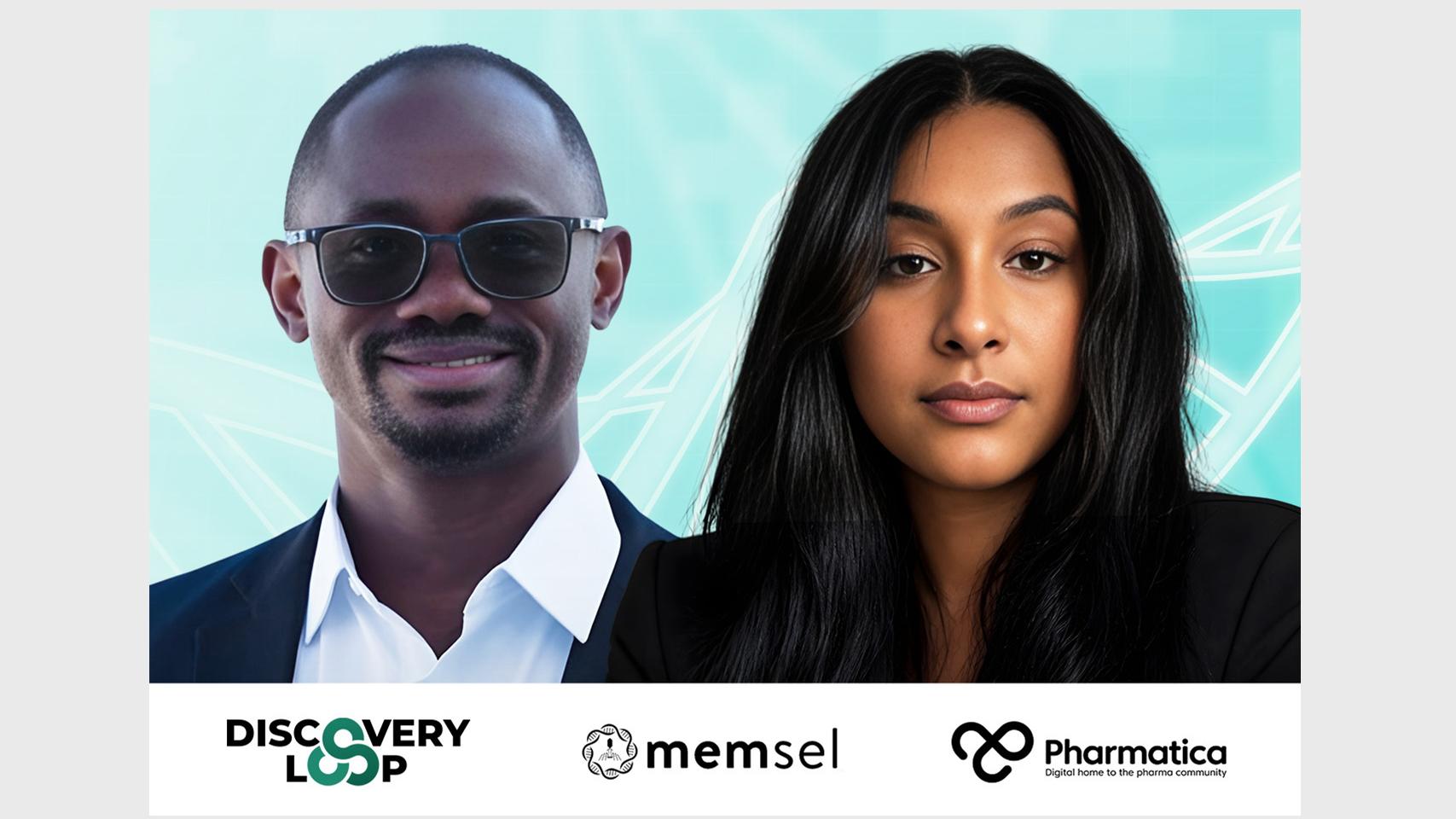
In the recent episode of The Chain Reaction podcast, Nour AlSaleh, Founder and CEO of Veragence Pharma Consultancy, sat down with host Shubhangi Dua, Podcast Producer and B2B Journalist at Pharmatica.io and EM360Tech.
AlSaleh shares her expertise on maintaining data integrity in this new era of AI and changing policies. She is a pharmacist with 20 years of experience in quality assurance roles at international and multinational pharmaceutical companies in Jordan. A few months ago, she started her own consultancy with a goal to help manufacturers in the Middle East and across the globe improve regulatory compliance and protect patient safety as digital and AI-driven systems transform the industry.
What Data Integrity Means Now in Pharma Manufacturing
AlSaleh describes data integrity as ensuring that every data point produced in a GxP or GMP environment, whether a sensor reading, batch record, or an AI model's output, is "complete, accurate, attributable, and trustworthy enough" to support safe patient decisions.
However, this definition has had to expand, especially with technological developments. As AI tools are now amalgamated into manufacturing decisions, the Veragence CEO explains that the scope of data integrity has "widened to consider that we are no longer just talking about chromatography and paper-based documentation."
Manufacturers must confirm that AI models receive correct data and that a human properly reviews every output before it affects a decision.
Find out how Quality-by-Design improves reliability and compliance in pharma and how you can maximise innovation through quality-based pharma development systems.
US FDA Warning Pharma Companies
AlSaleh points to a recent example where the US FDA sent a warning letter and a Form 483 observation to a pharmaceutical manufacturer after the company used an AI tool to establish product specifications without sufficient human review.
According to the U.S. FDA, an FDA Form 483 is a document issued to a company's management at the conclusion of an FDA facility inspection.
According to the CEO, companies cannot use regulatory uncertainty as an excuse for inaction. "We cannot have this justification that we still don't have clear guidelines from the regulators," she states.
"Patient safety is not negotiable." She believes AI should act like a co-worker—helpful for speeding up analysis and identifying trends, but never a substitute for human judgment. "It will never be a replacement for the human brain."
Why ALCOA+ Needs Reinterpreting for Pharma AI
The podcast also ventures into ALCOA and its extended version, ALCOA+. ALCOA is a data integrity framework that combines five fundamental principles used to ensure data integrity, compliance, and quality. It stands for attributable, legible, contemporaneous, original, and accurate.
ALSaleh believes that these frameworks still hold, but each principle now needs a fresh perspective. For instance, regarding "attributable", if an AI model logs a deviation, who is actually responsible? "We need to specify who is accountable in this case. Is it the user, the data scientist, or the vendor?"
She mentions that EU regulators have begun drafting Annex 22 specifically to address AI in manufacturing, but global consistency is still lacking. Manufacturers operating in multiple markets—the US, EU, Australia, Canada—often must interpret AI compliance expectations on their own.
EU GMP Annex 22 is the first dedicated regulatory framework governing the use of Artificial Intelligence (AI) and Machine Learning (ML) in pharmaceutical and medicinal manufacturing according to Eupry.
Throughout the conversation with Dua, AlSaleh also covered where data integrity breaks down and the associated risks. She also challenges the notion that AI and "vibe coding" methods can bypass compliance in pharma.
In terms of the future, the Veragence Founder foresees more regulatory discussions with manufacturers, greater harmonisation of global AI guidelines, and an increasing need for talent that combines GxP regulatory knowledge with AI skills.
Her advice to pharma leaders is to invest in that talent now, encourage open dialogue with regulators early in development, and always prioritise human oversight over speed.
AlSaleh emphasises that the goal is not to choose between fast innovation and compliance. A solid compliance foundation enables quicker, safer innovation.
Listen to the full episode of "The Chain Reaction" by Pharmatica.io for the complete conversation with Nour Al Saleh.
Takeaways
Data integrity is foundational for product quality and patient safety.
AI and digital systems are reshaping the pharmaceutical industry.
Human oversight is essential in evaluating AI-generated data.
Regulatory expectations are evolving with the introduction of AI.
The interface between systems is a common risk for data integrity.
Outsourcing does not absolve manufacturers of responsibility.
Continuous monitoring of AI tools is necessary for compliance.
Data integrity requirements should be integrated from the design phase.
Knowledge and training are crucial for effective data integrity control.
Patient safety must remain the primary focus in pharmaceutical manufacturing.
Chapters
00:00 AI and data integrity overview
02:19 Noor’s background in pharma
03:45 Defining data integrity today
05:33 Leader responsibility in compliance
07:30 Alcova Plus Plus in practice
09:41 Regulatory expectations for AI
12:16 FDA warning letter example
14:14 Risks at system interfaces
16:08 Vendor oversight and lifecycle control
18:55 CSV for evolving AI tools
20:23 Drift, monitoring, and revalidation
23:20 Design-phase data integrity
25:00 Choosing the right vendor
27:36 Traceability in automated systems
31:32 Inspection readiness culture
35:17 AI as a pharma partner
40:09 Priorities for future pharma leaders
43:29 Closing thoughts
For more information on data integrity and AI in pharma, please visit veragence.com.
Coming soon
Ask questions about this interview.
AI Assistant will use the video transcript once it is available.
A B2B journalist, Podcast Host and Producer with a PPA-accredited MA in Magazine Journalism from Cardiff University. Specialising in content strategy and execution for segments on healthcare technology, AI, emerging innovation, and life sciences at Pharmatica.io. Bringing lively, up-to-date conversations to life on camera. Hosted and produced enterprise podcasts for global technology enterprises, covered CES 2024, Infosec 2025 and 2026 and Big Data LDN 2025 and 206 live by hosting vox pop interviews on camera. Also, written for publications including Interesting Engineering and The Hindu.
Did you enjoy the content?
2
Why not support
Shubhangi Dua
by giving this content a like
Anthropic's new drug discovery programme marks a strategic shift from sole AI software provider to active R&D participant. Here's what it means for pharmaceutical innovation.
Anthropic’s Gates Foundation Partnership and Healthcare AI
See how Anthropic's Gates Foundation partnership and Long-Term Benefit Trust could lead the way in shaping responsible AI governance across healthcare innovation.
AI in Healthcare: OpenAI and Epic Integration Connects EHRs
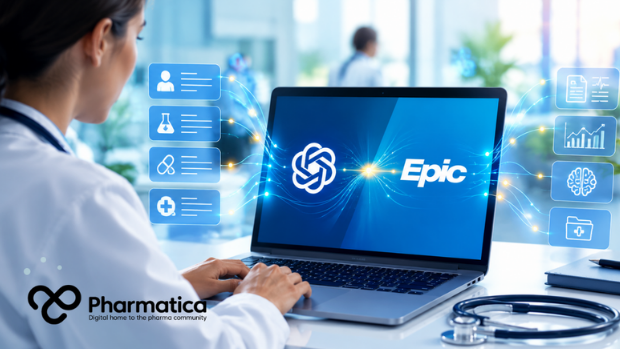
OpenAI and Epic integration brings AI healthcare into EHR workflows, connecting patient records with ChatGPT for Healthcare to advance research and patient care.
<p>Founded in 2004, Ametris (formerly ActiGraph) is a global digital health solutions provider transforming real-world patient data into validated clinical evidence. Our end-to-end platform combines advanced wearables, regulatory-aligned analytics, and expert scientific support across every phase of a clinical trial. We serve leading pharmaceutical, biotech, and public health research organizations worldwide, backed by two decades of experience and a collaborative, science-first approach.</p><p>In 2026, Ametris joined Signant Health, uniting wearable-derived digital outcome measures with industry-leading eCOA solutions to give sponsors a single partner for integrated evidence generation, combining continuous sensor data with patient-reported outcomes.</p>
Image
Clinical Development
<p><a href="https://www.medidata.com/en/">Medidata </a>has been powering smarter treatments and healthier people by supporting clinical trials through groundbreaking technological innovations for over 25 years. Medidata is a leader in AI-powered solutions across the entire trial lifecycle to accelerate clinical breakthroughs, reduce patient and site burden, and bring new therapies to market faster. Supported by one of the largest clinical datasets in the industry of more than 38,000 trials and 12 million patients, Medidata's <a href="https://www.medidata.com/en/experiences/study-experience/">Study</a>, <a href="https://www.medidata.com/en/experiences/patient-experience/">Patient</a>, and <a href="https://www.medidata.com/en/experiences/data-experience/">Data</a> Experiences are trusted by more than 1 million registered users across approximately 2,300 customers. A Dassault Systèmes brand (Euronext Paris: FR0014003TT8, DSY.PA), Medidata is headquartered in New York City and is recognized as a leader by Everest Group and IDC. Discover more at <a href="https://www.medidata.com/">www.medidata.com</a><strong>. </strong>Listen to our latest podcast, <a href="https://www.medidata.com/en/from-dreamers-to-disruptors-podcast/"><em>from Dreamers to Disruptors</em></a>,<strong> </strong>and follow us at @medidata-solutions on LinkedIn.</p>














Comments (0)