
Seven Ways AI Is Solving Pharmaceutical Supply Chain Problems

AI is tackling the pharmaceutical supply chain's most persistent problems, from demand forecasting to counterfeit detection. See the top 7 ways AI is improving supply chain resiliency.
The pharmaceutical supply chain is more fragile than ever with single-source API dependencies, just-in-time inventory, highly interdependent multi-tier supplier networks, and a cold chain carrying increasingly complex biologics. Geopolitical disruption has made every one of these more vulnerable.
AI is now deployed across seven distinct pharma supply chain functions where it demonstrates significant operational impact to help mitigate supply chain fragility.
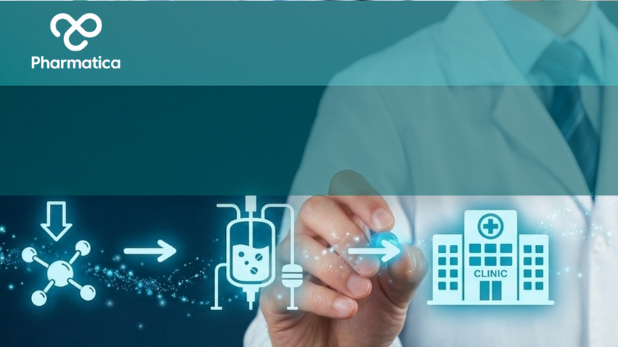
1. Demand Forecasting and Inventory Optimisation
Traditional pharmaceutical demand forecasting relies on historical sales data and manual adjustment for known variables such as seasonal trends and product launches.
These models fail when demand patterns shift rapidly, as they did during the COVID-19 pandemic and as they continue to do in markets where prescribing behaviour, biosimilar entry, and treatment guideline changes create non-linear demand movements.
AI forecasting models address this by integrating multiple data streams simultaneously: Hospital admission rates, electronic health records, epidemiological data, competitor sales signals, and macroeconomic variables.
Published analysis indicates that AI demand forecasting achieves 25–30% lower forecast error compared to legacy models, with some implementations reporting higher than 30% forecasting accuracy overall.
AI-driven forecasting can reduce pharmaceutical stockouts by 15–35%, with particularly high impact in oncology, where treatment delays caused by shortages have direct clinical and economic consequences.
The downstream effect is inventory optimisation. Accurate demand forecasting allows manufacturers and distributors to hold less safety stock without increasing stockout risk, freeing working capital and reducing cold-chain storage costs for temperature-sensitive products.
2. Supplier Risk Monitoring and Procurement Intelligence
With 80% of U.S. active pharmaceutical ingredient (API) imports sourced from China and India, the pharmaceutical supply chain is structurally exposed to geopolitical, regulatory, and quality disruptions in a small number of geographies.
Monitoring this exposure across hundreds of multi-tier supplier relationships is beyond the capacity of manual procurement processes.
AI-driven supplier risk platforms address this in two ways. First, natural language processing (NLP) tools scan regulatory databases, U.S. Food and Drug Administration (FDA) warning letters, World Health Organisation (WHO) alerts, clinical literature, and supplier news in real time, flagging signals of potential quality failures or compliance issues before they materialise as disruptions.
Second, machine learning models score and rank suppliers by risk profile, integrating audit history, production data, and financial health metrics into a continuously updated assessment.
In one pharmaceutical procurement engagement, supplier analytics frameworks delivered a 15% reduction in procurement costs, while AI-enabled automation significantly accelerated sourcing and contract workflows.
These systems increasingly incorporate real-time risk monitoring, using external data signals to flag potential supplier issues before they escalate.
3. Cold Chain Monitoring and Temperature Excursion Prevention
The global pharmaceutical cold chain logistics market was valued at USD 18.61 billion in 2024 and is projected to reach USD 27.11 billion by 2033, driven by the rapid growth of biologics, mRNA therapies, and cell and gene therapy products that require cryogenic storage below -150°C.
A single temperature excursion during transit can destroy a shipment that has taken months to manufacture and may be irreplaceable for a waiting patient.
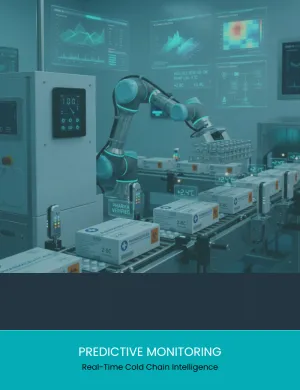
Traditional cold chain monitoring records temperature breaches after they occur, while AI-powered systems now predict excursions before they happen.
Machine learning models trained on historical temperature data, equipment performance logs, weather patterns, and route profiles identify the conditions that precede excursions and trigger preemptive intervention, rerouting shipments, alerting logistics teams, or recommending packaging upgrades for specific lane conditions.
For clinical trial supply, where investigational medicinal products (IMPs) are often irreplaceable and patient enrolment cannot be paused, predictive cold chain monitoring provides a layer of protection that reactive monitoring cannot offer.

How Should Pharma Companies Audit AI Vendors?
“This is one of the riskiest industries there is because you're dealing with human lives, you're dealing with experimental protocols, and you're dealing with regulatory bodies where you might not get another shot at that clinical trial."

4. Serialisation, Traceability, and Counterfeit Detection
The counterfeit pharmaceutical drug trade is estimated to cost the industry between USD 200 billion and USD 400 billion annually, with an estimated 10% of medicines in low- and middle-income countries being substandard or falsified.
Full FDA Drug Supply Chain Security Act (DSCSA) enforcement came into effect for U.S. wholesale distributors in August 2025, with large dispensers following in November 2025, mandating electronic package-level traceability across the U.S. prescription drug supply chain.
AI is essential to making serialisation data operationally useful at scale. The volume of transaction records generated by DSCSA-compliant systems is too large for human review.
AI-driven analytics monitor serialisation data flows for anomalies: Duplicate serial numbers, unexpected movement patterns, verification failures at chain-of-custody checkpoints, and deviations from expected geographic routing that may indicate counterfeit insertion or product diversion.
Computer vision systems complement data analytics by analysing physical product packaging — label text, print quality, colour consistency, and tamper-evident feature integrity — to detect even subtle discrepancies that human inspectors would miss at production line speeds.
NLP tools further strengthen this by scanning text across multiple languages and scripts for the linguistic inconsistencies that frequently appear in counterfeit labelling.
5. Predictive Maintenance in GMP Manufacturing
In pharmaceutical manufacturing, an unplanned equipment failure does not produce a service call. It produces a batch rejection, an FDA deviation record, a formal investigation, and a potential line shutdown that may run for days or weeks.
AI-driven predictive maintenance addresses this by analysing data from sensors embedded in critical manufacturing equipment (centrifuges, compressors, filling lines, bioreactors, tablet presses) to identify the early signatures of wear or drift before they cross the threshold into deviation.
Machine learning models trained on historical failure data recognise patterns in vibration, temperature, pressure, and power consumption that precede equipment failures, allowing maintenance teams to intervene on a planned basis rather than in response to an emergency.
The Good Manufacturing Practice (GMP) environment imposes requirements that standard predictive maintenance platforms do not address: Audit trail integrity, validation documentation, and compliance with ICH Q8–Q11 guidelines on quality-by-design.
Explainable AI approaches, including SHAP (SHapley Additive exPlanations) values, are increasingly used to make model outputs interpretable to quality teams and regulators.
6. Geopolitical and Macro-Risk Scenario Modelling
The tariff environment that started in 2025 exposed how unprepared most pharmaceutical supply chain planning processes were for rapid, large-scale policy shocks.
A 25% tariff on Indian API imports, imposed in August 2025, affected the cost base for a significant proportion of both generic and speciality drugs simultaneously. Planning cycles built on stable annual assumptions had no mechanism for absorbing a change of this speed and magnitude.
AI-powered supply chain scenario modelling helps address this by running continuous probabilistic simulations across a range of geopolitical, regulatory, and macroeconomic inputs.
These models do not predict exactly which disruption will occur, but they quantify the supply chain's exposure to different classes of shock and identify the network design choices that reduce vulnerability across the widest range of scenarios.
Network design choices that can be identified with such models may include alternative supplier pre-qualification, buffer inventory levels, geographic diversification of manufacturing, amongst many others.
For clinical supply specifically, this capability matters because investigational product supply chains are configured years before the trial runs. A disruption to an API source mid-trial cannot be resolved quickly.
Sponsors who have modelled geopolitical risk scenarios before IND submission and pre-qualified alternative sources face a materially different risk profile than those who have not.
AI in Pharma: Why the Future of Healthcare Starts With Patients, Not Tech
Kate O’Reilly, President & Chair of the Healthcare Businesswomen’s Association (HBA) Dublin-Ireland Chapter & Healthcare Transformation Partner at Roche, discusses AI in pharma, patient engagement, and the future of healthcare innovation.

7. Digital Twins for End-to-End Supply Chain Simulation
A digital twin is a virtual model of a physical supply chain that mirrors real-world conditions in real time and can be used to simulate the impact of decisions before they are implemented.
For pharmaceutical supply chains, spanning multiple continents, regulatory jurisdictions, temperature zones, and manufacturing partners, the complexity of interdependencies makes intuitive planning alone far from sufficient.
AI-powered digital twins integrate data from enterprise resource planning (ERP) systems, manufacturing execution systems (MES), logistics platforms, and external signals — including demand forecasts, regulatory alerts, and geopolitical risk indicators — into a single dynamic model.
Planners can use the twin to test the downstream consequences of decisions such as shifting an API source, adding a CDMO, or changing a distribution route before committing resources.
The technology also reduces waste. Digital twin simulation supports quality by digital design (QbDD), reducing the need for extensive experimental trials during scale-up, minimising material waste, and shortening the time between process development and commercial manufacturing.
For advanced therapy medicinal products (ATMPs), where batch sizes are small, manufacturing processes are complex, and failures are costly, this capability is particularly valuable.

Implementation: How Pharmaceutical Companies Can Operationalise AI
Most pharmaceutical companies should begin with a single operational use case rather than a full-scale AI transformation programme. Demand forecasting, cold-chain monitoring, or predictive maintenance pilots are typically easier to validate and scale than enterprise-wide deployments.
The primary implementation challenge is data integration. Supply chain, manufacturing, logistics, and quality data are usually spread across disconnected ERP, MES, warehouse, and serialisation systems that were not designed to work together.
Governance is equally important. AI systems operating in GxP-regulated environments must be explainable, validated, auditable, and periodically reassessed as models evolve or retrain on new operational data.
Cross-functional coordination is also essential. Successful deployments usually involve supply chain, manufacturing, quality, regulatory, cybersecurity, and IT teams working under a shared operational framework rather than isolated departmental initiatives.
Companies that combine strong operational discipline with structured AI governance are consistently better positioned to scale AI across procurement, manufacturing, logistics, and quality operations.

Conclusion: AI Increases Supply Chain Resiliency
AI is increasingly becoming a core operational layer within pharmaceutical supply chains rather than a standalone innovation initiative. Forecasting, procurement, cold-chain management, serialisation, and manufacturing operations are all becoming more data-driven as supply chain complexity increases.
The organisations generating the strongest results are typically those focusing on implementation quality rather than headline AI capability. Data infrastructure, validation processes, and operational governance remain the decisive factors in long-term success.
As geopolitical disruption, biologics growth, and regulatory traceability requirements continue to intensify, pharmaceutical companies with limited AI capability may become structurally less resilient than competitors with mature digital supply chain operations.
Pharmatica analyses how AI, advanced analytics, and digital infrastructure are reshaping pharmaceutical manufacturing and supply chain operations globally. Our coverage focuses on evidence-based implementation realities, helping pharmaceutical leaders separate operationally meaningful progress from industry hype.
Pharmatica: Insight. Connection. Impact.
Frequently Asked Questions
What is AI in the pharmaceutical supply chain?
AI in the pharmaceutical supply chain refers to the use of machine learning and predictive analytics to optimise forecasting, procurement, manufacturing, logistics, and supply chain risk management.
How does AI improve pharmaceutical demand forecasting?
AI forecasting models analyse multiple data sources simultaneously, including prescribing trends, epidemiological data, and inventory signals, improving forecast accuracy and reducing stockout risk.
Why is AI important for pharmaceutical cold chain logistics?
AI helps predict temperature excursions before they occur by analysing shipment routes, equipment performance, weather patterns, and historical transit conditions in real time.
How does AI help detect counterfeit medicines?
AI systems analyse serialisation records, routing anomalies, packaging quality, and verification failures to identify potential counterfeit products and supply chain diversion events.
What are the biggest barriers to AI adoption in pharmaceutical supply chains?
The biggest barriers are fragmented data systems, limited interoperability, regulatory validation requirements, cybersecurity concerns, and the need for explainable AI in GxP-regulated environments.
About the author
Did you enjoy the content?
Why not support Nicole Dale by giving this content a like





Comments (0)