
Phenotypic Drug Discovery: Beyond the Target

Phenotypic drug discovery is reshaping how pharma finds first-in-class drugs. This analysis covers the methods, AI integration, and strategic decisions R&D leaders face in 2026.
Target-based drug discovery (TDD) dominated pharmaceutical R&D for over three decades. It delivered precision but produced a pattern of late-stage attrition that has cost the industry billions: Compounds with excellent target engagement but poor clinical performance. Phenotypic drug discovery (PDD), which identifies compounds based on their effects in living disease models rather than on a predetermined target, has re-emerged as a direct response to that problem.
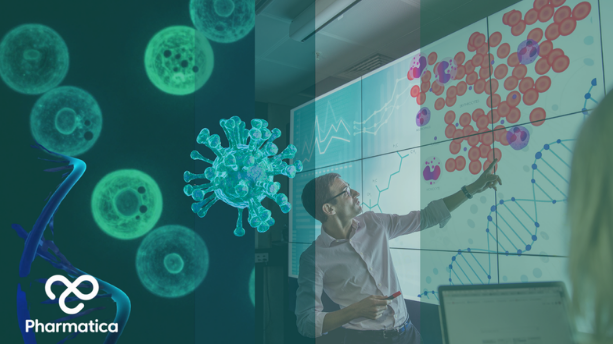
What is Phenotypic Drug Discovery?
PDD identifies drug candidates by observing measurable biological responses in cell- or tissue-based systems, without requiring prior knowledge of the molecular mechanism. A compound library is screened against a disease-relevant model (cell line, patient-derived organoid, 3D culture) and hits are selected based on the phenotypic outcome they produce.
Over the past two decades, PDD contributed to first-in-class medicines treating Duchenne muscular dystrophy, spinal muscular atrophy, hepatitis C, and cystic fibrosis. These are conditions where target-based approaches either lacked sufficient mechanistic understanding or where the biology required interaction with multiple pathways simultaneously.
Early immunotherapy discoveries, such as interleukin-2 (IL-2), emerged from observational biology rather than target-first design, illustrating the broader principle underlying phenotypic approaches. Additionally, several widely used drugs, including minoxidil and certain anti-inflammatory agents, originated from observed biological effects prior to full mechanistic understanding.
The Target Deconvolution Problem
The main operational challenge in PDD is the inverse of TDD's strength: Knowing what a hit compound does without knowing how it does it. Target deconvolution (the process of identifying the molecular target[s] responsible for an observed phenotypic effect) adds time, cost, and uncertainty to PDD workflows.
Mechanism deconvolution now draws on chemical proteomics, functional genomics screens (CRISPR-based), and computational methods. The process is not trivial. Some PDD programmes advance through lead optimisation with partial mechanistic understanding, carrying a residual uncertainty that regulatory agencies and development teams must manage.
There is increasing industry recognition that this uncertainty is manageable and is frequently outweighed by the advantage of working from a compound with demonstrated activity in a disease-relevant system, rather than optimising a molecule for a target whose role in clinical disease remains incompletely characterised.
How Should Pharma Companies Audit AI Vendors?
“This is one of the riskiest industries there is because you're dealing with human lives, you're dealing with experimental protocols, and you're dealing with regulatory bodies where you might not get another shot at that clinical trial."

AI and Machine Learning in Phenotypic Screening
The practical limitations of classical PDD include throughput and data analysis. High-content screening (HCS) generates images of thousands of cells per well across thousands of wells per plate, a volume of data that exceeds human analytical capacity. Machine learning (ML) and AI are increasingly changing the equation.
Current AI-enabled PDD workflows can:
- Automate morphological feature extraction from HCS images, identifying subtle cellular phenotypic changes invisible to human reviewers
- Cluster cellular phenotypes across compound libraries to identify distinct modes of action, even without target knowledge
- Integrated multimodal data, combining chemical structure with image-derived phenotypic profiles, to improve bioactivity and mechanism-of-action prediction
- Enable target hypothesis generation from phenotypic data, reducing the time and cost of deconvolution by providing ranked mechanistic candidates for follow-up validation
The JUMP-CP Consortium, a cross-industry initiative led by the Broad Institute of MIT and Harvard, aims to standardise and share phenotypic profiling datasets and represents the field's recognition that data infrastructure, not just algorithmic sophistication, is the primary bottleneck.
Platforms contributing to shared repositories are building the reference datasets against which new compound libraries can be profiled and annotated.

The Chain of Translatability
A framework often referred to as the ‘chain of translatability’ has gained significant traction in industry PDD practice: The requirement that phenotypic hits are validated through a connected series of increasingly complex biological models before clinical nomination.
This means the disease model used in primary screening must have demonstrable relevance to the human condition, not simply the most convenient or high-throughput assay available.
A cell line that doesn't recapitulate patient-specific disease biology produces hits that won't translate. The growing adoption of patient-derived organoids, induced pluripotent stem cell (iPSC)-derived models, and primary tissue cultures directly addresses this.
Polypharmacology: Feature or Complication?
Many drugs discovered through phenotypic approaches exhibit polypharmacology (activity at multiple molecular targets simultaneously).
Traditional medicinal chemistry views multi-target activity with suspicion, associating it with off-target adverse events. In phenotypic discovery, it can instead reflect a mechanism specifically suited to the biology of disease, where multiple pathway interactions are required for clinical efficacy.
Examples include several antibiotics and neuropsychiatric drugs (e.g. clozapine) where polypharmacology, rather than limiting efficacy, appears to underlie it.
Analysis of PDD found that phenotypic screening can identify polypharmacology signatures ‘only limited by the target landscape of the model system,’ a feature when the disease biology requires it.
|
Dimension |
Target-Based Discovery |
Phenotypic Discovery |
|
Starting Point |
Known molecular target |
Disease-relevant biological model |
|
Mechanism Knowledge |
Required upfront |
Determined post-hit (deconvolution) |
|
Polypharmacology |
Typically avoided |
Potentially advantageous |
|
Translation Risk |
High (target-to-clinic gap) |
Potentially lower translation risk (biology-first validation) |
|
Data Requirements |
Target structure/function data |
High-content imaging, omics, AI analysis |
|
First-in-Class Potential |
Moderate |
High (novel mechanisms more accessible) |
AI in Pharma: Why the Future of Healthcare Starts With Patients, Not Tech
Kate O’Reilly, President & Chair of the Healthcare Businesswomen’s Association (HBA) Dublin-Ireland Chapter & Healthcare Transformation Partner at Roche, discusses AI in pharma, patient engagement, and the future of healthcare innovation.

Where the Two Phenotypic Approaches Converge
The emerging consensus in pharmaceutical R&D is that target-based and phenotypic approaches are complementary, not competing.
Target-based workflows increasingly use phenotypic assays to validate candidate molecules, creating feedback between mechanistic precision and biological complexity. Conversely, phenotypic hits, once deconvoluted, can be further refined using structure-based methods.
This convergence is most visible in immunology pipelines, where phenotypic screening coupled with single-cell transcriptomics and high-content imaging is revealing nuanced immune cell behaviours that neither approach alone would identify. The field is moving toward hybrid workflows that maximise the biological relevance of phenotypic systems while retaining the mechanistic precision of target-based design.

Strategic Considerations for R&D Leaders
For heads of drug discovery and research considering PDD integration, the following considerations should be addressed:
- Disease model selection is the most consequential decision. A hit from a non-predictive cell line is not a PDD success. Invest in model validation before scaling phenotypic screens.
- AI infrastructure is now the primary capability differentiator. Teams that cannot process and interpret high-content imaging data at scale cannot realise PDD's throughput advantage.
- Plan for deconvolution from the start. Deconvolution is not an afterthought — it should be built into the programme timeline with chemical proteomics and CRISPR-based tools designated upfront.
- Manage regulatory expectations around mechanism. Regulatory agencies accept PDD-derived candidates but expect a credible mechanistic hypothesis and safety rationale before clinical entry. Programmes that treat deconvolution as optional are exposed at the Investigational New Drug (IND) stage.
Conclusion: Phenotypic Drug Discovery Is Back
Phenotypic drug discovery is not a return to empirical guesswork. Modern PDD combines disease-relevant biological models, AI-enabled data analysis, and a disciplined translational chain to identify compounds that would be unreachable through target-based methods alone.
The track record in first-in-class discovery is real. The operational and regulatory challenges are also real.
Programmes that commit to rigorous disease model selection, invest in AI-enabled profiling infrastructure, and plan for mechanistic characterisation from the outset are best positioned to make PDD a dependable source of pipeline value.
Pharmatica provides the analytical depth and industry context that pharma executives need to evaluate PDD not as a trend but as a strategic portfolio decision with evidence behind it.
Pharmatica: Insight. Connection. Impact.
Frequently Asked Questions
What is phenotypic drug discovery?
Phenotypic drug discovery is an approach to identifying drug candidates by observing their effects in disease-relevant biological systems (cell cultures, organoids, or tissue models) without requiring prior knowledge of a specific molecular target.
Compounds are selected based on their ability to produce a desired phenotypic outcome, such as reducing tumour cell viability or restoring normal immune function, rather than binding a predetermined target.
How does phenotypic drug discovery differ from target-based drug discovery?
Target-based drug discovery starts with a known molecular target and designs or screens compounds to engage it. Phenotypic drug discovery starts with a biological model of disease and identifies compounds that alter its behaviour.
The two approaches differ in their starting point, data requirements, and the type of mechanistic knowledge they produce. Phenotypic approaches tend to find first-in-class compounds with novel mechanisms; target-based approaches offer greater upfront mechanistic clarity.
What is target deconvolution in phenotypic screening?
Target deconvolution is the process of identifying the molecular target or targets responsible for a compound's observed phenotypic effect. It is the main technical challenge specific to PDD, because phenotypic hits are identified without prior mechanistic knowledge.
Deconvolution uses methods including chemical proteomics, CRISPR-based functional screens, and computational modelling to generate and validate mechanistic hypotheses for phenotypically active compounds.
What role does AI play in phenotypic drug discovery?
AI enables PDD workflows to process and interpret high-content screening data at a scale that exceeds human capacity. Machine learning models extract morphological features from cellular images, cluster phenotypic signatures across compound libraries, and integrate chemical structure data with biological response profiles to predict modes of action.
AI also accelerates target deconvolution by ranking mechanistic hypotheses based on phenotypic and genomic data, reducing the experimental burden of follow-up validation.
Which diseases have been successfully targeted using phenotypic drug discovery?
Phenotypic drug discovery has contributed to first-in-class medicines for Duchenne muscular dystrophy, spinal muscular atrophy, hepatitis C, and cystic fibrosis.
Earlier phenotypic origins include IL-2 (foundational to immunotherapy), ibuprofen, minoxidil, and clopidogrel.
These examples span infectious disease, rare genetic disorders, and cardiovascular medicine. They represent conditions where the complexity of the biological mechanism made target-based approaches insufficient or unavailable at the time of discovery.
About the author
Did you enjoy the content?
Why not support Nicole Dale by giving this content a like








Comments (0)