AI-driven digital organisms could transform drug discovery by simulating biology across scales. Explore GenBio AI's AIDO vision and the virtual cell.
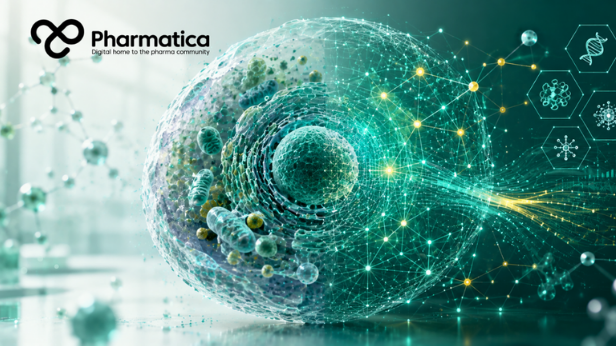
AI-driven digital organisms could move pharmaceutical R&D beyond isolated prediction models towards a connected computational representation of biology.
A new Nature MedicinePerspective from GenBio AI researchers sets out a vision for modelling biology from molecules and cells through to individuals, with the potential to make experiments more targeted, iterative, and informative.
Image
Why Biology Needs a Different AI Architecture
AI has already transformed individual parts of biological research. Protein structure prediction, genomic models, and single-cell foundation models can extract patterns from datasets that are too large or complex for conventional analysis.
The problem is that biology does not operate in isolated layers.
A genetic change can alter RNA, protein activity, cellular behaviour, tissue states, and eventually phenotype. Treating each layer as a separate prediction problem can miss the connections between them.
In the Nature Medicine Perspective, researchers propose an AI-driven digital organism (AIDO) as a way to address this problem.
Rather than one giant model, the AI-driven digital organism concept uses integrated, multiscale foundation models that can connect different biological modalities and levels.
From Foundation Models to a Virtual Cell
The architecture matters because the proposed system is designed to move from prediction towards simulation.
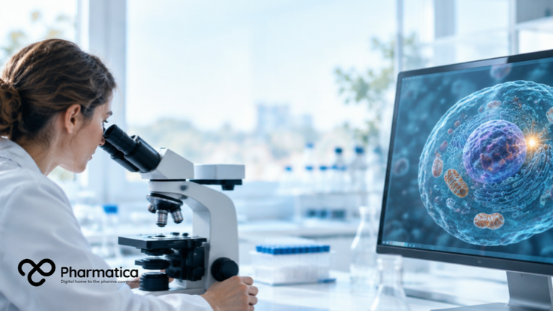
GenBio AI describes AIDO cell as a framework for predicting, simulating, and programming biology across scales. Its work spans DNA, RNA, proteins, protein structure, and single-cell biology, with the longer-term objective of connecting these capabilities into a more unified system.
That direction builds on the earlier AIDO research framework, which proposed a modular and connectable system rather than simply combining unrelated models.
The practical goal is important for drug discovery. Instead of asking only whether a model predicts a particular biological outcome, researchers could eventually test computationally what might happen after a gene is perturbed, a drug is introduced, or a pathway changes.
GenBio AI’s virtual-cell work describes this as a world-model approach, where a model explores possible cellular outcomes following an intervention rather than simply classifying existing data.
This complements the broader industry R&D movement towards integrated AI research environments, shown in Pharmatica’s analysis of Claude’s drug discovery workbench and the emergence of AI-native drug discovery organisations.
“This is one of the riskiest industries there is because you're dealing with human lives, you're dealing with experimental protocols, and you're dealing with regulatory bodies where you might not get another shot at that clinical trial."
Image
Building the Data Layer for Functioning Virtual Cells
GenBio AI is not developing this vision in isolation.
Chan Zuckerberg’s BiohubVirtual Biology Initiative is pursuing the biological data and measurement infrastructure needed for predictive models of cellular biology.
Biohub committed U.S. $500 million over five years, including investment in data generation, imaging, and technologies for measuring and engineering biology.
That matters because better models depend on better biological observations.
Biohub is investing in advanced imaging, molecular, cellular, and tissue engineering. Its initiative also emphasises open data and collaboration with organisations working on single-cell, spatial, protein, and other biological datasets.
This creates an emerging ecosystem around virtual biology: Models, data, experimental systems, and computational infrastructure need to develop together.
Biohub’s work on virtual cells also demonstrates the importance of combining AI with experimental biology.
Its computational biology programme uses high-throughput omics and imaging data alongside experimental research to understand cellular behaviour.
What Could Virtual Cells Mean for Drug Discovery?
The attraction is not simply faster computation but also the possibility of changing how experiments are selected.
A mature virtual biology system could help researchers:
Prioritise biological hypotheses before laboratory testing.
Explore combinations of genetic or pharmacological interventions.
Identify potentially useful mechanisms earlier.
Generate predictions that guide more informative experiments.
Connect molecular changes with downstream cellular or phenotypic effects.
This could strengthen the design-make-test-learn cycle already central to modern R&D. It also aligns with the multidisciplinary skills increasingly required by drug discovery teams, as explored in Pharmatica’s Insights into modern drug discovery scientists.
The opportunity also extends beyond molecule discovery. A computational representation of biology could eventually support target validation, mechanism-of-action research, biomarker development, therapeutic combination studies, and translational research.
However, the technology remains a research direction, not a substitute for experimental evidence.
The Real Test of a AI-Driven Digital Organism Is Biological Fidelity
The hardest question is not whether AI can generate plausible biological predictions but whether those predictions remain reliable when researchers introduce interventions, move between biological scales, and test conditions that were poorly represented in training data.
That makes validation, experimental feedback, and data quality central to the AIDO vision. The Biohub research community has similarly highlighted the need for robust evaluation and contextual biological data as virtual-cell models develop.
The opportunity is therefore bigger than another AI model. A working digital organism could become a computational environment for exploring biological possibilities before committing every hypothesis to the laboratory or clinic.
But its value will ultimately be determined by what happens outside the model.
At Pharmatica, we focus on the technologies and scientific systems reshaping pharmaceutical R&D, connecting AI innovation with the experimental evidence needed to turn computational insight into better drug discovery decisions.
Pharmatica: Insight. Connection. Impact.
Image
Frequently Asked Questions
What is an AI-driven digital organism?
An AI-driven digital organism is a proposed system of interconnected foundation models designed to represent, predict, and simulate biology across multiple scales, from molecules and cells to individuals.
How could a digital organism support drug discovery?
A digital organism or virtual cell could allow researchers to explore biological interventions computationally, prioritise hypotheses, and use predictions to design more targeted laboratory experiments.
What is a virtual cell?
A virtual cell is a computational model intended to simulate cellular behaviour under different conditions or interventions. GenBio AI is developing AIDO Cell as part of its broader digital-organism programme.
How is Biohub supporting virtual biology?
Biohub’s Virtual Biology Initiative is investing in biological data generation, advanced measurement technologies, imaging, and engineering capabilities intended to support predictive models of cellular biology.
Can AI replace laboratory experiments in drug discovery?
Not at this stage. The AIDO vision is intended to complement experimental research by helping scientists explore possibilities and design more informative experiments. Experimental validation remains essential.
Nicole (BSc Molecular Medicine, Honours Medical Biochemistry) has many years of pharmaceutical experience, having worked for top CROs and biopharma companies for more than a decade.
Did you enjoy the content?
1
Why not support
Nicole Dale
by giving this content a like
Machine Learning in Drug Discovery: Gains and Data Gaps
Machine learning in drug discovery promises faster drug screening and fewer failures, but weak data limits gains. See what the latest 2026 review means for pharma.
AI Biology: What Biohub’s $1.8bn Push Means for Pharma
In one of the most important developments, AI biology gets a $1.8 billion boost as Biohub, DOE, and the NIH build open and AI-ready data for virtual cell models.
Real-Time Clinical Trials Are a Huge Competitive Advantage
Real-time clinical trials enable continuous data capture and faster decisions, improving how data is used in clinical trials. Here is what pharma leaders need to know.
Operation TrialBlazer: Can the U.S. Reclaim Clinical Trial Leadership?
Operation TrialBlazer aims to reignite U.S. clinical development by accelerating trials, modernising FDA oversight, and strengthening pharmaceutical innovation.
The Latest Evidence on Informed Consent in Clinical Trials
A recent systematic review reveals incredible detail about informed consent in clinical trials, participant understanding, and trial quality. Find out now.




Comments (0)