Antimicrobial resistance threatens millions of lives, global economies, and food security. Explore the pharma, livestock, agriculture, and One Health regulatory response.
Antimicrobial resistance (AMR) is one of global health’s most major regulatory, economic, and public health challenges. AMR has huge consequences that extend from hospitals into livestock production, food systems, and the environment.
The adoption of the Global Action Plan on AMR for 2026 to 2036 gives governments a renewed framework for tackling the problem through a One Health approach.
With millions of deaths associated with resistant infections and substantial economic losses projected, the pharmaceutical and agricultural industries face growing pressure to change how they develop, use, and manage antimicrobials.
Image
A New Global Framework for Antimicrobial Resistance
The decision marked an important development in international health policy, renewing the commitment to coordinate action against drug-resistant infections across human, animal, plant and environmental health.
The updated plan was developed through the Quadripartite partnership between the World Health Organization (WHO), Food and Agriculture Organization of the United Nations (FAO), United Nations Environment Programme (UNEP), and World Organisation for Animal Health (WOAH).
It replaces the original 2015 framework with a revised approach informed by a decade of implementation, new scientific evidence, and commitments made by governments at the 2024 United Nations General Assembly High-Level Meeting on AMR.
The policy development also has a direct connection to World AMR Awareness Week 2026, observed from 18 to 24 November.
The FAO has selected the theme“One Health, one action: Prevent AMR now”, placing the links between human health, animal health, food production and environmental protection at the centre of this year's campaign.
The timing this year is particularly important. The updated Global Action Plan provides the international policy framework, while World AMR Awareness Week brings its priorities into the public and industry discussion.
Together, the new Action Plan and the AMR Awareness Week reinforce a shift away from treating AMR as a problem confined to antibiotic prescribing or hospital infection control.
AMR policy increasingly reaches across the full lifecycle of antimicrobial medicines, from research and manufacturing to prescribing, veterinary use, disposal, and environmental impact.
The plan is not a single new pharmaceutical regulation, nor does its adoption automatically impose identical legal requirements on every company or country.
Instead, it establishes a global direction for national policy, regulatory development, investment, and accountability through 2036.
The impact of the Global AMR Action Plan will depend on how governments translate those commitments into funded national action plans, sector-specific rules, and measurable implementation.
The Human and Economic Cost of AMR Is Already Substantial
The case for stronger intervention to prevent AMR rests on a growing body of evidence.
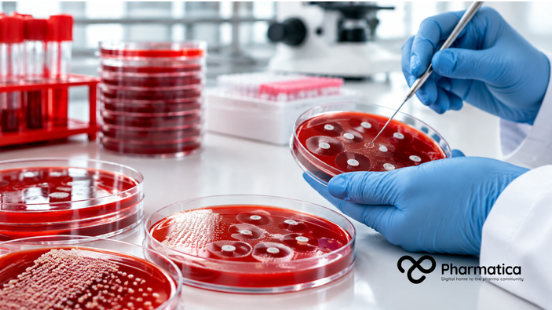
AMR occurs when microorganisms develop the ability to withstand medicines that previously controlled or eliminated them. It affects bacteria, viruses, fungi and parasites, although bacterial resistance accounts for a particularly significant share of the measured global mortality burden.
A major analysis published in The Lancet in 2024 estimated that bacterial AMR was associated with an estimated 4.71 million deaths a year over the last decade, including 1.14 million deaths directly attributable to bacterial resistance.
These figures describe different measures. Associated deaths include cases in which resistant infections contributed to the fatal outcome, while attributable deaths estimate the additional mortality specifically linked to resistance.
The researchers also modelled the potential future burden. Their reference scenario estimates approximately 1.91 million deaths directly attributable to bacterial AMR annually through 2050.
Cumulative deaths directly attributable to resistance between 2025 and 2050 could reach 39.1 million.
The wider number of deaths associated with AMR over that period could reach 169 million.
However, these staggering numbers do not have to be inevitable outcomes.
The same analysis estimates that improvements in infection treatment and access to appropriate antibiotics could avert approximately 92 million deaths between 2025 and 2050.
The difference between these scenarios makes prevention, access and treatment quality central to the policy response.
The financial implications are equally serious. Resistant infections can require more complex treatment, additional diagnostics, longer hospital stays and greater use of expensive or last-line medicines. They also affect workforce participation and productivity.
The FAO’s 2026 World AMR Awareness Week materials highlight the potential for AMR to cost the global economy more than U.S.D. $3.4 trillion annually, with low- and middle-income countries facing a disproportionate burden.
A further assessment prepared through the Quadripartite organisations estimates that global treatment costs and productivity losses could reach U.S.D. $412 billion to $443 billion respectively by 2035 without stronger action.
These estimates show why AMR belongs in economic and development policy as well as health regulation.
For governments, the cost of inaction includes more than healthcare expenditure. Resistant infections can undermine the safety of surgery, cancer treatment, and transplantation.
Such resistant infections can also reduce agricultural output, disrupt food supply chains, and place additional pressure on public finances.
And, the challenge is particularly complex. New antimicrobial medicines are expensive to develop, yet responsible stewardship requires their use to be carefully managed.
The pharmaceutical industry especially must find sustainable ways to support innovation without creating commercial incentives for unnecessary consumption.
How AI Is Opening New Opportunities in Fertility Care for Pharma
"If I had to get great minds in a room, I'd be looking at it from a tech perspective. How can we take all this knowledge, apply it to policies that can be easily distributed?” Clara Toombs, Fertilia AI.
Image
Livestock and Food Production Are Central to the AMR Challenge
The One Health framework gives particular attention to antimicrobial use in agriculture and livestock production.
This is important because the global food system is both a great contributor to resistance and a sector that faces significant consequences when antimicrobial treatments become less effective.
Antimicrobials play a legitimate role in veterinary medicine. They treat bacterial infections, protect animal welfare, and help maintain healthy livestock populations.
The challenge is not to eliminate their use, but to prevent unnecessary exposure and ensure that treatment decisions follow sound veterinary practice.
In some production systems, however, high animal densities, poor biosecurity, inadequate sanitation, and limited veterinary access can increase the risk of infection.
Where producers rely heavily on routine antimicrobial administration instead of disease prevention, vaccination, and improved husbandry, conditions can favour the emergence and spread of resistant microorganisms.
The scale of future antimicrobial use is a particular concern.
A seminal study published in Nature Communications in April 2025 projected that global antibiotic use in livestock could reach approximately 143,481 tonnes by 2040 under a business-as-usual scenario.
This represents a 29.5% increase compared with the estimated 2019 baseline of 110,777 tonnes.
The researchers also modelled alternative scenarios. Depending on changes in livestock biomass and antimicrobial use intensity, projected consumption ranged from a potential 14.2% increase to a 56.8% reduction.
This is a significant finding because it suggests that agricultural growth does not have to translate into proportionately higher antibiotic consumption.
Changes in production practices and disease prevention can influence the trajectory.
The economic consequences for food producers
The FAO’s June 2026 economic assessment, Antimicrobial Use in Livestock: The Economic Cost of Action or Inaction, provides another important perspective.
The assessment compares different scenarios involving the withdrawal of antimicrobial growth promoters and the progression of AMR.
Under its highest-impact AMR scenario, cumulative livestock production losses reach approximately U.S.D $318 billion by 2040, while wider economy-wide welfare losses reach around U.S.D. $1.25 trillion.
By comparison, the highest-impact scenario for phasing out antimicrobial growth promoters could produce cumulative livestock production losses of approximately U.S.D $53 billion over 2025–2040.
These figures require careful interpretation. They are outputs from specific economic modelling scenarios, not forecasts of guaranteed losses or a direct estimate of the cost of all agricultural antimicrobial use.
However, the comparison illustrates an important policy point in that the long-term economic consequences of worsening resistance will exceed the shorter-term adjustment costs associated with changing production practices.
For agricultural businesses, antimicrobial stewardship must therefore become part of a wider productivity strategy. Investment in vaccination, animal welfare, veterinary access, improved housing, and farm biosecurity can reduce infection rates and the need for treatment.
This also creates opportunities for pharmaceutical and animal health companies. Vaccines, rapid diagnostics, preventive treatments, and improved veterinary medicines can support more responsible antimicrobial use while protecting livestock productivity.
The regulatory challenge is to encourage these alternatives without restricting access to essential veterinary treatment.
Image
How Antimicrobial Resistance Moves Between People, Animals, and the Environment
The One Health approach is based on the recognition that resistant microorganisms do not remain within the sector where they first emerge.
Transmission can occur through direct contact between people and animals, contaminated food, water, soil, and other environmental pathways.
Resistant bacteria can also move through international trade and travel, making national efforts dependent on wider surveillance and cooperation.
Agricultural waste is one important area of concern. Manure from treated animals can contain antimicrobial residues and resistant bacteria. If waste is poorly managed, these materials can enter soil and water systems through runoff or other routes.
Wastewater also requires attention.
Healthcare facilities, households, pharmaceutical manufacturing, and agricultural operations can release antimicrobial residues and resistant microorganisms into wastewater systems. Where treatment processes do not adequately remove these contaminants, environmental exposure can continue downstream.
This creates a regulatory challenge far more difficult than medicine approvals and prescribing controls.
Environmental monitoring, wastewater management, manufacturing discharge controls, and responsible disposal practices all have a role in reducing the conditions that favour resistance.
The pharmaceutical industry must therefore consider environmental risk as part of its broader approach to product stewardship.
It is also important to avoid overstating the contribution of any one source. The relative importance of agricultural, healthcare, and industrial pathways varies by location, organism, and antimicrobial.
Livestock production is an important part of the AMR picture, but it is not the sole origin of resistance in human infections.
For regulators, the practical implication is that surveillance systems need to connect information from different sectors. Human clinical data alone cannot provide a complete picture of resistance across the food system and environment.
What the Updated Global AMR Action Plan Means for Industry
The updated GAP-AMR 2026–2036 gives governments a common framework for developing policies and monitoring progress.
It also reinforces several priorities that will influence pharmaceutical, agricultural, and healthcare businesses.
The first is prevention before treatment. Reducing infections through vaccination, hygiene, sanitation, biosecurity, and infection control can reduce demand for antimicrobials.
This principle applies to hospitals, farms, food processing facilities, and communities.
The second priority is responsible and equitable antimicrobial access. Restricting inappropriate use must not create barriers for patients or animals that genuinely need effective treatment.
Therefore, the global response must address both overuse and inadequate access to quality-assured medicines and diagnostics.
The third is stronger surveillance. Countries need reliable information about which pathogens are becoming resistant, where resistance is emerging, and how antimicrobial consumption changes over time.
Lastly, there is innovation. The Global AMR Plan recognises the need to support research and development while ensuring that new medicines, diagnostics, and preventive technologies reach the populations and sectors that need them.
For pharma, these priorities have several practical implications:
Research and development: New antimicrobial programmes need to address priority pathogens and resistance mechanisms, with clear evidence of clinical value.
Manufacturing and environmental controls: Companies should assess how production processes, wastewater, and pharmaceutical residues contribute to environmental exposure.
Commercial strategy: Antibiotic business models must balance access, affordability, investment returns, and responsible use.
Regulatory planning: Companies operating across markets need to monitor national AMR action plans, veterinary medicine requirements, and environmental standards.
Partnerships: Collaboration with public health agencies, diagnostic developers, veterinary organisations, and agricultural stakeholders will become increasingly important.
The updated AMR plan does not automatically create new binding obligations for every manufacturer. Its influence will emerge through national implementation, revised legislation, regulatory guidance, procurement conditions, and public funding priorities.
Companies should therefore monitor how individual markets translate the global framework into enforceable requirements.
Find out how Quality-by-Design improves reliability and compliance in pharma and how you can maximise innovation through quality-based pharma development systems.
Image
The Regulatory Priorities to Combat AMR Over the Next Decade
The adoption of the updated Global AMR Action Plan places greater emphasis on measurable progress and coordination between national authorities.
This is important because previous AMR commitments have often struggled to translate into consistent implementation.
The 2024 UN General Assembly Political Declaration established several commitments, including a target to reduce human deaths associated with bacterial AMR by ten per cent by 2030, using the 2019 baseline.
It also called for a meaningful reduction in antimicrobial use across global agrifood systems.
The updated 2026–2036 plan builds on the success of these commitments. It gives countries a framework for strengthening national action plans, improving surveillance, increasing prevention, and securing sustainable funding.
Several regulatory developments deserve attention.
National action plans and accountability
Governments need to move beyond publishing AMR strategies. They must establish funded programmes, assign responsibilities, and monitor outcomes.
For companies, this means regulatory expectations will increasingly depend on the markets in which they operate.
Pharmaceutical manufacturers, veterinary medicine developers, food producers, and healthcare providers should monitor national implementation rather than assume that global commitments will translate into identical requirements everywhere.
Stronger antimicrobial surveillance
Surveillance needs to connect human, animal, and environmental data.
Better data can help regulators identify emerging resistance patterns, assess antimicrobial consumption, and target interventions.
It can also help pharmaceutical companies understand unmet treatment needs and prioritise research.
Prevention, diagnostics, and access
The AMR plan places considerable emphasis on reducing infections before antimicrobial treatment becomes necessary.
Vaccination, improved infection control, rapid diagnostics, and stronger veterinary services all support this objective.
For the pharmaceutical industry, this broadens the commercial and innovation landscape beyond conventional antibiotic development.
Companies developing diagnostics, vaccines, and alternative antimicrobial technologies could find new opportunities as governments invest in prevention-focused programmes.
However, access remains critical. Stewardship should not become a reason to withhold effective medicines from patients who need them. The objective is appropriate use.
Image
The Pharmaceutical Industry Must Look Beyond New Antibiotics
The development of new antibiotics remains essential, particularly as resistance compromises existing treatment options.
However, the updated Global AMR Action Plan reinforces an important reality that new medicines alone cannot resolve antimicrobial resistance.
The commercial model for antibiotic development is already challenging. Development programmes require significant investment, yet successful products often need restricted or carefully managed use to preserve their effectiveness.
This creates tension between commercial returns and public health priorities.
The industry needs incentives that reward innovation without relying exclusively on sales volume.
Public-private partnerships, research grants, subscription-style purchasing models, and other market incentives can help support the development of priority antimicrobials.
There is also a need to expand the range of technologies used to prevent and treat infections.
Potential areas include:
Rapid diagnostic technologies that distinguish bacterial infections and identify resistance patterns.
Vaccines that prevent infections and reduce antimicrobial demand.
New antimicrobial compounds with different mechanisms of action.
Bacteriophage-based therapies that use viruses targeting specific bacteria.
Alternative approaches that complement or reduce dependence on conventional antibiotics.
These technologies have different levels of clinical and regulatory maturity. None should be treated as a universal replacement for antibiotics.
Nevertheless, their development forms part of a broader response that combines prevention, diagnosis, and treatment.
The strategic opportunity lies in understanding how these technologies fit into evolving regulatory priorities and healthcare procurement models.
Companies that can demonstrate clinical value, responsible use, and meaningful contributions to AMR prevention will be better positioned as national strategies develop.
Image
One Health Requires More Than International Commitments
Preventing resistance requires action across connected health and food systems.
The adoption of the Global AMR Action Plan on AMR 2026–2036 gives the international community a renewed policy framework and the World AMR Awareness Week 2026 brings the same message into sharper focus.
The evidence makes the economic argument difficult to ignore.
Millions of deaths are already associated with bacterial resistance; livestock antibiotic consumption could rise substantially under current trends; and the projected economic consequences extend far beyond healthcare expenditure.
The next decade will require a broader understanding of regulatory responsibility. Antibiotic development, responsible manufacturing, environmental management, access, and stewardship cannot be treated as separate commercial concerns.
The same applies to agriculture. Veterinary treatment must remain available when necessary, but improved disease prevention, vaccination, biosecurity, and responsible prescribing need to reduce avoidable antimicrobial exposure.
The real test of the updated plan will be implementation.
Governments must translate international commitments into funded programmes; regulators must establish practical expectations, and businesses must adapt their strategies to support measurable progress.
AMR is not simply a threat to the effectiveness of today’s medicines. It is a threat to the healthcare, agricultural, and economic systems that depend on them.
Understanding the connections between human health, animal health, food production, and environmental protection is essential to making better decisions about the future of medicines.
Pharmatica: Insight. Connection. Impact.
Frequently Asked Questions
What is the Global Action Plan on Antimicrobial Resistance 2026–2036?
The Global Action Plan on Antimicrobial Resistance 2026–2036 is an updated international framework adopted by Member States at the 79th World Health Assembly in May 2026. It guides coordinated action across human, animal, plant, and environmental health through a One Health approach.
How much does antimicrobial resistance cost the global economy?
AMR could cost the global economy more than U.S.D. $3.4 trillion annually, according to figures highlighted by the FAO for World AMR Awareness Week 2026. Projected costs include healthcare expenditure, productivity losses, and reduced agricultural output.
How does livestock farming contribute to antimicrobial resistance?
Antimicrobial use in livestock can contribute to resistance when medicines are used excessively or inappropriately. Resistant microorganisms can spread through animal contact, food production, and environmental pathways. Better veterinary oversight, vaccination, and farm biosecurity can help reduce unnecessary use.
What is the One Health approach to antimicrobial resistance?
One Health recognises that human, animal, plant, and environmental health are interconnected. It coordinates surveillance, infection prevention, responsible antimicrobial use, and environmental protection across these sectors.
What does the updated AMR Global Action Plan mean for pharmaceutical companies?
The plan reinforces the need for antimicrobial research and development, responsible manufacturing, environmental controls, equitable access, improved diagnostics, and stewardship. Its implementation will influence national regulatory policies, investment priorities, and commercial strategies through 2036.
Nicole (BSc Molecular Medicine, Honours Medical Biochemistry) has many years of pharmaceutical experience, having worked for top CROs and biopharma companies for more than a decade.
Did you enjoy the content?
3
Why not support
Nicole Dale
by giving this content a like
Pharmacovigilance Trends Shaping Drug Safety Reporting in 2026
We explore the pharmacovigilance trends shaping drug safety in 2026, from AI and real-world data to ICH E2D(R1), to reporting quality for MedSafety Week 2026.
SynthID Bio embeds hidden watermarks in AI-designed proteins. See how Google DeepMind’s tool could strengthen biosecurity and what pharma R&D should do next.
The UK’s AI Biosecurity Lab Puts Pharma at the Centre of Security
The UK AI Biosecurity Lab brings government, AI developers, and life sciences together to detect biological threats and accelerate medical countermeasures.
White House Tightens Nucleic Acid Screening Policy
The U.S. nucleic acid synthesis screening policy sets new supplier, customer and equipment controls for pharma and biotech research governance and procurement.











Comments (0)