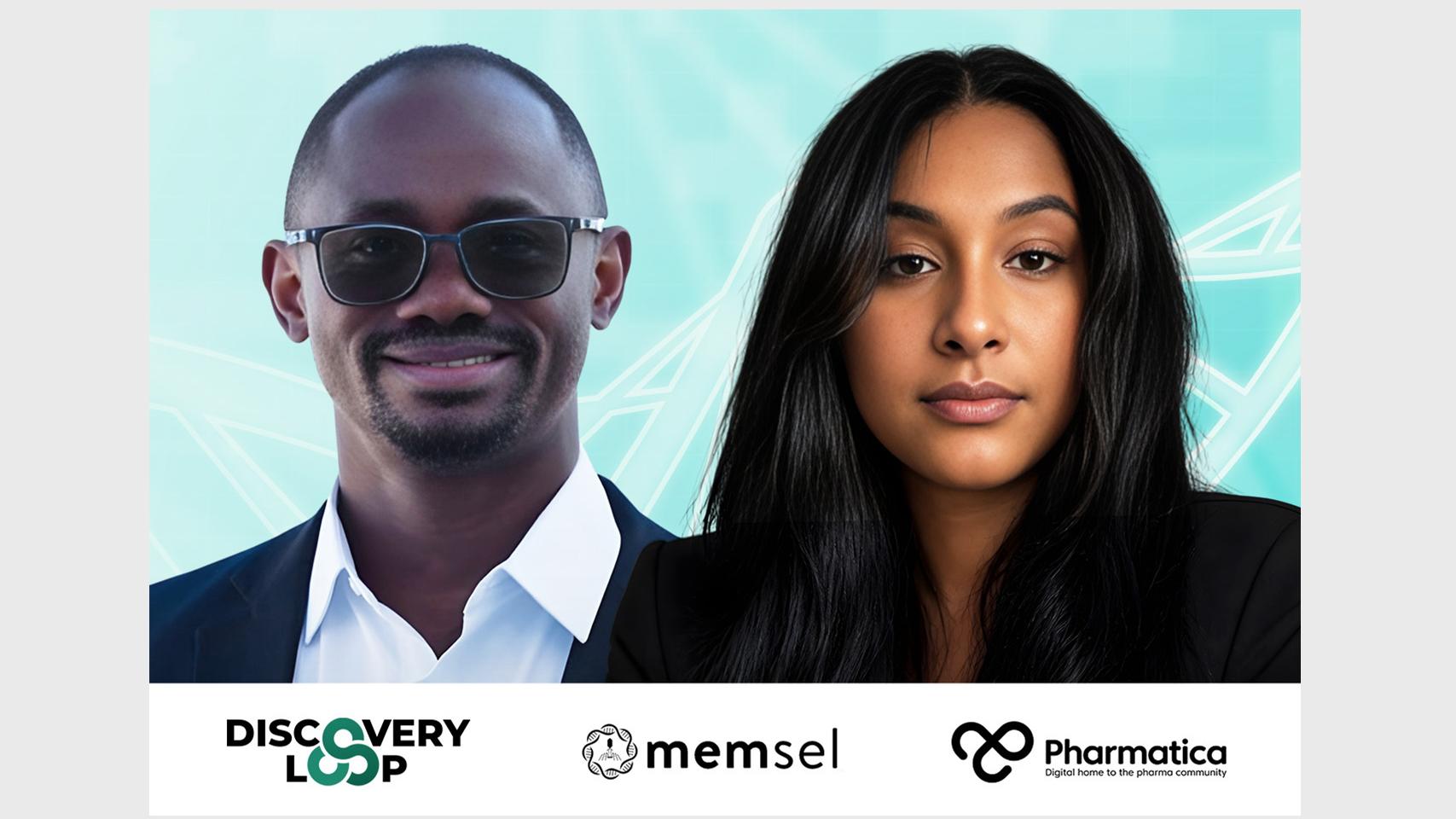
"If I had to get great minds in a room, I'd be looking at it from a tech perspective. How can we take all this knowledge, apply it to policies that can be easily distributed?” Clara Toombs, Fertilia AI.
Fertility care is beginning to serve as an example of where the next wave of healthcare innovation will be developed. The opportunities for pharmaceutical companies go well beyond the development of new treatments, since AI, digital health platforms and workplace technologies are providing new methods of supporting patients, clinicians and employers throughout what is still a fragmented fertility journey.
The discussion explored why fertility innovation cannot be limited to treatment alone. The next opportunity is actually in linking together the data, the people, and the support associated with treatment.
Fertility Care: A Digital Health Opportunity?
The pharmaceutical industry has always looked at fertility in terms of drugs, diagnostic tools and clinical results, but the podcast pointed out a wider ecosystem in which technology could help patients deal with their treatment and enable clinicians to interpret the information.
Fertilia AI by Toombs is intended to assist couples in understanding their fertility data by incorporating their test results onto a platform on which AI can support patients before they have their clinical consultation.
Toombs explained that the platform is being built from the ground up for couples, not just for women.
When asked about how the initiative plans to make an impact, she says, "If I had to get great minds in a room, I'd be looking at it from a tech perspective. How can we take all this knowledge, apply it into policies that can be easily distributed?”
Especially when “looking at the macro situation that we're in at the moment with declining birth rates, not just in the UK, but globally across many, many countries,” she added.
It is also important from a commercial point of view. Fertility is not something that relates only to one user. Treatment may involve two partners, a number of clinicians, various diagnostics, medications and a series of decision points.
The aim is to use "expert humans in the loop" in order to get answers more quickly and thus enable patients and clinicians to work with a clearer picture of fertility health.
Find out how Quality-by-Design improves reliability and compliance in pharma and how you can maximise innovation through quality-based pharma development systems.
Fertility in the Workplace
While technology is one step in the right direction, it's not enough to make a change in pharma. Biddle’s research in fertility treatment and line management showed that it is possible for workplace policies to exist even if employees may not get meaningful support. While managers may have access to these policies, they might lack the confidence or knowledge needed to put them into practice.
"Policy is not enough," Biddle tells Dua. This means that for pharmaceutical and healthcare companies looking into fertility innovations, there is a significant factor to take into account. For instance, the patient's journey does not end when a prescription has been written or a procedure finished.
Dr Sacha stated that AI could be of help in linking together the requirements of the workplace, the clinical environment and the individual. For instance, a line manager could make use of digital tools to find out what a specific fertility treatment entails, and clinicians could use technology to swiftly become aware of the workplace implications.
She said that, for her, AI was about streamlining the process and went on to say that the model still required a "human in the loop." There is a market for technologies in pharmaceutical interventions rather than replacing them.
The commercial potential for pharma doesn’t just include a Fertility app such as Fertilia.ai but it also lies in creating an ecosystem. A space where pharma leaders can connect treatment, data, clinicians, patients and employers.
Alluding to what an executive can consider when investing in fertility platforms, Toombs tells the host that technology and policy go hand in hand so they should weigh the two together as a unit. “The enabler is the platform”, while policy offers the framework, the guardrails and the process.
“There are lots of small businesses out there that may not have the budget for big platforms. We want to have something that's accessible to all businesses alongside major corporations,” she says.
While Dr Sacha advises, “Look at investing in a company that can combine both technology and policy, and they can speak with you and say, what is it that you think we need? It's not a one-tick spot ball. It's around finding the right people that can deliver the right package.”
This opens up several possible avenues for pharmaceutical innovation, such as collaborations with fertility platforms, the integration of diagnostic and treatment information, tools to support clinicians, patient education, and digital services which enhance adherence and engagement.
It also indicates that pharmaceutical companies might consider the way in which they view fertility technology. Instead of seeing digital health as a separate area, they could use it to enhance the value of their existing therapies and to create more connected patient journeys.
Fertilia AI is currently making progress on its MVP and is pursuing strategic partnerships, such as expanding its support network to include fertility testing, coaches and other services.
What pharma executives can no longer ignore is the fact that the next wave of fertility innovation may not be determined by one particular drug or device, but rather by the extent to which technology links up the whole care process.
With fertility becoming more and more linked to digital health, employee wellbeing and personalised care, the firms that are able to establish these connections might end up having to compete in a market which goes well beyond that of traditional reproductive medicine.
A B2B journalist, Podcast Host and Producer with a PPA-accredited MA in Magazine Journalism from Cardiff University. Specialising in content strategy and execution for segments on healthcare technology, AI, emerging innovation, and life sciences at Pharmatica.io. Bringing lively, up-to-date conversations to life on camera. Hosted and produced enterprise podcasts for global technology enterprises, covered CES 2024, Infosec 2025 and 2026 and Big Data LDN 2025 and 206 live by hosting vox pop interviews on camera. Also, written for publications including Interesting Engineering and The Hindu.
Did you enjoy the content?
1
Why not support
Shubhangi Dua
by giving this content a like
Anthropic's new drug discovery programme marks a strategic shift from sole AI software provider to active R&D participant. Here's what it means for pharmaceutical innovation.
Anthropic’s Gates Foundation Partnership and Healthcare AI
See how Anthropic's Gates Foundation partnership and Long-Term Benefit Trust could lead the way in shaping responsible AI governance across healthcare innovation.
AI in Healthcare: OpenAI and Epic Integration Connects EHRs
OpenAI and Epic integration brings AI healthcare into EHR workflows, connecting patient records with ChatGPT for Healthcare to advance research and patient care.
<p>Founded in 2004, Ametris (formerly ActiGraph) is a global digital health solutions provider transforming real-world patient data into validated clinical evidence. Our end-to-end platform combines advanced wearables, regulatory-aligned analytics, and expert scientific support across every phase of a clinical trial. We serve leading pharmaceutical, biotech, and public health research organizations worldwide, backed by two decades of experience and a collaborative, science-first approach.</p><p>In 2026, Ametris joined Signant Health, uniting wearable-derived digital outcome measures with industry-leading eCOA solutions to give sponsors a single partner for integrated evidence generation, combining continuous sensor data with patient-reported outcomes.</p>
Image
Clinical Development
<p><a href="https://www.medidata.com/en/">Medidata </a>has been powering smarter treatments and healthier people by supporting clinical trials through groundbreaking technological innovations for over 25 years. Medidata is a leader in AI-powered solutions across the entire trial lifecycle to accelerate clinical breakthroughs, reduce patient and site burden, and bring new therapies to market faster. Supported by one of the largest clinical datasets in the industry of more than 38,000 trials and 12 million patients, Medidata's <a href="https://www.medidata.com/en/experiences/study-experience/">Study</a>, <a href="https://www.medidata.com/en/experiences/patient-experience/">Patient</a>, and <a href="https://www.medidata.com/en/experiences/data-experience/">Data</a> Experiences are trusted by more than 1 million registered users across approximately 2,300 customers. A Dassault Systèmes brand (Euronext Paris: FR0014003TT8, DSY.PA), Medidata is headquartered in New York City and is recognized as a leader by Everest Group and IDC. Discover more at <a href="https://www.medidata.com/">www.medidata.com</a><strong>. </strong>Listen to our latest podcast, <a href="https://www.medidata.com/en/from-dreamers-to-disruptors-podcast/"><em>from Dreamers to Disruptors</em></a>,<strong> </strong>and follow us at @medidata-solutions on LinkedIn.</p>















Comments (0)