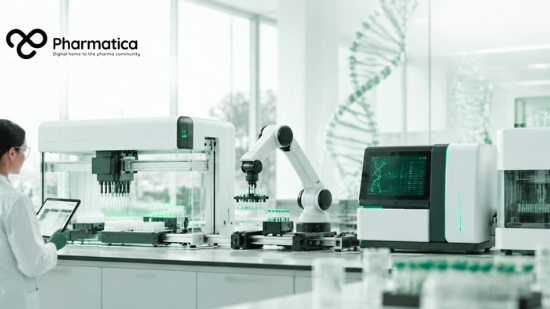
AutoDNA demonstrates how autonomous laboratories can coordinate complex nucleic acid experiments, offering new possibilities for AI-driven pharmaceutical research.
Autonomous laboratory technology is more than automation with new techniques for AI-directed experimental research.
AutoDNA is one such platform that is able to coordinate more than 20 instrument types across over 11,000 experimental steps, offering a glimpse of how pharmaceutical research could change when AI can plan, execute, and evaluate physical experiments.
Image
What Makes AutoDNA Different From Conventional Lab Automation?
Laboratory automation is not new. Robotic liquid handlers, automated sequencers, and analytical instruments already perform many repetitive tasks.
However, these systems generally depend on predefined protocols, equipment-specific software, and human researchers to coordinate the wider experiment.
AutoDNA takes a completely different and real automation approach.
Developed by researchers at Shanghai Jiao Tong University, the technology combines artificial intelligence (AI), specialised software agents, and laboratory hardware within one coordinated system.
Rather than simply automating individual actions, AutoDNA can interpret an experimental request, develop a procedure, allocate instruments, and manage execution.
It can also use experimental feedback to inform subsequent decisions.
The researchers describe this as an AI-native laboratory. Its architecture was designed around the interaction between AI models, experimental processes, and instruments, rather than adding an AI interface to existing automation.
This builds on earlier work in autonomous experimentation, including the mobile robotic chemist developed by researchers in 2020.
That mobile system demonstrated how mobile robotics could perform chemical experiments and optimise reactions.
AutoDNA takes the concept further with more complex biomolecular workflows involving multiple instruments and different nucleic acid operations.
This has been a milestone in shift from automating laboratory equipment to automated and coordinated experimental processes.
“This is one of the riskiest industries there is because you're dealing with human lives, you're dealing with experimental protocols, and you're dealing with regulatory bodies where you might not get another shot at that clinical trial."
Image
How Does AutoDNA Coordinate an Autonomous Laboratory?
The system uses a multi-agent architecture divided into two connected functions: Chemical planning, and hardware execution.
Each function contains specialised AI agents with defined responsibilities.
Planning the experiment
The planning module translates a researcher’s request into an experimental procedure.
Its agents support several activities:
Experiment planning: Breaks down the requested objective into individual experimental steps.
Literature research: Retrieves relevant scientific information to inform protocol design.
Reagent management: Checks whether the required materials are available.
Hypothesis development: Proposes adjustments when experimental results do not meet the intended objectives.
This arrangement allows the system to consider both scientific requirements and practical laboratory conditions before starting an experiment.
Translating plans into physical operations
The hardware execution module converts the proposed procedure into instructions that laboratory equipment can perform.
A programme-development agent generates the required code, while a hardware execution and validation agent manages instrument operation, scheduling, and feedback.
This is a critical part of the design. Laboratory instruments come from different manufacturers and have different interfaces. AutoDNA creates a common way for its agents to interact with their functions.
The system can therefore coordinate equipment across multiple workstations rather than treating each instrument as an isolated automation task.
Human involvement was largely limited to maintenance activities, including replenishing reagents and laboratory materials. The researchers did not need to direct each experimental step manually.
Image
What Did the AutoDNA Experiments Demonstrate?
AutoDNA so far has four representative applications. Together, they test whether the platform can manage different types of biomolecular work rather than perform one narrowly defined task.
Across these applications, the results suggest that autonomous systems can manage a broader range of biomolecular operations than conventional single-purpose automation.
Enzymatic DNA synthesis
The researchers used AutoDNA to optimise enzymatic DNA synthesis. The system’s reported yields matched those achieved using an expert-optimised protocol.
This is important required validation that’s needed because synthesis performance depends on experimental conditions and the coordination of multiple laboratory operations.
Automating the optimisation process could reduce the amount of manual work involved in testing different conditions.
Faster execution of concurrent experiments
AutoDNA also demonstrated its ability to coordinate multiple experimental requests.
The researchers reported that concurrent protocol execution was 3.2 times faster than the comparison approach. This result highlights a potential benefit beyond reducing manual handling: Better scheduling and utilisation of laboratory equipment.
For pharmaceutical R&D teams, instrument availability can influence how quickly experimental programmes progress. A system that coordinates compatible tasks could reduce idle time and improve throughput.
DNA data storage
Another demonstration involved storing digital information in DNA and recovering it through sequencing.
The platform coordinated the biological and computational stages of the process. It completed the cycle and recovered the original digital content exactly.
This is a particularly useful demonstration of end-to-end coordination. The system had to manage more than DNA synthesis or sequencing alone. It connected several stages into one continuous workflow.
Detection of a specific disease mutation
The final application involved identifying and validating a clinically detected KRAS G13D mutation.
This demonstrates the platform’s ability to support a molecular testing workflow.
It also provides an example of how autonomous laboratory systems could contribute to research involving disease-associated genetic changes.
AI in Pharma: Why the Future of Healthcare Starts With Patients, Not Tech
Kate O’Reilly, President & Chair of the Healthcare Businesswomen’s Association (HBA) Dublin-Ireland Chapter & Healthcare Transformation Partner at Roche, discusses AI in pharma, patient engagement, and the future of healthcare innovation.
Image
What Could Autonomous Laboratories Mean for Drug Discovery?
Drug discovery requires repeated cycles of hypothesis generation, experimental design, testing, and interpretation. These activities often involve several scientific disciplines, instruments, and specialist teams.
Autonomous laboratories like AutoDNA could help connect these activities more efficiently.
Potential applications include:
Molecular biology workflows: Coordinating DNA synthesis, amplification, sequencing, and related experiments.
Experimental optimisation: Testing conditions and adjusting protocols based on measured results.
Parallel research: Managing several compatible experimental requests across shared instruments.
Research reproducibility: Creating more consistent execution pathways and structured experimental records.
Discovery support: Generating experimental data that can inform target investigation and early-stage research decisions.
This new area of innovation connects with the broader development of AI-driven scientific discovery. Pharmatica has previously examined the importance of experimental feedback in AI drug discovery. Predictions only become useful when researchers can test them against meaningful biological evidence.
AutoDNA brings this relationship closer to the physical laboratory. AI does not simply recommend what researchers should investigate but can also coordinate the equipment needed to carry out the experiment.
The wider opportunity is a more integrated design, make, test, and analyse process. That could help research teams investigate more experimental conditions and use laboratory resources more effectively.
Image
What Must Be Proven Before Wider Pharmaceutical Adoption of Autonomous Laboratories?
AutoDNA so far shows the clearest technology with widescale validation, but an autonomous laboratory is not automatically a reliable pharmaceutical research environment.
Several questions remain important, including whether we establish that the same results will transfer to other laboratories, instrument configurations, biological systems, or experimental objectives.
Biomedical research institutions will need evidence of reliability. Instrument errors, reagent variability, sample handling, and unexpected experimental results can affect the quality of research. Automated execution must not make these problems harder to identify.
Finally, human oversight remains essential. Researchers must be able to review experimental decisions, investigate unexpected results, and understand how the system reached its conclusions.
Automation can reduce manual intervention, but it cannot remove scientific accountability.
Data integrity is another consideration. Pharmaceutical teams will need clear records of protocols, instrument operations, sample identity, model decisions, and changes made during an experiment.
These requirements become particularly important when automated workflows generate evidence used in later development decisions.
Pharmatica has explored related concerns in our Insights into the AI algorithm black box. The more responsibility AI systems take on, the more important it becomes to understand and document their decisions.
The commercial case also remains open. Organisations will need to assess equipment integration, maintenance, operating costs, staff training, and the value of increased throughput.
At Pharmatica, we see autonomous laboratories as an important development in the infrastructure supporting pharmaceutical discovery. AutoDNA demonstrates how AI can move beyond computational analysis and coordinate physical experiments across complex laboratory environments. The next challenge is to establish reliability, reproducibility, and measurable value across broader research settings.
An autonomous laboratory uses AI, software, and automated equipment to plan and execute experiments with limited human intervention. Some systems can also assess experimental results and adjust subsequent procedures.
What is AutoDNA?
AutoDNA is an AI-native biomolecular engineering laboratory developed by researchers at Shanghai Jiao Tong University. It coordinates multiple laboratory instruments to perform nucleic acid experiments.
How many instruments and experimental steps did AutoDNA coordinate?
The research and development team of AutoDNA report coordination of more than 20 types of instruments across over 11,000 experimental steps.
Can autonomous laboratories accelerate drug discovery?
They could improve experimental throughput, optimise laboratory workflows, and help researchers generate biological evidence more efficiently. However, AutoDNA has not demonstrated the discovery of a new drug candidate.
Can AI replace laboratory scientists?
Not at present. Autonomous systems can take responsibility for many experimental operations, but scientific judgement, oversight, interpretation, and accountability remain important human responsibilities.
Nicole (BSc Molecular Medicine, Honours Medical Biochemistry) has many years of pharmaceutical experience, having worked for top CROs and biopharma companies for more than a decade.
Did you enjoy the content?
0
Why not support
Nicole Dale
by giving this content a like
Anthropic's new drug discovery programme marks a strategic shift from sole AI software provider to active R&D participant. Here's what it means for pharmaceutical innovation.
Anthropic’s Gates Foundation Partnership and Healthcare AI
See how Anthropic's Gates Foundation partnership and Long-Term Benefit Trust could lead the way in shaping responsible AI governance across healthcare innovation.
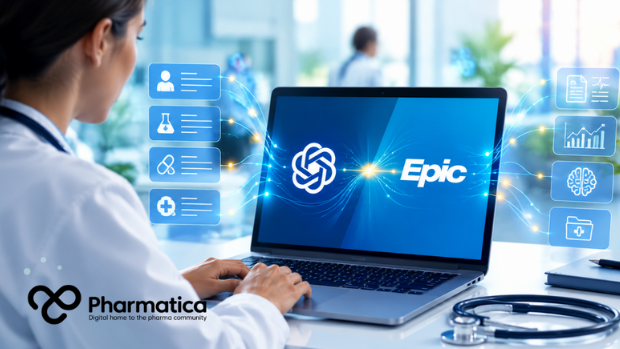
AI in Healthcare: OpenAI and Epic Integration Connects EHRs
OpenAI and Epic integration brings AI healthcare into EHR workflows, connecting patient records with ChatGPT for Healthcare to advance research and patient care.
<p>Founded in 2004, Ametris (formerly ActiGraph) is a global digital health solutions provider transforming real-world patient data into validated clinical evidence. Our end-to-end platform combines advanced wearables, regulatory-aligned analytics, and expert scientific support across every phase of a clinical trial. We serve leading pharmaceutical, biotech, and public health research organizations worldwide, backed by two decades of experience and a collaborative, science-first approach.</p><p>In 2026, Ametris joined Signant Health, uniting wearable-derived digital outcome measures with industry-leading eCOA solutions to give sponsors a single partner for integrated evidence generation, combining continuous sensor data with patient-reported outcomes.</p>
Image
Clinical Development
<p><a href="https://www.medidata.com/en/">Medidata </a>has been powering smarter treatments and healthier people by supporting clinical trials through groundbreaking technological innovations for over 25 years. Medidata is a leader in AI-powered solutions across the entire trial lifecycle to accelerate clinical breakthroughs, reduce patient and site burden, and bring new therapies to market faster. Supported by one of the largest clinical datasets in the industry of more than 38,000 trials and 12 million patients, Medidata's <a href="https://www.medidata.com/en/experiences/study-experience/">Study</a>, <a href="https://www.medidata.com/en/experiences/patient-experience/">Patient</a>, and <a href="https://www.medidata.com/en/experiences/data-experience/">Data</a> Experiences are trusted by more than 1 million registered users across approximately 2,300 customers. A Dassault Systèmes brand (Euronext Paris: FR0014003TT8, DSY.PA), Medidata is headquartered in New York City and is recognized as a leader by Everest Group and IDC. Discover more at <a href="https://www.medidata.com/">www.medidata.com</a><strong>. </strong>Listen to our latest podcast, <a href="https://www.medidata.com/en/from-dreamers-to-disruptors-podcast/"><em>from Dreamers to Disruptors</em></a>,<strong> </strong>and follow us at @medidata-solutions on LinkedIn.</p>
Image
Clinical Development
<p>Caidya is a global, therapeutically focused drug development partner helping biotech and biopharma sponsors make smarter decisions, move faster, and advance together. Our connected teams combine scientific insight, operational expertise, and local knowledge across critical markets to generate actionable evidence and keep complex development programs moving forward.</p>
Image
HealthTech & AI
<p>We are rebuilding biotech for the AI era. When a breakthrough is delayed, the world waits.</p><p>Getting a molecule from discovery to patients, or a crop from lab to field, involves thousands of slow, manual, disconnected steps. AI has the potential to change this, compressing decades of R&D work into years. But that only happens when clean, structured scientific data and AI are built into how science gets done. </p><p>Benchling is the AI platform for biotech R&D. Scientists use Benchling to design experiments, capture structured data, and run AI agents and models directly in their workflows. Over 200,000 scientists around the world trust Benchling to power their most important work, from academic labs to Sanofi, Moderna, and more than half of the world's top 50 biopharma.</p>



















Comments (0)