Bacteriophage therapy is advancing against drug-resistant infections. Explore engineered phages, CRISPR therapeutics, clinical progress, and remaining challenges.
Antimicrobial resistance (AMR) is narrowing the effectiveness of conventional antibiotics. In response, bacteriophage therapy is attracting renewed research interest as a targeted approach to multidrug-resistant (MDR) bacterial infections.
New clinical applications, engineered phages, and CRISPR-based delivery systems are moving this field towards more precise antibacterial treatments, although important clinical and manufacturing barriers remain.
Image
Why Is Antimicrobial Resistance Driving Interest in Phage Therapies?
Antimicrobial resistance threatens the effectiveness of treatments used against many types of bacterial infections.
Pathogens such as carbapenem-resistant Gram-negative bacteria, methicillin-resistant Staphylococcus aureus (MRSA), and multidrug-resistant Pseudomonas aeruginosa can cause infections that respond poorly to available antibiotics.
The development of new antibiotic classes has also struggled to keep pace with bacterial resistance. Pharmaceutical researchers therefore face a growing need to investigate alternative mechanisms of bacterial control.
One approach gaining attention is bacteriophage therapy, which uses naturally occurring or engineered viruses called bacteriophages to infect and kill bacteria.
Unlike conventional broad-spectrum antibiotics, many bacteriophages target specific bacterial species or strains.
This selectivity could help eliminate pathogenic bacteria while limiting disruption to beneficial microorganisms in the human microbiome.
A June 2026 mini-review published in Frontiers in Microbiology examines developments in bacteriophage therapy between 2020 and 2026.
The research reviews clinical applications, genetic engineering techniques, combination treatments, and emerging delivery platforms.
Its central finding is that phage-based treatments have progressed with clinical experience expanding, and synthetic biology is creating new ways to direct antibacterial activity.
However, promising clinical observations should not be confused with established therapeutic efficacy.
Large randomised controlled trials remain limited, and no CRISPR-based phage therapeutic has received marketing authorisation from any major regulatory agency as of 2026.
How Does Bacteriophage Therapy Target Resistant Bacteria?
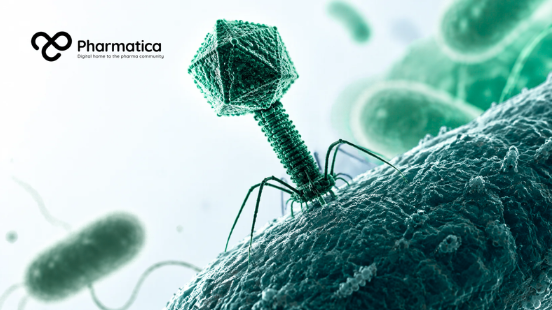
Bacteriophages are viruses that infect bacteria.
They attach to specific receptors on a bacterial surface, introduce their genetic material, and use the bacterial cell’s machinery to replicate.
In naturally lytic phages, this process eventually causes bacterial cell destruction. Viral proteins, including endolysins and holins, contribute to the breakdown of the bacterial cell envelope and release newly formed phage particles.
These particles can then infect other susceptible bacteria.
The process offers several potential advantages for antibacterial drug discovery:
Target specificity: Selected phages can attack particular bacterial strains while sparing many other microorganisms.
Local amplification: Replicating phages can increase in number where susceptible bacteria are present.
Biofilm targeting: Certain phages produce enzymes called depolymerases that break down components of bacterial biofilm matrices.
Combination potential: Phages can complement antibiotics through different mechanisms of bacterial killing.
Biofilms are particularly relevant to pharmaceutical research. These structured bacterial communities can form on medical devices, chronic wounds, and other surfaces. Their protective matrix can restrict antibiotic penetration and contribute to persistent infections.
Phages carrying suitable depolymerases could help weaken this barrier, although the effect depends on the specific enzyme and the composition of the target biofilm.
This makes phage selection and characterisation important parts of therapeutic development.
How AI Is Opening New Opportunities in Fertility Care for Pharma
"If I had to get great minds in a room, I'd be looking at it from a tech perspective. How can we take all this knowledge, apply it to policies that can be easily distributed?” Clara Toombs, Fertilia AI.
Image
Clinical Progress Is Expanding Beyond Experimental Applications
The review identifies increasing clinical experience between 2020 and 2026, particularly through specialised phage therapy centres and compassionate-use programmes.
One prominent example is the Intravenous Phage Therapy (IPATH) programme at the University of California San Diego. Its published series of 10 consecutive compassionate-use cases reported clinical success in seven patients, representing a 70% response rate. The series also reported no major adverse events.
An expanded-access cohort involving 12 customised phage treatments reported bacterial eradication in 42% of cases and a favourable overall clinical response in 66%.
These findings provide useful evidence about the feasibility of personalised phage treatment. They also demonstrate why phage selection and antibiotic susceptibility testing matter.
Phage therapy has also attracted interest in chronic wounds, diabetic foot ulcers, and other infections associated with persistent biofilms.
Most reported clinical applications have combined phages with conventional antibiotics, rather than relying on phage monotherapy.
This reflects the potential for complementary antibacterial activity and the possibility of restoring susceptibility to existing treatments.
Nevertheless, compassionate-use outcomes cannot establish comparative efficacy. These programmes involve small patient populations, complex infections, individualised treatment decisions, and varying administration protocols.
Larger controlled studies must determine which patients benefit, which phages work best, and how treatment should be standardised.
Image
How Are Engineered Phages and CRISPR Changing Antibacterial Drug Discovery?
One of the most significant developments is the application of genetic engineering to bacteriophage design.
Researchers can now modify phage genomes to improve bacterial killing, alter host range, and deliver specific antimicrobial payloads.
Techniques include recombineering, CRISPR-assisted genome editing, chemically accelerated evolution, and synthetic genome assembly.
These approaches offer greater control over how phages interact with bacterial targets.
CRISPR-based phage therapeutics
CRISPR-based systems are particularly interesting because they can direct antibacterial activity towards specific genetic sequences.
Engineered phages can act as delivery vehicles for CRISPR-Cas systems. Once inside a target bacterium, these systems can disrupt selected genes associated with bacterial survival, virulence, or antibiotic resistance.
There are two investigational platforms that have progressed into human clinical research:
LBP-EC01 (Locus Biosciences): A CRISPR-Cas3-enhanced phage cocktail targeting E. coli. The programme completed Phase I/II evaluation for uncomplicated urinary tract infections, with favourable safety and pharmacological findings reported.
SNIPR001 (SNIPR Biome): A CRISPR-based antibacterial platform that completed a Phase I randomised, double-blind, first-in-human dose-escalation study.
These programmes illustrate how bacteriophage engineering has progressed steadily to potential clinical application.
However, neither platform should be interpreted as an approved treatment. As of 2026, no CRISPR-based phage therapeutic has received marketing authorisation from the U.S. Food and Drug Administration (FDA), European Medicines Agency (EMA), or equivalent regulatory authorities.
Non-replicating phage delivery platforms
Another development involves synthetic phage particles that deliver antimicrobial substances without replicating inside bacteria.
Researchers have explored using assembled phage structures as carriers for existing antibiotics.
One such example involves T7 phage structural particles loaded with penicillin, which have been found to reduce populations of penicillin-resistant E. coli in preclinical experiments.
This approach could separate the targeting properties of phages from the biological risks associated with viral replication.
It also introduces a different drug discovery proposition.
Rather than relying exclusively on a virus to destroy bacteria, researchers can use phage-derived structures as delivery vehicles for selected therapeutic payloads.
Naturally lytic phages and synthetic delivery systems therefore have different development requirements:
Development characteristic
Natural lytic phages
Synthetic phage platforms
Main function
Infect and destroy bacteria
Deliver antimicrobial payloads
Replication
Can replicate inside bacteria
Designed to be non-replicating
Targeting
Often highly strain-specific
Can be engineered
Therapeutic payload
Phage-mediated bacterial killing
CRISPR systems, antibiotics, or other agents
Manufacturing
Requires bacterial host propagation
Some approaches allow cell-free assembly
This is particularly important for assessing product design, safety, manufacturing complexity, and regulatory classification.
How Could Combining Phages With Antibiotics Improve Treatment Outcomes?
Phage-antibiotic combination therapy is another important area of research.
Rather than replacing antibiotics, phages could help restore or improve their activity against resistant bacteria. Different mechanisms may contribute to this effect.
For example, certain phages can disrupt biofilm structures, allowing antibiotics to reach bacterial populations that would otherwise remain protected.
Phage infection may also change bacterial metabolic activity or create conditions that increase susceptibility to particular antibiotics.
Researchers have investigated several combination strategies:
Using phages and antibiotics together to attack bacterial populations through different mechanisms.
Administering treatments sequentially to influence bacterial resistance development.
Combining multiple phages that recognise different bacterial surface receptors.
Engineering phages to deliver enzymes or other substances that increase antibiotic susceptibility.
This approach has implications for drug discovery because it changes how researchers evaluate antibacterial candidates. The objective may be to identify a combination that restores the clinical usefulness of an existing antibiotic rather than developing an entirely new antibiotic molecule.
However, phage-antibiotic interactions are pathogen- and treatment-specific.
A combination that produces synergy in one experimental model may not produce the same result in another infection.
Researchers need to establish appropriate sequencing, concentrations, and susceptibility profiles before translating these findings into clinical protocols.
Find out how Quality-by-Design improves reliability and compliance in pharma and how you can maximise innovation through quality-based pharma development systems.
Image
What Is Preventing Wider Clinical Adoption of Bacteriophage Therapies?
Despite progress in clinical applications and genetic engineering, bacteriophage therapy faces several scientific and operational challenges.
Bacterial resistance to phages
Bacteria can develop resistance to phages through changes to their surface receptors, which prevent viral attachment.
Other defence mechanisms, including restriction-modification systems and bacterial CRISPR-Cas systems, can interfere with phage infection.
Researchers are investigating phage cocktails, genetic engineering, and combination treatments to address this problem.
Personalised treatment may also require repeated susceptibility testing. If bacterial populations change during treatment, the original phage selection may no longer provide adequate activity.
Immune responses and biosafety
The human immune system can recognise phages as foreign particles. Neutralising antibodies may reduce their effectiveness, particularly when patients receive repeated doses.
Engineered phages introduce further safety considerations. These include unintended genetic transfer between bacteria, off-target CRISPR activity, and possible disruption of microbial communities.
Non-replicating delivery systems could reduce some of these risks, although they introduce different challenges around dosing and delivery efficiency.
Manufacturing and quality control
Manufacturing therapeutic phages presents challenges that differ from conventional antibiotic production.
Companies must manage bacterial host systems, phage propagation, purification, potency testing, and contamination controls. Products must also demonstrate consistent phage titres and acceptable levels of endotoxins and other bacterial impurities.
Good Manufacturing Practice (GMP) production will be essential for clinical translation.
The industry also needs manufacturing models that support both personalised treatments and standardised, ready-to-use products.
Personalised phage libraries could be difficult to scale economically if every treatment requires separate selection, preparation, and quality testing.
Regulatory uncertainty
Regulatory frameworks must accommodate the biological characteristics of phages. Natural phages can replicate, interact with bacterial populations, and potentially evolve during treatment.
Personalised treatment creates further questions about product definition, batch consistency, potency specifications, clinical endpoints, and treatment modifications.
Regulators will need to assess these products through appropriate biological product and gene-delivery frameworks, depending on their design and mechanism.
International alignment will also matter. Different national requirements could increase development costs and delay access to treatments for patients with resistant infections.
Image
What Does Phage Therapy Mean for Pharmaceutical R&D to Combat AMR?
Over the last few years, there has been a broader change in antibacterial drug discovery. Researchers are investigating biological agents, engineered delivery vehicles, and programmable genetic systems alongside conventional small-molecule antibiotics.
Three areas deserve particular attention from pharmaceutical R&D leaders.
First, precision medicine is becoming central to antibacterial treatment design.
Rapid diagnostics, bacterial genome sequencing, and phage susceptibility testing could help researchers match therapeutic candidates to individual infections. This creates opportunities for integrated diagnostic and therapeutic development.
Secondally, synthetic biology is expanding the range of possible antibacterial products.
CRISPR-equipped phages and non-replicating delivery platforms introduce new mechanisms for targeting bacterial resistance and survival.
These approaches could also support the development of products that deliver existing antimicrobial agents more selectively.
Last, combination development may offer a practical route towards clinical application. Phages could complement existing antibiotics, potentially extending the usefulness of established treatments against selected resistant pathogens.
These opportunities require investment in more than genetic engineering.
Pharmaceutical companies will need microbiology expertise, validated susceptibility assays, scalable manufacturing processes, and clinical development strategies suited to personalised biological products.
The commercial model also deserves attention. A treatment designed around an individual bacterial isolate may offer clinical value but create different pricing, reimbursement, and manufacturing considerations from a conventional mass-produced antibiotic.
The industry must also establish how to collect meaningful clinical evidence when treatment selection varies between patients.
AMR Awareness Week 2026 Highlights the Need for New Antibacterial Strategies
While bacteriophage therapy remains investigational, its development reflects the growing need to diversify the antimicrobial pipeline.
There has been steady progress in clinical experience, phage engineering, CRISPR-based delivery, and combination treatment strategies.
But, the field has not yet resolved its central challenges.
Small compassionate-use cohorts cannot replace adequately powered randomised controlled trials. Manufacturing consistency, immune responses, bacterial resistance, and regulatory harmonisation will determine whether these approaches can move into routine clinical practice.
The opportunity lies in developing a stronger antibacterial research portfolio that includes biological and engineered approaches alongside traditional antibiotic discovery.
Bacteriophage therapy could become an important complementary tool against multidrug-resistant infections, provided that clinical evidence and manufacturing standards develop alongside the technology.
During AMR Awareness Week 2026, Pharmaticaexamines the science, technologies, and pharmaceutical strategies shaping the future of antimicrobial research. Through The Discovery Loop, we connect emerging drug discovery research with the commercial, scientific, and clinical decisions that will influence the next generation of antibacterial treatments.
Pharmatica: Insight. Connection. Impact.
Frequently Asked Questions
What is bacteriophage therapy?
Bacteriophage therapy uses viruses called bacteriophages to infect and destroy specific bacteria. Researchers are developing natural and genetically engineered phages to target multidrug-resistant infections, including those caused by Pseudomonas aeruginosa, E. coli, and Staphylococcus aureus.
How can bacteriophages treat antibiotic-resistant infections?
Bacteriophages attach to specific bacterial receptors, introduce their genetic material, and replicate inside susceptible bacteria. Some engineered phages also deliver CRISPR-Cas systems that target bacterial genes associated with survival, virulence, or antibiotic resistance.
Can bacteriophage therapy replace antibiotics?
No. Current research primarily positions bacteriophage therapy as a complementary treatment. Combining selected phages with antibiotics could improve bacterial clearance and potentially restore antibiotic susceptibility in certain infections.
What is CRISPR-based phage therapy?
CRISPR-based phage therapy uses engineered bacteriophages to deliver programmable gene-editing systems into bacteria. These systems can target specific bacterial genetic sequences, including genes associated with antibiotic resistance. Several investigational platforms have reached early human clinical research, but none has received marketing authorisation as of 2026.
What are the main challenges facing bacteriophage drug development?
The main challenges include bacterial resistance to phages, immune responses, manufacturing consistency, regulatory uncertainty, and limited clinical evidence. Larger randomised controlled trials and scalable GMP manufacturing processes are needed before wider clinical adoption.
Nicole (BSc Molecular Medicine, Honours Medical Biochemistry) has many years of pharmaceutical experience, having worked for top CROs and biopharma companies for more than a decade.
Did you enjoy the content?
3
Why not support
Nicole Dale
by giving this content a like
Digital Measures in Clinical Trials: FDA vs EMA Pathways
Explore how novel digital measures gain regulatory acceptance in clinical trials, comparing FDA-structured pathways with EMA engagement-led frameworks.
Libre Duo FDA Authorisation Through De Novo Pathway
Abbott’s Libre Duo FDA authorisation creates a new Class II device category, combining glucose and ketone monitoring while setting a regulatory path for future devices.
MHRA Opens New Regulatory Forum for Digital Mental Health
Digital mental health regulation is evolving as the UK MHRA launches a new industry forum to support developers with medical device compliance and patient safety.
CMS Finalises Medicare GLOBE to Rewrite Drug Pricing
The Medicare GLOBE drug payment uses international drug prices to reshape selected Medicare Part B rebates. Here is what the final CMS rule means for pharma.
Where Healthcare AI Investment Is Going — And Where It Isn't
The data is out: Two-thirds of AI healthcare startup investment went to just three domains. Insight into clinical leadership, gender inclusivity, and geographical access reveals a sector building for investability… not clinical need.
The AI Bioweapons Risk: We Cannot Afford to Look Away
The risk of AI being used to create a bioweapon is a serious concern for pharma biosecurity after researchers found AI-designed toxins can evade DNA screening. Here’s what you need to know about the AI and bioweapons risk.







Comments (0)