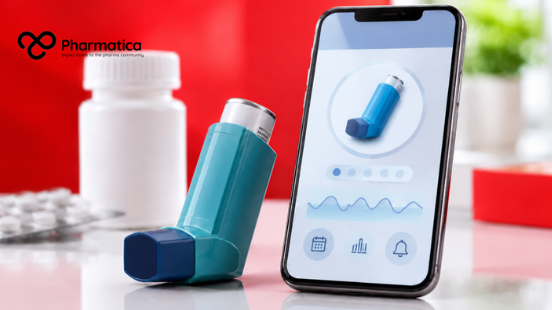
Prescription drug use-related software can be an important part of modern treatment plans. From digital dosing support to connected inhalers and patient-facing mobile applications, these tools are changing how patients interact with medicines.
In October 2026, the U.S. Food and Drug Administration (FDA) finalised guidance clarifying how these software outputs should be classified, documented, and communicated under prescription drug labelling requirements for digital health developers, pharmaceutical sponsors, and combination product manufacturers to implement.
FDA Establishes a Clearer Framework for Drug-Related Software
Published in the Federal Register on 21 October 2026, the FDA’s Regulatory Considerations for Prescription Drug Use-Related Software finalises guidance first proposed in September 2023.
It establishes how the Agency intends to apply its drug labelling regulations to software distributed by, or on behalf of, prescription drug sponsors.
The guidance covers software used with prescription medicines and certain drug-device combination products overseen by the Center for Drug Evaluation and Research (CDER) or the Center for Biologics Evaluation and Research (CBER).
Importantly, the software does not need to qualify as a medical device to fall within the guidance. Its relationship with the sponsored drug and the information presented to users determine whether its outputs are subject to drug labelling requirements.
Understanding the qualification and how the regulation applies is important as pharmaceutical companies increasingly incorporate digital services into treatment programmes.
How Clinical Evidence Determines Regulatory Treatment
The FDA considers software-generated content presented to patients, caregivers, or healthcare professionals to be a form of prescription drug labelling.
This includes screen displays, notifications, audio messages, and other information generated by the software.
The guidance distinguishes between two categories:
- Device-connected software: Functions that receive data directly from a device or device component, such as an inhaler or autoinjector.
- Standalone software: Functions that rely on information entered by users rather than data transferred directly from a device.
The regulatory treatment depends on whether the software is essential to safe and effective drug use, whether clinical evidence demonstrates meaningful improvement in outcomes, and whether it connects to a device.
Where adequate and well-controlled studies demonstrate meaningful clinical improvement, the FDA may require the associated software output to meet FDA-required labelling requirements.
Sponsors may then include supporting evidence in the Clinical Studies section of the Prescribing Information.
Without this evidence, standalone software outputs generally fall under promotional labelling unless the function is essential to safe and effective use.
Device-connected functions without demonstrated clinical benefit may still warrant a brief description in the Prescribing Information.
However, the FDA recommends making clear when their use is not necessary for the safe and effective use of the medicine.
Software Updates Need Additional Compliance Responsibilities
The final guidance also clarifies how sponsors should manage software-generated content after launch.
Promotional outputs must generally be submitted to the FDA using Form 2253 when first disseminated.
However, software updates that do not change previously submitted user-facing content, such as certain security patches, do not require resubmission of that content.
Changes to FDA-required labelling and modifications to authorised medical devices remain subject to their respective regulatory requirements.
This creates an important operational responsibility. Pharmaceutical developers and sponsors must understand how software changes affect both drug labelling and any applicable device authorisation.
What Do Sponsors and Developers Need to Consider?
The FDA’s prescription drug-linked software guidance has implications for product development, regulatory affairs, medical affairs, and digital health partnerships.
Sponsors should assess:
- Clinical evidence: Whether studies support claims that software improves meaningful clinical outcomes.
- Labelling strategy: How software functions and outputs should appear in the Prescribing Information.
- Change management: Whether updates affect promotional content, approved labelling, or device authorisation.
- Partner oversight: Whether third-party developers distributing software on a sponsor’s behalf meet applicable regulatory expectations.
The FDA also recommends early engagement with relevant review divisions when sponsors plan to develop software functions or generate clinical evidence to support their use.
Digital Therapeutics Require Stronger Evidence Strategies
The final FDA prescription drug-linked software guidance provides sponsors and developers with greater clarity as digital capabilities become increasingly integrated into prescription medicines.
The final guidance also reinforces an important distinction in that digital functionality does not automatically establish clinical benefit.
For industry leaders, the opportunity lies in developing software that contributes measurable value to treatment outcomes while maintaining appropriate regulatory oversight.
Pharmaceutical sponsors will need to consider software, clinical evidence, labelling, and postmarket change management as connected elements of product strategy.
At Pharmatica we understand that investing in connected medicines and digital patient support requires regulatory planning that must increasingly extend beyond the medicine itself.
Pharmatica: Insight. Connection. Impact.










Comments (0)