
Google SensorFM: One Trillion Minutes of Wearable AI Data

Google SensorFM was pretrained on over one trillion minutes of wearable data. Discover what this AI foundation model could mean for digital health and pharma.
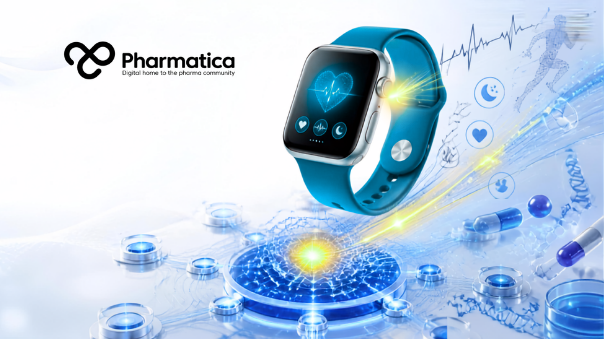
Google Research has introduced Google SensorFM, a foundation model pretrained on more than one trillion minutes of wearable sensor data from over five million people. Rather than developing separate artificial intelligence (AI) models for individual health applications, SensorFM learns a broad representation of human physiology that can be adapted to multiple prediction tasks.
This is a large announcement of a potential shift towards scalable AI models that support biomarker discovery, remote patient monitoring, and decentralised clinical trials.
From Wearable Data to Foundation Models
Foundation models have transformed natural language processing and computer vision by learning general representations from enormous datasets before being adapted to specific applications. Google Research is now applying the same principle to wearable health data.
Google SensorFM was pretrained using more than one trillion minutes of anonymised sensor information collected from over five million individuals, making it one of the largest wearable AI models reported to date.
Instead of learning a single task, the model captures relationships between physiological signals recorded by wearable devices, including activity, movement, sleep, and heart-related measurements.
These representations can then be fine-tuned for numerous downstream healthcare applications.
According to Google, the pretrained model demonstrated effective transfer learning across 35 separate health prediction tasks, reducing the need to build new AI systems from scratch for every clinical use case.
This approach mirrors developments in large language models, where extensive pretraining provides a flexible foundation for specialised applications.

Why Scale Matters in Wearable AI for Digital Health
One of the biggest challenges in digital health is that wearable datasets are often fragmented.
Individual studies may contain only thousands of participants, limiting how well AI models generalise across different populations.
Google SensorFM attempts to overcome this limitation through unprecedented scale.
Key figures from the research
|
Metric |
SensorFM |
|
Pretraining data |
>1 trillion minutes |
|
Participants |
>5 million people |
|
Downstream evaluation tasks |
35 health prediction tasks |
|
Learning approach |
Foundation model pretraining + fine-tuning |
The diversity of data allows the model to identify complex physiological patterns that smaller datasets may fail to capture.
For healthcare AI developers, this means models may require less task-specific data while delivering stronger performance across multiple applications.
How Should Pharma Companies Audit AI Vendors?
“This is one of the riskiest industries there is because you're dealing with human lives, you're dealing with experimental protocols, and you're dealing with regulatory bodies where you might not get another shot at that clinical trial."
What Can Google SensorFM Predict for Digital Health?
Rather than focusing on a single disease, SensorFM was evaluated across numerous health-related prediction tasks involving wearable sensor data.
Examples include:
- Sleep-related measurements
- Physical activity assessment
- Cardiorespiratory indicators
- Mobility and movement analysis
- General physiological state estimation
The researchers report that pretraining consistently improved downstream performance compared with models trained independently on smaller datasets.
Importantly, SensorFM is not intended to replace clinical judgement or diagnostic testing. Instead, it functions as a reusable AI backbone capable of supporting multiple predictive models.
This distinction is particularly important for regulated healthcare environments, where AI outputs remain subject to clinical validation.
Potential Applications Across Pharma and Clinical Research
Although the research originates from wearable technology, its implications extend well beyond consumer health.
As decentralised clinical trials continue to expand, pharmaceutical companies are collecting increasing volumes of continuous physiological data from wearable devices.

AI foundation models could help transform these raw signals into clinically meaningful insights.
Digital biomarkers
Continuous wearable monitoring could support the discovery of novel digital endpoints for neurological disorders, cardiovascular disease, metabolic conditions, respiratory illnesses, and even Longevity.
Clinical trial monitoring
Rather than relying solely on periodic site visits, SensorFM-like models may enable continuous assessment of patient health throughout a study.
Patient stratification
Patterns identified within wearable data may help researchers identify patient subgroups that respond differently to treatment.
Early safety monitoring
Continuous physiological monitoring could provide earlier signals of adverse events or disease progression.
Real-world evidence
Foundation models may improve analysis of RWE from wearable data collected after product approval, strengthening post-market surveillance and long-term outcomes research.
Investing in digital health platforms, reusable AI models could significantly reduce development time for future analytics.
Challenges Remain Before Clinical Adoption of Wearable Technology and SensorFM
Despite its scale, SensorFM should be viewed as an enabling technology rather than a finished clinical solution.
Several important challenges remain. These considerations each highlight an important distinction between technical performance and clinical utility.
Generalisability
Although five million participants represent an exceptionally large dataset, continued evaluation across different healthcare systems, demographics, and disease populations will be essential.
Clinical validation
Performance improvements on prediction tasks must ultimately translate into measurable improvements in patient care and clinical decision-making.
Privacy and governance
Large-scale wearable AI relies on secure management of sensitive physiological information. Robust governance, transparency, and regulatory oversight remain fundamental requirements.
Regulatory acceptance
Any AI model intended for clinical decision support will require rigorous validation before widespread adoption in regulated healthcare environments.
Wearable AI Is Moving Beyond Consumer Technology
Google SensorFM demonstrates how wearable devices are evolving from fitness trackers into platforms capable of generating clinically relevant physiological insights.
The research also reflects a broader trend across artificial intelligence: Moving from highly specialised models towards general-purpose healthcare foundation models that can support multiple downstream applications.
For life sciences organisations, this evolution could accelerate the development of digital biomarkers, improve decentralised clinical trials, strengthen real-world evidence generation, and enable more personalised patient monitoring.
While substantial clinical validation remains ahead, Google's work illustrates how scale, transfer learning, and foundation model architectures may become central components of the next generation of digital health infrastructure.
At Pharmatica, we analyse the technologies transforming life sciences, from foundation AI models and digital biomarkers to clinical research innovation and next-generation pharmaceutical development. Our evidence-based Insights help industry leaders understand how emerging technologies are reshaping healthcare, research, and patient outcomes.
Pharmatica: Insight. Connection. Impact.

Frequently Asked Questions
What is Google SensorFM?
Google SensorFM is a healthcare foundation model pretrained on more than one trillion minutes of wearable sensor data from over five million people. It learns general representations of human physiology that can be adapted to multiple health prediction tasks.
Why is SensorFM significant for healthcare AI?
Unlike traditional AI models that are trained for one specific task, SensorFM uses foundation model pretraining. This allows it to transfer knowledge across multiple healthcare applications, potentially improving efficiency and reducing the need for large task-specific datasets.
How could Google SensorFM benefit pharmaceutical companies?
Pharmaceutical companies could use similar wearable AI foundation models to support digital biomarker discovery, patient monitoring, decentralised clinical trials, safety surveillance, and real-world evidence generation.
Can Google SensorFM diagnose diseases?
No. SensorFM is designed to generate physiological representations and support prediction tasks. Clinical diagnosis and treatment decisions must remain under clinician supervision and require regulatory validation.
What are digital biomarkers?
Digital biomarkers are objective physiological measurements collected through connected devices such as smartwatches, wearable sensors, or smartphones. They can help researchers monitor disease progression, treatment response, and patient health outside traditional clinical settings.
About the author
Did you enjoy the content?
Why not support Nicole Dale by giving this content a like







Comments (0)