Discover how Robert Koch, Louis Pasteur, and George Bernard Shaw and the little guinea pig shaped tuberculosis research and medical experimentation.
Before the BCG vaccine became one of the world’s most widely used vaccines, tuberculosis research was shaped by a remarkable cast of scientists, laboratory animals, and ethical debates.
From Robert Koch’s discovery of the tubercle bacillus to George Bernard Shaw’s challenge to experimental medicine, this is the story of the guinea pig’s unexpected place in medical history.
Image
The Long Road for Public Health and the Fight Against TB
There is something extraordinary about the history of the BCG vaccine.
It begins over 100 years ago and long before Albert Calmette and Camille Guérin, in a period when tuberculosis was still a mysterious and devastating disease, when doctors argued over its causes, and when the smallest unseen creatures could help overturn centuries of medical thinking.
It takes us from the battlefields of bacteriology to the streets of industrial Europe, from a Paris hospital to a London theatre airing a George Bernard Shaw production, and eventually to a vaccine that would travel around the world, and still remains the most widely-used vaccine ever.
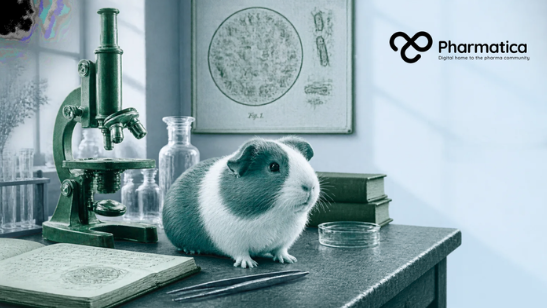
It is also a story about an unlikely scientific protagonist: The brave little guinea pig.
The animal became one of the most recognisable companions of experimental medicine, helping researchers investigate tuberculosis and other respiratory infections. Yet it also became a symbol of something much more uncomfortable. In the hands of Shaw, the guinea pig represented the vulnerable subject on whom science practised its ambitions, often before it was prepared to accept the same risks itself.
To understand how BCG came into being, we need to begin with the disease it was designed to confront, and with the scientists who first made this invisible enemy visible.
A Disease That Seemed to Consume its Victims
For centuries, tuberculosis was known by names that captured its most visible effects.
Consumption described the wasting away of the body. Phthisis, an ancient term meaning a wasting disease, appeared in medical writing for generations.
Patients grew thin, developed persistent coughs, suffered fever and night sweats, and sometimes coughed blood.
The illness could progress slowly, leaving families to watch as someone they loved became weaker over months or years.
Tuberculosis was not simply a medical problem. It was woven into the social fabric of nineteenth-century Europe. Crowded housing, poor nutrition, inadequate sanitation and long working hours created conditions in which infection could spread and illness could flourish.
The disease did not respect class, although poverty and overcrowding made its consequences particularly severe. It affected writers, taking the young life of John Keats, for example, and artists, factory workers, children, and entire households.
By the nineteenth century, tuberculosis was responsible for an enormous proportion of deaths in many European populations.
It was sometimes romanticised in literature and art, but there was little romantic about its reality. The disease could destroy a family’s income, separate children from parents and leave survivors with the knowledge that they might themselves become ill.
Doctors could recognise the characteristic lesions in the lungs. They could describe the tubercles found during post-mortem examinations. But recognising the damage was not the same as understanding its cause.
Was tuberculosis inherited? Was it caused by unhealthy surroundings, poor constitution or some mysterious disturbance within the body?
Could it pass from one person to another? And, if it was infectious, what exactly was being transmitted?
The answers would emerge from one of the most important scientific transformations of the nineteenth century: The rise of Germ Theory.
Reimagine AI-driven Drug Discovery with Pharma Superintelligence
Explore how AI-driven drug discovery is evolving through Pharmaceutical Superintelligence and what your organisation can do to keep up.
Koch, Pasteur, and the Invisible World
The story of modern bacteriology is often told through two formidable figures: Robert Koch and Louis Pasteur.
They were not a scientific partnership. They worked in different countries, developed distinct approaches, and became rivals in a period when proving the microbial causes of disease was transforming medicine.
Their work nevertheless formed part of the same extraordinary shift in scientific thinking.
Pasteur, the French chemist, had demonstrated that microorganisms were responsible for fermentation and spoilage. His investigations challenged the belief that complex biological processes could arise spontaneously.
He showed that microbes were not simply present in decaying material by chance. They had identifiable roles in processes that mattered to industry, food production, and human health.
Koch, a German physician, brought bacteriology into the investigation of specific infectious diseases.
He developed methods for isolating and cultivating microorganisms, linking particular organisms to particular illnesses.
His work helped establish the experimental foundations of medical microbiology.
Then came tuberculosis.
On 24 March 1882, Koch announced that he had identified the bacterium responsible for the disease. He had found the organism now known as Mycobacterium tuberculosis.
His achievement was not merely that he had observed a suspicious microorganism under a microscope. He presented a chain of evidence connecting the bacterium with the disease, including its isolation and the reproduction of infection in susceptible animals.
The work helped establish the logic that would become associated with Koch’s postulates.
And here the guinea pig enters the story.
Koch used guinea pigs in his tuberculosis experiments because they were susceptible to human respiratory infections.
They offered researchers a living system in which to observe the disease, investigate its progression, and test whether material associated with tuberculosis could reproduce the characteristic illness.
The animal was not simply a convenient laboratory specimen. It helped make an invisible biological argument visible.
The significance of this was enormous. If a disease could be linked to a specific microorganism, isolated and then reproduced in a susceptible host, medicine had a new way of investigating infection. It could move beyond descriptions of symptoms and damaged organs towards the biology of the pathogen itself.
The guinea pig would remain important in tuberculosis research for precisely this reason. Its susceptibility to M. tuberculosis, together with the ability to examine pulmonary pathology and immune responses, made it a valuable experimental model.
It was not a perfect miniature human, and no animal model can reproduce every aspect of human tuberculosis. But it offered researchers a way to investigate questions that could not ethically or practically be answered by experimenting directly on people.
Koch’s discovery also opened a new chapter in the complicated relationship between human and animal tuberculosis.
At first, Koch considered bovine and human tuberculosis to be caused by the same organism. In 1901, however, he controversially argued that the two diseases were distinct and that transmission from cattle to humans was not a major public-health threat.
Subsequent research established the importance of distinguishing M. tuberculosis from Mycobacterium bovis, a related member of the tuberculosis complex that can infect cattle and humans.
The debate was not an academic detail. It had direct implications for food safety, veterinary medicine, and the regulation of milk.
The discovery of the tubercle bacillus had given medicine an enemy it could identify. But, it had not yet given medicine a reliable way to defeat it.
Image
The Spilled Milk on the 19-Century Table
One of the most important consequences of understanding tuberculosis was the growing recognition that infection did not always travel through the air.
Bovine tuberculosis could reach people through contaminated animal products, particularly milk.
Children were especially vulnerable. At a time when milk was an essential part of infant nutrition, the possibility that an apparently wholesome glass could carry a dangerous organism presented a serious public-health challenge.
This was also where Pasteur’s work on fermentation would have consequences far beyond wine and beer.
In 1864, Pasteur demonstrated that carefully heating wine and then cooling it could prevent unwanted microbial activity. The process became known as pasteurisation.
His work provided the scientific foundation for a method that would eventually become central to food safety.
But it is important to get the history right: Pasteur’s original work concerned wine and beer, not the modern industrial pasteurisation of milk. The application of heat treatment to milk developed later, through the work of other scientists, public-health authorities, and food producers.
So, milk safety was not solved by a single discovery. It required microbiology, veterinary surveillance, better dairy hygiene, regulation, and the gradual adoption of effective heat-treatment standards.
The bovine tuberculosis debate also demonstrated how difficult it could be to translate scientific evidence into public policy. Farmers worried about the cost of controlling infected herds. Consumers needed safe food. Physicians and veterinarians did not always agree about the scale of the threat or the best response.
Pasteurisation itself was controversial in some places, and its adoption was gradual.
By the early twentieth century, however, the public-health case was clear.
Research into the heat resistance of M. tuberculosis helped establish time-and-temperature combinations capable of making milk safer.
In the United States, Chicago was the first in the world to introduce a compulsory milk-pasteurisation ordinance in 1908, initially as a measure against bovine tuberculosis. The wider development of milk standards would continue over subsequent decades.
The lesson was an important one for the future of vaccination: Infectious disease could not be tackled through laboratory science alone. It required an understanding of animals, people, food, industry, and the environments in which infection spread.
Find out how Quality-by-Design improves reliability and compliance in pharma and how you can maximise innovation through quality-based pharma development systems.
Image
Why the Guinea Pig Became Such an Important Respiratory Model
The guinea pig’s place in this history is not accidental.
Researchers needed animals that could develop recognisable forms of disease after exposure to particular pathogens.
Guinea pigs proved especially useful in tuberculosis research because they are highly susceptible to infection with M. tuberculosis.
The animals can develop pulmonary lesions and immune responses that allow investigators to study aspects of human disease, including the relationship between bacterial exposure, lung pathology, and protective immunity.
Their value extends beyond tuberculosis. Guinea pigs have been used in research into respiratory infections, includinginfluenza and other pathogens affecting the airways.
Their respiratory physiology, susceptibility to selected infections, and measurable pulmonary responses can make them useful in particular experimental settings.
But calling them the best animal for studying human respiratory disease would be too broad. The best model depends on the question.
Mice are widely used because of the range of genetic and immunological tools available. Ferrets are valuable for certain studies of influenza transmission and hamsters have been extensively used in SARS-CoV-2 infection research.
Non-human primates can answer questions that require closer similarities to human physiology and immunity, although their use raises substantial ethical and practical considerations.
Guinea pigs have their own strengths and limitations. Their susceptibility to tuberculosis makes them particularly useful for studying infection and vaccine protection, but they do not reproduce every feature of human disease.
Their role is best understood as part of a wider collection of animal models, each contributing different evidence.
The COVID-19 pandemic renewed interest in animal models that could help researchers understand respiratory infection, immune responses, and potential interventions.
Guinea pigs appeared in some SARS-CoV-2 research, including studies of infection and transmission.
The BCG vaccine itself also became the subject of clinical trials investigating whether its broader effects on the immune system might offer some protection against COVID-19.
There is, however, a deeper reason why the guinea pig deserves a prominent place in the history of BCG.
The animal was not only used to investigate tuberculosis. It also became central to demonstrating that the vaccine developed by Calmette and Guérin had been sufficiently weakened to protect without causing progressive disease.
In other words, the same creature that helped establish the danger of the tubercle bacillus would later help establish the safety of a vaccine designed to protect against it.
And that brings us to a rather unexpected voice in the history of experimental medicine.
George Bernard Shaw and the Human Guinea Pig
George Bernard Shaw was not a microbiologist. He was a playwright, critic, and provocateur, with a particular talent for exposing the contradictions in institutions that preferred not to examine themselves too closely.
He was also fascinated by medicine.
At the turn of the twentieth century, medical research was advancing rapidly, but the ethical rules governing experimentation were still developing.
Animal experimentation was fiercely debated. Some scientists regarded it as indispensable to progress; opponents questioned whether scientific ambition could justify the suffering of living creatures.
Shaw approached the subject with characteristic sharpness. He turned the language of the laboratory into a question about human responsibility.
The expression guinea pig, used to describe a person subjected to an experiment, became closely associated with Shaw’s writing.
Its history is not quite as simple as the popular version sometimes suggests, and the precise earliest use should be treated carefully. But Shaw’s most memorable treatment of the idea appears in his 1906 playThe Doctor's Dilemma, particularly in the preface entitled “Vivisecting the Human Subject”.
The preface describes a physician attempting to develop a treatment for pulmonary tuberculosis. His proposed remedy was a powerful germicide injected directly into the bloodstream.
Rather than beginning with himself, the doctor first tested it on two hospital patients. They suffered severe convulsions and came close to dying. He then tried the preparation on a rabbit, which died almost immediately. Only after these experiments did he test a modified version on himself.
Shaw’s outrage was directed at the order of events.
The physician had been willing to expose vulnerable patients to a dangerous treatment before establishing whether it was safe. The rabbit was also sacrificed, but only after the human experiments had already taken place. The doctor eventually accepted risks himself, but only once the earlier experiments had provided information that could guide him.
Shaw then delivered the line that would make the guinea pig a lasting metaphor for the human experimental subject:
“If a guinea pig may be sacrificed for the sake of the very little that can be learnt from it, shall not a man be sacrificed for the sake of the great deal that can be learnt from him?”
It is a deliberately uncomfortable argument. Shaw was not simply suggesting that human experimentation should replace animal experimentation.
Shaw was exposing the moral inconsistency of treating one form of suffering as acceptable while assuming that another must be protected.
He was also challenging the idea that the scientific value of an experiment automatically makes it ethically defensible.
The tuberculosis setting was no coincidence. The disease was one of the great medical challenges of the age, and experimental treatments were attracting intense interest.
One of the most famous was Koch’s tuberculin, announced in 1890 with enormous expectations as a possible treatment for tuberculosis. It was derived from tubercle bacilli and initially inspired hope that science had found a way to arrest the disease. But the clinical results were disappointing and, in some cases, dangerous. The episode became a warning about the distance between promising laboratory findings and safe, effective treatment in people.
Shaw’s play also had a real scientific setting behind it.
The conversation concerned the selection of patients when a new treatment was experimental and resources were limited.
And Shaw transformed that very discussion into the moral and dramatic conflict at the heart of The Doctor’s Dilemma.
It is tempting to draw a direct line from Koch’s guinea-pig experiments to Shaw’s metaphor. The historical connection is more interesting, and more careful, than that.
Koch’s work helped establish the guinea pig as a central experimental animal in tuberculosis research. Shaw, writing in the same medical culture, used the animal to question the ethics of experimentation and the value placed on human life.
The two stories nevertheless meet around the same disease. One demonstrates how animal experiments helped establish the scientific foundations of tuberculosis research. The other asks what happens when the pursuit of knowledge begins to treat living subjects as instruments.
That tension would follow the history of BCG from its earliest experiments to its modern use.
The vaccine would eventually save countless lives, but its development depended on years of animal research, repeated testing, difficult decisions and, ultimately, the willingness to test a new intervention in human beings.
Shaw’s challenge remains relevant because the history of medicine is not only a record of discoveries. It is also a record of the people and animals who bore the risks of making them.
Image
The Animal, the Experiment, and the Important Question of Scientific Progress
The guinea pig occupies an unusual place in the history of medicine.
It helped Robert Koch establish the infectious nature of tuberculosis, became an important model for studying respiratory disease, and later played a role in the experimental work that helped make BCG possible.
Yet it also became a symbol of the ethical questions that accompany scientific progress.
George Bernard Shaw recognised the contradiction. Scientific discovery could offer extraordinary benefits, but the pursuit of those benefits did not automatically make every experiment acceptable.
His challenge was not to dismiss medical research, but to ask who carried its risks, who benefited from its discoveries, and whether the principles applied to experimental animals should also govern the treatment of human patients.
And then by the beginning of the twentieth century, tuberculosis research had entered a new era.
The disease had an identifiable bacterial cause.
Researchers understood more about how it spread, and public-health interventions were beginning to reduce some routes of infection. But a reliable vaccine remained elusive.
That challenge would soon attract two men working at the Pasteur Institute in Lille. Albert Calmette, a physician and bacteriologist with an extraordinary range of interests, and Camille Guérin, a veterinary scientist with a gift for meticulous experimental work, would embark on an investigation that lasted more than a decade.
Their objective was deceptively simple: To take a bacterium capable of causing a devastating disease and transform it into something that could protect against that very same disease.
The experiment would involve patience, repeated cultivation, setbacks, scientific collaboration, and an unusual understanding of how microorganisms change when their environment changes.
It would eventually produce one of the most widely administered vaccines in history and that helped save millions of lives.
But before BCG became a global public-health intervention, there was a laboratory in Lille, a stubborn organism, and two scientists prepared to keep trying…
Pharmatica explores the discoveries, people, and scientific turning points that have shaped modern life sciences, connecting the history of innovation with the questions facing medicine today.
Pharmatica: Insight. Connection. Impact.
Frequently Asked Questions
Why were guinea pigs used in early tuberculosis research?
Guinea pigs were used because they are highly susceptible to infection with Mycobacterium tuberculosis. Researchers could study disease development, lung pathology, and immune responses in a living animal model. Their susceptibility made them particularly valuable in the early experiments that helped establish the infectious nature of tuberculosis.
What did Robert Koch discover about tuberculosis in 1882?
Robert Koch identified Mycobacterium tuberculosis, the bacterium responsible for tuberculosis, in 1882. His discovery provided compelling evidence that tuberculosis was caused by a specific microorganism and transformed the scientific understanding of how the disease developed and spread.
What was George Bernard Shaw’s connection to the guinea pig?
George Bernard Shaw used the guinea pig as a metaphor for an experimental subject, particularly in his criticism of medical research ethics. In the preface to his 1906 play The Doctor's Dilemma, he questioned why society accepted sacrificing animals for scientific knowledge while resisting the same logic when human subjects were involved.
How did Louis Pasteur contribute to the understanding and prevention of tuberculosis?
Louis Pasteur’s research helped establish germ theory and the scientific foundations of pasteurisation. Although his original pasteurisation work focused on wine and beer, the principles he demonstrated were later applied to milk safety. Heat treatment of milk became an important public-health measure for reducing the risk of bovine tuberculosis transmission.
Are guinea pigs still used in respiratory disease and tuberculosis research?
Yes. Guinea pigs remain useful in selected studies of tuberculosis, other respiratory infections, and vaccine-induced immune responses. Their susceptibility to tuberculosis makes them particularly valuable for investigating infection and protection. They are not universally the best model for human respiratory disease, however, and researchers choose animal models according to the scientific question being investigated.
Nicole (BSc Molecular Medicine, Honours Medical Biochemistry) has many years of pharmaceutical experience, having worked for top CROs and biopharma companies for more than a decade.
Did you enjoy the content?
2
Why not support
Nicole Dale
by giving this content a like
The Hidden Vulnerabilities Behind the Supply of Essential Medicines
Discover how hidden dependencies, single-source suppliers, and cold-chain disruption threaten supply chain resilience and essential medicine availability.
Drug shortages expose weaknesses in pharmaceutical manufacturing, supplier networks, and procurement. Discover the causes and how to improve supply resilience.
Trisha Pillay speaks with Adriaan Kruger, CEO of nuvoteQ, as they unpack why clinical research is still heavily reliant on paper-based systems in many regions.
How Pharmacy Innovation Is Changing Healthcare Delivery
Pharmacy is emerging as a critical but overlooked route to faster patient access. In this episode of Digital Pulse, Judit Mora explains how innovation, digital workflows, and pharmacy-led models can bypass traditional delays in healthcare delivery.
First Quarter 2026 State of Digital Health Funding
Digital health funding hit $7.4B in Q1 2026, the highest since Q2 2022. The CB Insights State of Digital Health report reveals where capital is concentrating and why it matters for pharma leaders.














Comments (0)