
Liver-Chip Supported Drug Discovery Moves to FDA Qualification

Liver-chip supported drug discovery is moving closer to regulatory acceptance as Emulate advances FDA ISTAND qualification for human-relevant DILI assessment.
Liver-chip supported drug discovery is moving closer to reality as Emulate submits a full qualification package for its Human Liver-Chip under the U.S. FDA’s ISTAND programme.
If qualified for drug-induced liver injury assessment, the technology could give development teams a more human-relevant way to make preclinical safety decisions.
Why Liver-Chips Can Support Drug Discovery
The liver is the centre of drug metabolism, exposure, and toxicity. Yet the models used to predict human liver injury have important gaps.
Animal models can miss species-specific responses, while conventional two-dimensional cultures often lose the multicellular architecture and dynamic environment that shape hepatic function.
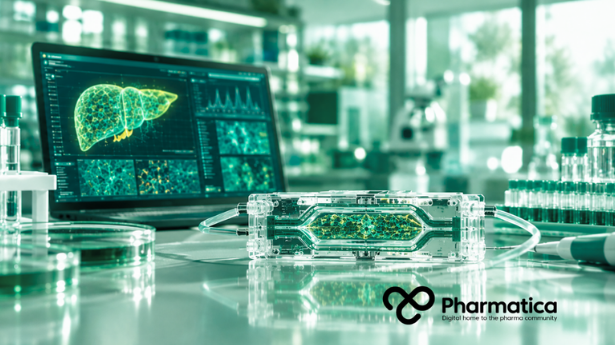
Liver-on-a-chip systems address part of those gaps by creating a microphysiological system combining human cells with controlled microfluidic flow and a three-dimensional microenvironment.
Potential applications span across drug screening, toxicity testing, metabolism, pharmacokinetics, disease modelling, and biosensing.
This could be really vital for drug discovery teams because a better model is useful only if it changes a decision.
A liver-chip is valuable when its data could help teams stop a risky compound from advancing earlier in development, distinguish candidates with different safety profiles, or build stronger evidence before clinical development.
The Emulate platform is designed around that principle. Its Liver-Chip S1 combines primary human hepatocytes with liver sinusoidal endothelial cells, with Kupffer and stellate cells added in its quad-culture configuration.
The Liver-Chip S1 system uses two channels separated by a porous membrane to create a dynamic environment that supports cell-cell interactions and hepatic function.
Emulate’s newer Liver-Chip R1 also addresses a practical issue in drug discovery, in the form of the interaction between device materials and test compounds. Its rigid plastic design is intended to reduce small-molecule absorption compared with the S1 format.
The company reports improved compound recovery for three of eight drugs tested with the R1 system, while the remaining five showed no significant absorption in either chip.
The Evidence Behind Liver-Chip Supported Drug Discovery
The strongest case for liver-chip adoption in drug discovery comes from evidence connecting chip performance with known human outcomes as conventional preclinical testing can miss liver toxicity that later appears in people.
A large peer-reviewed assessment tested 870 liver-chips against a blinded set of benchmark compounds selected using Innovation and Quality consortium criteria.
The study reported 87% sensitivity and 100% specificity for distinguishing hepatotoxic from non-toxic compounds under the tested conditions.
The study also found a stronger relationship with clinical drug-induced liver injury (DILI) severity when its analysis accounted for protein binding.
The economic argument is also significant. The researchers modelled the potential effect of incorporating liver-chips into preclinical workflows and estimated that broader adoption could generate more than U.S. $3 billion in annual industry value through improved R&D productivity.
That economic figure is a modelled estimate, not a realised saving, but it shows why predictive toxicology has become a strategic issue for pharmaceutical companies.
There is also a strong argument that instead of treating the chip as a universal replacement for existing testing, proposed decision-support frameworks using quantitative liver-chip results to assess DILI severity from clinical data, could be combined with pipeline liver-chip data, predictive models, and existing evidence from animal studies to better decide whether a drug candidate should progress towards clinical trials.
Therefore, any commercial value of a liver-chip lies in how its evidence enters the development decision.
Pharmaceutical R&D does not need another standalone assay. Rather, it needs evidence that can be interpreted consistently and used at the point where teams decide which compounds advance, which require further investigation, and which should be stopped.
However, as of now there is no organ-on-chip fully qualified for drug development under the Food and Drug Administration's Innovative Science and Technology approaches for new drugs (ISTAND). Emulate hopes to change that.

Reimagine AI-driven Drug Discovery with Pharma Superintelligence
Explore how AI-driven drug discovery is evolving through Pharmaceutical Superintelligence and what your organisation can do to keep up.
Emulate’s Liver-Chip 2026 FDA Submission
Emulate’s September 2026 FDA submission brings the liver-chip closer to that critical R&D decision-making role.
The company has submitted a full qualification package under the FDA’s ISTAND program, with the proposed context-of-use focused on DILI assessment.
The submission builds on an earlier regulatory milestone. In September 2024, the FDA accepted Emulate’s Letter-of-Intent into the ISTAND pilot programme for a human Liver-Chip Drug Development Tool intended to assess DILI risk and generate relevant information for an Investigational New Drug (IND) submission.
The 2026 package reportedly includes data from three independent laboratories and three primary human hepatocyte donors. Emulate also reports consistent discrimination between structurally similar compounds with different toxicity profiles and repeat-study performance months apart.
Those points are strategically important because regulatory usefulness depends on reproducibility, not just a strong headline performance number.
The package also includes data generated using Emulate’s Zoë Culture Module and next-generation AVA Emulation System.
Emulate says AVA can support up to 96 independent Organ-Chip samples per run, which could be important because a model can be scientifically impressive but difficult to adopt if throughput, automation, and operational consistency do not fit pharmaceutical workflows.
If approved, the FDA qualification will not make every liver-chip study automatically acceptable for every purpose. The context-of-use remains central. A model qualified for a defined DILI assessment will have a specific role, with defined performance expectations and boundaries.
Qualification is not simply a technology endorsement. It is a framework for using a defined source of evidence in a defined development decision.
From Better Biology to Better Drug Discovery Pipeline Decisions
Liver-chips are less about simply replacing animal testing overnight and more about improving the evidence architecture around candidate selection.
Liver-chips could contribute at several points across the Drug Discovery Loop:
- Lead optimisation: Human-relevant liver data could identify safety liabilities while candidate series are still flexible enough to change.
- Candidate selection: Comparative toxicity signals could support decisions between otherwise attractive compounds.
- Preclinical risk assessment: Quantitative chip outputs could sit alongside pharmacology, exposure, animal toxicology, and other evidence.
- Mechanistic investigation: Multicellular systems can provide information about different patterns of hepatic injury rather than relying on a single endpoint.
- Regulatory planning: A defined context of use can help teams understand where liver-chip evidence may strengthen an IND package.
The Emulate S1 data also illustrates the platform’s potential breadth. The system has been characterised for hepatic functionality, including albumin and urea secretion and cytochrome P450 activity.
Emulate also presented for AAV transduction studies, showing how liver-chip platforms can extend beyond conventional small-molecule toxicity questions.
The newer R1 configuration focuses on human-relevant toxicology, efficacy, and ADME assessment while reducing drug absorption associated with polydimethylsiloxane (PDMS), which is the flexible polymer used to make the chip.
Liver-Chip R1 can maintain mature hepatic characteristics for up to 12 days, with a stated drug exposure and assessment window of up to seven days.
This shows an important distinction that a liver-chip is only valuable when the additional biological relevance produces information that conventional models fail to provide.
That principle should guide adoption. More biological complexity does not automatically create better evidence. The model must demonstrate that its added complexity improves prediction, interpretation, or decision-making for a specific use.
Maximise Pharma Innovation With Quality-by-Design
Find out how Quality-by-Design improves reliability and compliance in pharma and how you can maximise innovation through quality-based pharma development systems.

How to See Liver-Chips in Drug Development
The Emulate FDA submission is a milestone, but the larger story is the maturation of human-relevant drug discovery models.
Three issues deserve attention.
Context of use will determine adoption
The industry does not need another broad claim that organ-chips are simply “more human”. It does need clearly defined questions, measurable endpoints, reproducible methods, and evidence showing how those results improve a specific development decision.
Scale will matter as much as science
Drug discovery teams work across large compound sets. A model that works only under specialist conditions will struggle to become routine.
The move towards higher-throughput systems therefore matters beyond equipment, and must address whether human-relevant testing can fit into real pharmaceutical workflows.
Regulatory acceptance could change investment decisions
The FDA has already invested in organ-chip research and accepted Emulate’s Liver-Chip into ISTAND. A successful qualification could give pharmaceutical companies greater confidence about where such data fit within development programmes.

Qualified Liver-Chips Will Support Stronger R&D Decision-making
The opportunity of any technology in R&D should always be judged carefully. Liver-chips will not eliminate biological uncertainty, replace every animal study, or remove the need for clinical evidence.
The true value of liver-chips supported drug discovery will depend on standardisation, donor variability, assay robustness, reproducibility, and the quality of the decisions they inform.
As drug discovery moves towards models that attempt to measure human biology more directly, the competitive advantage comes not from running more preclinical tests, but from choosing tests that answer the right human-relevant questions earlier.
At Pharmatica, we carefully analyse and present the technologies driving successful drug discovery, from human-relevant preclinical models to advanced screening and predictive drug development. Our Insights focus on where new tools can improve the evidence behind pharmaceutical decisions, and where scientific promise still needs regulatory and real-pipeline proof.
Pharmatica: Insight. Connection. Impact.
Frequently Asked Questions
What is a liver-chip in drug discovery?
A liver-chip is a microengineered in vitro model that uses human liver cells within a controlled environment designed to reproduce important aspects of liver structure, function, and mechanical conditions. A liver-chip can be used to study drug metabolism, toxicity, and other responses.
How can liver-chips improve drug discovery?
Liver-chips can provide human-relevant information about drug response earlier in preclinical development. Their potential value is greatest when the data help researchers identify toxicity, compare candidates, or make better-informed progression decisions.
What has preclinical research shown for liver-chips in pharma preclinical R&D?
A large peer-reviewed assessment of 870 liver-chips reported 87% sensitivity and 100% specificity for a defined set of hepatotoxic and non-toxic benchmark compounds. The study also modelled a potential annual industry value of more than U.S. $3 billion from broader adoption.
What does Emulate’s FDA Liver-Chip submission mean?
Emulate has submitted a full qualification package under the FDA’s ISTAND programme seeking qualification of its Human Liver-Chip as a Drug Development Tool for drug-induced liver injury assessment. The Emulate ISTAND submission itself does not mean that FDA qualification has already been granted.
Can a liver-chip replace animal testing?
Not by itself. Liver-chips are better viewed as part of a broader preclinical evidence strategy. Their role depends on the specific context of use, the strength of the supporting evidence, and regulatory acceptance for that purpose.
About the author
Did you enjoy the content?
Why not support Nicole Dale by giving this content a like






Comments (0)