
Using Machine Learning for Lipid Nanoparticle Design

Read about machine learning for lipid nanoparticle design used to improve cell, gene, and RNA drug delivery and help optimise next-generation therapeutics.
Lipid nanoparticles (LNPs) are one of the most important emerging drug delivery technologies. Best known for enabling the first approved mRNA vaccines, LNPs are being developed to deliver RNA therapeutics, gene-editing systems, proteins, and other advanced medicines. And now, as LNP design becomes increasingly complex, researchers are turning to machine learning for lipid nanoparticles (LNPs) to accelerate formulation development, improve delivery performance, and reduce experimental burden.
Why Lipid Nanoparticles Are Central to Modern Drug Discovery
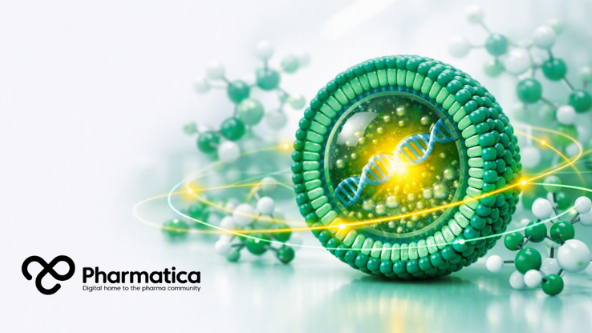
LNPs are microscopic lipid-based carriers that protect fragile therapeutic molecules and transport them safely to target cells.
Without an effective delivery system, many RNA medicines degrade rapidly in the bloodstream or fail to enter cells efficiently. LNPs overcome many of these barriers by encapsulating nucleic acids, protecting them during circulation, and facilitating cellular uptake.
Following the global success of mRNA vaccines, pharmaceutical companies are investigating LNP platforms across numerous therapeutic areas, including:
- Cancer immunotherapy
- Rare genetic diseases
- Gene editing using CRISPR technologies
- Protein replacement therapies
- Infectious diseases
- Autoimmune disorders
However, developing effective LNP formulations is far from straightforward.
Researchers must optimise dozens of interconnected variables, including lipid composition, particle size, surface charge, encapsulation efficiency, stability, biodistribution, and tissue targeting.
Small formulation changes can substantially affect therapeutic performance.
In response, artificial intelligence (AI) and machine learning (ML) can significantly improve how LNPs are designed, optimised, and translated into clinical applications.
While laboratory validation remains essential, data-driven modelling is helping scientists navigate an enormous formulation design space that would be difficult to explore using conventional experimental approaches alone.
Why Traditional Formulation Development Is Slow
Historically, LNP development has relied on iterative laboratory experimentation.
Scientists formulate hundreds or even thousands of nanoparticle combinations before identifying candidates with acceptable performance.
This process consumes considerable time, laboratory resources, and specialised expertise.
It also created one of the biggest challenges: The number of possible lipid combinations is effectively enormous. Exploring every possible formulation experimentally is unrealistic.
Machine learning offers a complementary approach.
Instead of evaluating formulations individually, ML algorithms analyse existing experimental datasets to identify relationships between lipid chemistry, formulation characteristics, and biological performance.
These ML models can then predict which new formulations are most likely to succeed before laboratory testing begins.
AI in Pharma: Why the Future of Healthcare Starts With Patients, Not Tech
Kate O’Reilly, President & Chair of the Healthcare Businesswomen’s Association (HBA) Dublin-Ireland Chapter & Healthcare Transformation Partner at Roche, discusses AI in pharma, patient engagement, and the future of healthcare innovation.

How Machine Learning Is Changing LNP Design
Rather than replacing experimental science, machine learning is helping researchers prioritise experiments more intelligently.
There are several areas where ML is already demonstrating value.
Predicting formulation performance
Machine learning models can learn from previous formulation data to estimate important characteristics such as:
- Encapsulation efficiency
- Particle size
- Stability
- Drug loading
- Cellular uptake
- Delivery efficiency
Researchers can then focus laboratory resources on the most promising formulations rather than screening thousands of random combinations.
Accelerating lipid discovery
New ionisable lipids remain one of the most active areas of LNP research.
AI models can evaluate molecular descriptors and chemical properties to identify lipid structures with favourable delivery characteristics before synthesis.
This approach reduces the number of compounds requiring laboratory evaluation while expanding the search for next-generation delivery materials.
Improving tissue targeting
One of the major goals in nanomedicine is delivering therapies beyond the liver.
Although current LNP technologies naturally accumulate in hepatic tissue, researchers increasingly seek targeted delivery to organs such as the lungs, spleen, brain, and tumours.
Machine learning is helping scientists identify formulation features associated with organ-specific delivery, supporting the development of more precise therapeutic platforms.

Data Quality Remains the Foundation of ML for LNPs
Despite growing enthusiasm, we know that AI is only as effective as the data used to train it.
Many published LNP datasets remain relatively small, use different experimental protocols, or report inconsistent outcome measures. This limits how well predictive models generalise across laboratories.
Any future progress depends upon greater standardisation, improved data sharing, and larger high-quality datasets generated using consistent experimental methods.
Without robust experimental evidence, even sophisticated algorithms cannot reliably predict biological performance.
Human Expertise Still Drives Drug Discovery
Machine learning complements scientific expertise rather than replacing it.
Successful LNP development still depends upon formulation scientists, chemists, molecular biologists, pharmacologists, and translational researchers interpreting model outputs, validating predictions, and refining formulations through laboratory experimentation.
Machine learning helps narrow the search space.
Scientists remain responsible for confirming whether predicted formulations perform safely and effectively in real biological systems.
AI Supports the Next Generation of RNA Medicines
Interest in LNP optimisation extends far beyond vaccines.
As RNA therapeutics continue expanding, delivery systems are becoming a strategic differentiator across pharmaceutical R&D.
Emerging applications include:
|
Therapeutic area |
Potential role of LNPs |
|
Efficient intracellular delivery |
|
|
Gene editing |
Delivery of CRISPR components |
|
siRNA therapies |
|
|
Cancer therapeutics |
|
|
Protein replacement |
Transient protein expression |
AI may significantly shorten drug development timelines by identifying high-performing formulations earlier in the discovery process.
Can AI Help Build Better Drug Delivery Systems?
Machine learning is unlikely to solve every challenge associated with nanoparticle delivery. Biological complexity, manufacturing scalability, regulatory validation, and clinical translation remain significant challenges.
However, the evidence increasingly suggests that AI can improve one of the most difficult aspects of formulation science: Identifying promising candidates within an almost limitless design space.
As datasets grow and predictive models become more robust, AI is expected to become an increasingly valuable decision-support tool throughout pharmaceutical formulation development.
For organisations investing in RNA medicines, gene therapies, and advanced biologics, combining computational modelling with experimental validation could substantially improve the efficiency of early drug discovery.
AI in Pharma: Hype vs. What Actually Works
Expert Lara Masad explains why pharma leaders miscalculate AI investments and how to build a defensible validation strategy.

Better Data Drive Better Drug Delivery
Lipid nanoparticles have already transformed modern medicine by enabling new therapeutic platforms. Their next phase of development may depend as much on computational intelligence as chemistry.
Machine learning for LNPs is helping researchers explore formulation possibilities that would be impractical through experimentation alone, supporting faster optimisation, improved targeting, and more informed scientific decision-making.
Although laboratory validation remains essential, the combination of AI and experimental science is emerging as a powerful strategy for advancing next-generation drug delivery.
At Pharmatica, we examine the technologies transforming therapeutic drug discovery, from AI-driven formulation science and advanced drug delivery systems to RNA therapeutics and precision medicine. Our expert analysis helps pharmaceutical leaders understand where computational innovation can accelerate scientific progress while maintaining rigorous experimental science practices.
Pharmatica: Insight. Connection. Impact.
Frequently Asked Questions
What are lipid nanoparticles (LNPs)?
Lipid nanoparticles are microscopic lipid-based delivery systems that protect therapeutic molecules, such as mRNA and siRNA, and transport them safely into target cells. They are widely used in RNA therapeutics and have become an essential technology for modern drug delivery.
How is machine learning used for lipid nanoparticles?
Machine learning analyses experimental formulation data to identify relationships between lipid composition and biological performance. Researchers use these models to predict promising formulations, optimise particle characteristics, and reduce the number of laboratory experiments required.
Why are lipid nanoparticles important in drug discovery?
LNPs enable the delivery of therapeutic molecules that would otherwise degrade before reaching their target. They are critical for developing mRNA medicines, gene-editing therapies, RNA interference treatments, and other advanced therapeutics.
Can AI replace laboratory testing for lipid nanoparticles?
No. AI supports formulation development by prioritising the most promising candidates for testing, but laboratory validation remains essential to confirm safety, efficacy, stability, and manufacturability before clinical development.
What challenges remain for AI-driven lipid nanoparticle design?
Researchers still face challenges including limited high-quality datasets, inconsistent experimental protocols, model validation, regulatory acceptance, and translating computational predictions into clinically successful drug delivery systems.
About the author
Did you enjoy the content?
Why not support Nicole Dale by giving this content a like






Comments (0)