Discover how modular pharmaceutical manufacturing and continuous production could improve flexibility, resilience, and efficiency across modern pharmaceutical operations.
Modular pharmaceutical manufacturing is emerging as a practical solution to one of the industry's biggest operational challenges: Building production facilities that can adapt as quickly as modern medicines evolve.
As demand grows for personalised medicines, biologics, and shorter product lifecycles, traditional manufacturing plants are increasingly struggling to provide the flexibility needed to remain competitive.
Many products now have shorter commercial lifecycles and greater manufacturing complexity than conventional small molecules.
At the same time, global supply chains have become more volatile. The COVID-19 pandemic, geopolitical uncertainty, and increasing regional manufacturing initiatives have highlighted the importance of production resilience alongside efficiency.
These trends are encouraging manufacturers to move away from static facilities towards modular production systems that can evolve over time.
A recent article published in the International Journal of Production Research argues that reconfigurable modular factories, combined with continuous pharmaceutical manufacturing, could fundamentally reshape how medicines are produced.
Rather than relying on large, fixed facilities designed for decades of operation, manufacturers could deploy adaptable production systems capable of changing alongside new products, technologies, and market demand.
What Is a Modular, Reconfigurable Pharmaceutical Factory?
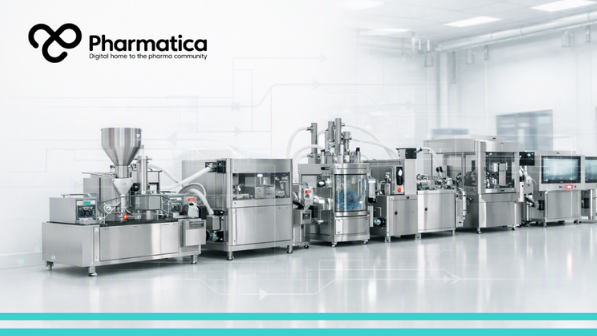
Modular factories are manufacturing environments built from independent production units that can be added, removed, relocated, or reconfigured without redesigning the entire facility.
Instead of constructing one large manufacturing line, companies develop smaller process modules that perform specific operations.
These may include:
raw material handling
feeding systems
continuous blending
granulation
drying
tableting
coating
packaging
in-line quality monitoring
Each module operates as part of an integrated production platform but can be upgraded or replaced independently as manufacturing requirements change.
This creates a production environment that is considerably more adaptable than conventional facilities, making reconfigurability just as important as manufacturing efficiency.
“This is one of the riskiest industries there is because you're dealing with human lives, you're dealing with experimental protocols, and you're dealing with regulatory bodies where you might not get another shot at that clinical trial."
Image
Continuous Manufacturing Enables Modular Production
Continuous manufacturing is the technology that makes modular factories commercially viable.
Unlike traditional batch manufacturing, continuous production allows materials to move through connected processing steps without interruption.
Instead of stopping between manufacturing stages, production becomes an integrated flow.
Image
This offers several operational advantages:
Greater production flexibility
Manufacturing capacity can be increased by adding modules rather than constructing entirely new production lines.
Faster product changeovers
Individual modules can be reconfigured to support different medicines with reduced downtime.
Improved quality assurance
Continuous monitoring enables manufacturers to detect process variation immediately rather than waiting until batch completion.
Better resource efficiency
Continuous systems typically reduce material waste, lower energy consumption, and improve equipment utilisation.
These benefits become increasingly valuable as pharmaceutical portfolios become more diverse and production volumes less predictable.
Digital Technologies Are the Manufacturing Control System
Modular factories depend on more than physical equipment.
Digital technologies increasingly provide the intelligence required to coordinate flexible manufacturing environments.
Together, these technologies create intelligent manufacturing systems capable of adapting to changing production requirements with minimal disruption.
Such technologies include:
Process Analytical Technology (PAT)
Real-time analytical tools continuously monitor critical process parameters throughout production.
Rather than relying solely on end-product testing, manufacturers gain immediate visibility into process performance.
Digital twins
Virtual representations of manufacturing systems allow companies to simulate process changes before implementing them on the production line.
This reduces operational risk while supporting faster optimisation.
Artificial intelligence
Machine learning algorithms can identify process trends, predict equipment performance, optimise production settings, and support predictive maintenance.
As modular facilities become more complex, AI is expected to play an increasingly important role in coordinating production across multiple manufacturing modules.
Beyond Operational Efficiency
Modular manufacturing is not simply an engineering innovation and it represents a strategic manufacturing model.
Traditional pharmaceutical facilities often require significant capital investment years before products generate commercial revenue.
Modular facilities offer a different approach.
By expanding capacity incrementally, manufacturers can better align investment with product demand.
Potential strategic advantages include:
lower initial capital expenditure
faster facility deployment
improved manufacturing resilience
easier technology upgrades
greater regional manufacturing capability
more efficient technology transfer between sites
For companies producing advanced therapies or medicines with uncertain demand, this flexibility could significantly reduce financial risk.
Challenges Remain Before Widespread Adoption
Modular manufacturing is not yet a universal solution and several barriers remain. Building these capabilities will be as important as investing in new production technologies.
Regulatory validation
Each manufacturing configuration must continue to demonstrate consistent product quality, regardless of how production modules are arranged.
This requires robust validation strategies and close collaboration with regulators.
Integration complexity
Although modular systems increase flexibility, integrating multiple equipment vendors, automation platforms, and digital control systems presents technical challenges.
Achieving seamless interoperability remains a priority for the industry.
Workforce transformation
Future manufacturing facilities will require multidisciplinary teams combining pharmaceutical science, automation engineering, data analytics, digital manufacturing, and quality management expertise.
Flexible Manufacturing as a Competitive Advantage
The pharmaceutical industry is entering an era where manufacturing agility is becoming as important as manufacturing capacity.
Modular manufacturing represents a strategic opportunity to build production networks that are more resilient, scalable, and capable of supporting the next generation of medicines.
As medicine portfolios diversify and commercial uncertainty increases, facilities designed for maximum flexibility may prove more valuable than those designed solely for maximum output.
Modular, reconfigurable factories supported by continuous manufacturing and digital technologies could provide manufacturers with the adaptability needed to respond more quickly to changing products, evolving regulations, and future market demands.
The transition will not happen overnight. Regulatory harmonisation, technology integration, and workforce development remain important challenges.
At Pharmatica, we examine the technologies, operational strategies, and manufacturing innovations shaping the future of pharmaceutical production. By translating emerging research into practical industry Insights, we help life sciences leaders understand where technical innovation can deliver lasting competitive advantage across the pharmaceutical value chain.
Pharmatica: Insight. Connection. Impact.
Frequently Asked Questions
What is modular pharmaceutical manufacturing?
Modular pharmaceutical manufacturing uses independent production units that can be added, removed, or reconfigured as manufacturing requirements change. This flexible approach enables pharmaceutical companies to adapt production more quickly than conventional fixed manufacturing facilities.
How does continuous pharmaceutical manufacturing support modular factories?
Continuous pharmaceutical manufacturing links individual production processes into a single, uninterrupted workflow. Combined with modular production units, it enables faster product changeovers, improved process control, and more flexible manufacturing capacity.
What are the benefits of reconfigurable pharmaceutical factories?
Reconfigurable pharmaceutical factories can reduce capital investment, improve manufacturing resilience, shorten facility deployment times, simplify technology upgrades, and support the production of personalised medicines, biologics, and smaller commercial batches.
How do digital technologies improve modular pharmaceutical manufacturing?
Technologies such as Process Analytical Technology (PAT), digital twins, artificial intelligence, and advanced automation provide real-time process monitoring, predictive maintenance, process optimisation, and continuous quality assurance throughout pharmaceutical production.
Will modular pharmaceutical manufacturing replace traditional production facilities?
Not entirely. Conventional facilities will remain important for high-volume commercial products. However, modular pharmaceutical manufacturing is expected to play an increasingly important role where manufacturers require greater flexibility, scalability, and rapid adaptation to changing product portfolios.
Nicole (BSc Molecular Medicine, Honours Medical Biochemistry) has many years of pharmaceutical experience, having worked for top CROs and biopharma companies for more than a decade.
Did you enjoy the content?
2
Why not support
Nicole Dale
by giving this content a like
Phenotypic drug discovery is reshaping how pharma finds first-in-class drugs. This analysis covers the methods, AI integration, and strategic decisions R&D leaders face in 2026.
Learn how drug discovery scientists are evolving alongside AI, computational biology, and multidisciplinary research to accelerate therapeutic innovation.
Collaboration in drug discovery can shape pharma R&D success. Explore the evidence on pharma partnerships, knowledge sharing, governance, and innovation.
Find out how q-CAR drug discovery moves beyond static protein structures by linking protein dynamics, ligand activity, and AI to precision drug design.
Night of the Living Drug: The Mortuary of Molecules Has Come Alive!
Drug repurposing can revive abandoned compounds. Discover the science of exploring the drug cemetery and the resurrection strategies helping drug discovery.








Comments (0)