Robotics in pharmaceutical manufacturing is strengthening GMP through automation, contamination control, traceability, and more consistent production processes.
Robotics in pharmaceutical manufacturing has moved from productivity into GMP strategy. Robotics, automation, AI, IoT, and electronic batch records can reduce human intervention, improve traceability, and strengthen pharmaceutical quality systems.
Image
Why Robotics Is Expanding in GMP Strategy
Pharmaceutical manufacturing has always relied on controlled processes, validated equipment, and documented procedures.
Robotics adds another layer of control by making more physical operations repeatable and less dependent on manual intervention.
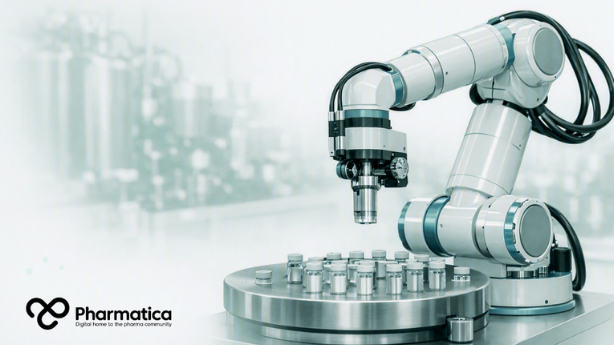
Robotic systems include articulated arms, SCARA robots, delta robots, and collaborative robots, alongside AI and IoT technologies.
Applications for such robotics in pharma manufacturing encompass aseptic filling, packaging, and environmental monitoring.
The strategic value of using robotics in pharma manufacturing is not simply speed. Automation can reduce opportunities for human error, improve consistency between batches, and limit unnecessary human contact with products and critical manufacturing environments.
That aligns with established GMP principles.
The U.S. Food and Drug Administration (FDA) guidance states that pharmaceutical manufacturing equipment must be suitable for its intended use, while critical equipment requires appropriate calibration, maintenance, and documented controls
Robotics in Pharma Manufacturing: From Repetitive Tasks to Controlled Processes
Robotics is particularly relevant where manufacturing involves repetitive, precise, or contamination-sensitive activities.
The opportunity is broader than replacing manual labour. It is about creating a more controlled manufacturing environment, where critical activities are executed consistently and documented systematically.
Aseptic manufacturing
In sterile production, reducing unnecessary human intervention can help strengthen contamination control. Robotic handling can support activities such as filling, material transfer, and other controlled operations.
This becomes increasingly important as regulators emphasise risk-based contamination control. EU GMP Annex 1, fully applicable since August 2024, places strong emphasis on contamination control and the design of facilities, equipment, and processes to protect sterile products.
Packaging and inspection
Robotic systems can also standardise high-volume packaging and handling operations. Combined with machine vision, automation can support inspection and identification tasks while generating consistent process data.
Find out how Quality-by-Design improves reliability and compliance in pharma and how you can maximise innovation through quality-based pharma development systems.
The Data Layer Makes Automation More Valuable
Physical automation is only one part of the opportunity.
The combination of robotics with AI and IoT, creating connected manufacturing systems that can monitor processes, capture data, and support quality decisions.
Electronic batch records are particularly important. When properly designed and validated, they can strengthen traceability and support regulatory expectations around electronic records and data integrity.
This connects directly with the wider Pharma 4.0 movement, where manufacturing equipment, sensors, software, quality systems, and production data increasingly operate as an integrated ecosystem.
Pharmatica's analysis of Quality-by-Design explores a similar shift towards designing quality into processes rather than relying primarily on end-product testing.
However, automation does not remove GMP responsibilities.
The FDA’s GMP guidance requires manufacturing-related computerised systems to be validated, with controls protecting data from unauthorised changes and records maintained for system changes and failures.
A robot can execute a process consistently. It cannot make an unvalidated process compliant.
Image
Validation Will Determine How Far Robotics Goes
The biggest strategic question is therefore not whether pharmaceutical manufacturers can deploy robots but whether they can validate, maintain, monitor, and govern automated systems throughout their lifecycle.
Regulatory acceptance and strong validation frameworks are key requirements for wider adoption.
This creates several priorities for manufacturing leaders:
Validate the complete system, including software, hardware, interfaces, and critical operating ranges.
Protect manufacturing data, including audit trails, electronic records, and system access.
Define human oversight, particularly where AI or autonomous decision-making enters a GMP process.
Manage change throughout the lifecycle, ensuring modifications do not compromise the validated state.
This is also reflected in continuous manufacturing. The FDA's Q13 guidance provides a regulatory framework for developing, implementing, operating, and managing continuous manufacturing throughout its lifecycle.
The Factory Is Becoming a Connected Quality System
Robotics in pharma manufacturing demonstrates the emergence of a connected manufacturing architecture.
Robotic equipment can perform physical tasks; sensors can capture process conditions; IoT infrastructure can connect equipment; AI can analyse patterns; electronic records can preserve the evidence, and blockchain can add a trusted data layer for provenance and auditability.
Together, these technologies can create a manufacturing environment where quality is increasingly monitored and managed throughout production rather than verified only afterwards. That is where the technology becomes important.
The future is one of more autonomous plants, continuous production, and increasingly personalised manufacturing, but the transition will depend on regulatory confidence, validation, data governance, and robust quality systems.
Pharmatica's pharmaceutical cold chain analysis and temperature excursions analysis shows why connected manufacturing and supply systems increasingly need to be viewed as resilience infrastructure, not isolated operational technologies.
At Pharmatica, we track the technologies shaping Technical Operations, connecting manufacturing innovation with GMP, quality, data, and regulatory strategy. The next generation of pharmaceutical manufacturing will not be defined by automation alone, but by how intelligently and defensibly that automation is integrated into the quality system.
Pharmatica: Insight. Connection. Impact.
Image
Frequently Asked Questions
What is the role of robotics in pharmaceutical manufacturing?
Robotics supports repetitive, precise, and controlled manufacturing activities while reducing manual intervention. Applications include aseptic filling, packaging, material handling, inspection, and environmental monitoring.
How does automation improve GMP compliance?
Automation can improve process consistency, reduce opportunities for human error, strengthen traceability, and generate structured manufacturing data. However, automated systems must still be appropriately qualified and validated.
Can robots reduce contamination risk in pharmaceutical manufacturing?
Yes. Robots can reduce unnecessary human intervention in controlled and aseptic processes, potentially lowering contamination opportunities. EU GMP Annex 1 emphasises designing processes and equipment to control contamination risks.
What is the role of AI and IoT in pharmaceutical automation?
AI and IoT can connect manufacturing equipment, sensors, and data systems to support monitoring, process optimisation, traceability, and quality control. Their combination with robotics is an important development factor in GMP-focused automation.
Does pharmaceutical robotics need GMP validation?
Yes. GMP-related computerised systems and critical manufacturing equipment require appropriate qualification, validation, controls, and lifecycle management. Automation does not remove the manufacturer's responsibility for demonstrating that processes consistently meet quality requirements.
Nicole (BSc Molecular Medicine, Honours Medical Biochemistry) has many years of pharmaceutical experience, having worked for top CROs and biopharma companies for more than a decade.
Did you enjoy the content?
1
Why not support
Nicole Dale
by giving this content a like
Anthropic's new drug discovery programme marks a strategic shift from sole AI software provider to active R&D participant. Here's what it means for pharmaceutical innovation.
Anthropic’s Gates Foundation Partnership and Healthcare AI
See how Anthropic's Gates Foundation partnership and Long-Term Benefit Trust could lead the way in shaping responsible AI governance across healthcare innovation.
AI in Healthcare: OpenAI and Epic Integration Connects EHRs
OpenAI and Epic integration brings AI healthcare into EHR workflows, connecting patient records with ChatGPT for Healthcare to advance research and patient care.
<p>Founded in 2004, Ametris (formerly ActiGraph) is a global digital health solutions provider transforming real-world patient data into validated clinical evidence. Our end-to-end platform combines advanced wearables, regulatory-aligned analytics, and expert scientific support across every phase of a clinical trial. We serve leading pharmaceutical, biotech, and public health research organizations worldwide, backed by two decades of experience and a collaborative, science-first approach.</p><p>In 2026, Ametris joined Signant Health, uniting wearable-derived digital outcome measures with industry-leading eCOA solutions to give sponsors a single partner for integrated evidence generation, combining continuous sensor data with patient-reported outcomes.</p>
Image
Clinical Development
<p><a href="https://www.medidata.com/en/">Medidata </a>has been powering smarter treatments and healthier people by supporting clinical trials through groundbreaking technological innovations for over 25 years. Medidata is a leader in AI-powered solutions across the entire trial lifecycle to accelerate clinical breakthroughs, reduce patient and site burden, and bring new therapies to market faster. Supported by one of the largest clinical datasets in the industry of more than 38,000 trials and 12 million patients, Medidata's <a href="https://www.medidata.com/en/experiences/study-experience/">Study</a>, <a href="https://www.medidata.com/en/experiences/patient-experience/">Patient</a>, and <a href="https://www.medidata.com/en/experiences/data-experience/">Data</a> Experiences are trusted by more than 1 million registered users across approximately 2,300 customers. A Dassault Systèmes brand (Euronext Paris: FR0014003TT8, DSY.PA), Medidata is headquartered in New York City and is recognized as a leader by Everest Group and IDC. Discover more at <a href="https://www.medidata.com/">www.medidata.com</a><strong>. </strong>Listen to our latest podcast, <a href="https://www.medidata.com/en/from-dreamers-to-disruptors-podcast/"><em>from Dreamers to Disruptors</em></a>,<strong> </strong>and follow us at @medidata-solutions on LinkedIn.</p>



















Comments (0)