WHOOP and Natural Cycles show how wearable health data is moving into regulated digital health, creating new opportunities for women’s health and pharma.
Wearable health data is steadily moving beyond fitness tracking and towards regulated digital health. The latest WHOOP and Natural Cycles partnership shows how continuous physiological data, software, and regulatory clearance are converging to create more personalised health tools.
Image
WHOOP and Natural Cycles: Platform and Approval
The new partnership between WHOOP and Natural Cycles connects a large-scale wearable health platform with an FDA-cleared digital contraceptive technology.
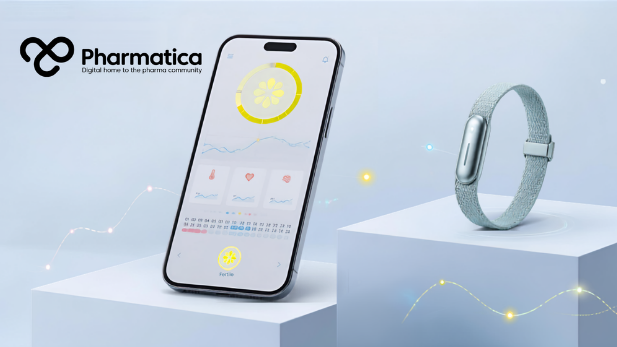
Under the partnership, WHOOP is offering eligible members a one-year Natural Cycles subscription, extending its focus on women’s health beyond menstrual and hormonal insights already available through its platform.
WHOOP describes its wearable as providing continuous monitoring across areas including sleep, strain, stress, heart health, and women’s hormonal health.
The commercial backdrop is also notable. In March 2026, WHOOP raised U.S. $10.1 billion in valuation. The round included institutional and strategic investors, including Abbott, as WHOOP continued expanding its health platform internationally.
That makes the Natural Cycles relationship more than a conventional consumer-health integration, as a broader model in which wearable technology companies can transition to data platforms, and regulated digital-health companies can turn those data into specific health applications.
From Fitness Data to Regulated Health Data
WHOOP’s core positioning has centred on continuous physiological monitoring and interpretation. Its current platform includes sleep, recovery, strain, stress, heart-health, and women’s hormonal insights.
Natural Cycles takes a narrower but more clinically- and regulatory-important approach.
Natural Cycles’ data algorithm uses basal body temperature and menstrual-cycle information to estimate fertility status, and the U.S. Food and Drug Administration (FDA) first approved Natural Cycles for contraception through the De Novo pathway in 2018.
That regulatory approval was highly significant in the digital health space because Natural Cycles became a clear example of how software itself can be regulated as a medical device (in this case for contraception).
Image
The FDA’s original De Novo review covered an application that used temperature and cycle information to generate fertility status, even establishing a new regulatory classification for this type of software and creating a pathway for subsequent devices of the same type.
The regulatory journey did not stop there.
In 2021, the FDA cleared an update allowing Natural Cycles to integrate temperature data from third-party thermometers and consumer wearables into its fertility algorithm. That removed the need for users to manually enter every temperature measurement.
That regulatory progression is important as a precedent that extended from software interpreting manually entered physiological data to software incorporating data generated by consumer wearables.
That creates a much larger opportunity for digital health developers.
The Data Advantage Of Continuous Monitoring
The value of wearables is not simply that they collect more information, but rather that they can collect information more consistently.
Natural Cycles’ published analysis compared 83,000 wearable users with 125,000 thermometer users, covering approximately 1.57 million menstrual cycles. The company reported that effectiveness was 98% with intended use and 93% with typical use in the analysed population.
The study also found a substantial difference in data collection behaviour.
Wearable users provided temperature data on 82% of days, compared with 56% among thermometer users. Wearable users were also more likely to remain with Natural Cycles after one year, with reported continuation of 76% versus 56%.
The data analysis has implications beyond contraception.
When digital health systems can collect physiological information passively and repeatedly, they can potentially build richer longitudinal datasets without requiring users to perform a separate measurement every day.
For women’s health specifically, that could support more a granular understanding of cycle-linked physiology, recovery, sleep, temperature, and other signals.
Image
Women’s Health Is a Wearable Data Frontier
The strategic opportunity for wearable health data in women’s health is broader than fertility.
Women’s physiology has historically been underrepresented in health research and technology.
Wearables create an opportunity to capture longitudinal data across different stages of the reproductive lifecycle, potentially including menstrual cycles, pregnancy, postpartum recovery, and menopause.
WHOOP has already positioned women’s hormonal health within its broader wearable platform. Natural Cycles adds a regulated application in which physiological data directly influences a health-related decision.
The partnership therefore illustrates a potentially important shift that while a wearable is the data-collection layer, specialised software has to provide the clinical or health interpretation.
That architecture could eventually support many more applications.
However, more data does not automatically mean better healthcare. Algorithms need appropriate validation, physiological signals need reliable measurement, and users need clear information about what a product can and cannot determine.
Find out how Quality-by-Design improves reliability and compliance in pharma and how you can maximise innovation through quality-based pharma development systems.
The Regulatory Model Is Most Important for Wearables and Digital Health Data
Natural Cycles’ company history also demonstrates how digital health regulation can evolve alongside technology.
The FDA granted its original De Novo classification in 2018 after reviewing evidence involving 15,570 users. The agency reported a perfect-use failure rate of 1.8% and a typical-use failure rate of 6.5% in the evidence supporting the original decision.
The regulatory pathway subsequently evolved. The FDA cleared a 510(k) submission in 2021, and further approvals followed, including decisions in 2023, 2024, 2025, and July 2026, showing how an already-regulated digital product could expand its data inputs through further regulatory submissions.
This creates an important precedent for healthtech companies.
Regulatory approval does not necessarily mark the end of product development and it can become the foundation for progressively expanding the validated data sources and capabilities of a digital health platform.
Wearable Data to Digital Health Infrastructure
The significance of the WHOOP and Natural Cycles partnership extends beyond fertility tracking as it illustrates how continuous wearable data can become an input into regulated digital health software, provided the data, algorithms, and intended use meet the required evidentiary and regulatory standards.
This is important as wearable companies move towards digital health monitoring. WHOOP now describes its platform as spanning sleep, recovery, cardiovascular measures, longevity, and other health insights, while also adding clinician access and AI-driven features.
Again, the opportunity is to transform passive physiological measurements into longitudinal health information.
This creates another potential source of real-world evidence. A wearable can observe physiology repeatedly in everyday life, rather than only at scheduled clinical encounters.
That real-world evidence could eventually support earlier detection, personalised interventions, digital biomarkers, and better understanding of how health changes between clinical visits.
Image
Women’s Health Benefits from Longitudinal Data
Women’s health is particularly suited to this model because many physiological processes change over time.
Temperature, heart rate, sleep, activity, and other signals can vary across the menstrual cycle and reproductive lifecycle. Capturing these measurements continuously could create a richer picture than isolated measurements collected during appointments.
Natural Cycles provides a useful example because its software already operates within a regulated framework. The FDA granted the company its De Novo classification in 2018, establishing Natural Cycles as a new type of fertility diagnostic and contraceptive software.
This demonstrates that a regulated product can continue to evolve as new technologies and data sources become available.
That is highly relevant to wearable health platforms.
The Commercial Model for Wearable Health Data and Advanced Healthcare
The Whoop and Natural Cycles partnership also illustrates how digital health companies can combine different assets.
WHOOP contributes a wearable, a large membership ecosystem, continuous physiological monitoring, and increasingly sophisticated analytics.
Natural Cycles contributes a specialised women's health application with an established regulatory pathway.
The result is a platform-plus-application model.
Rather than building every health capability internally, wearable companies can partner with specialist digital-health developers whose software addresses a specific clinical or health need (in this case, reproduction).
That approach could become increasingly attractive as wearable adoption expands and health platforms accumulate richer datasets.
WHOOP’s broader trajectory supports this interpretation. The company has been expanding beyond performance monitoring into health and longevity, while integrating features such as ECG, Healthspan, Advanced Labs, and AI-enabled health guidance.
The strategic value therefore lies not simply in selling a wearable but in building an ongoing health-data relationship with the user.
The Looming Threat of Geopolitical Risk in Clinical Supply Chains
Geopolitical risk is reshaping how clinical supply chains are managed, demanding resilience and foresight. Learn why building supply chain resilience is the key for clinical trial success.
Image
Watch the Wearables and Digital Health Space
The emerging wearable ecosystem raises several valuable questions for pharma.
First, can continuously collected physiological signals become validated digital biomarkers?
Second, can wearable data support patient identification, disease monitoring, treatment response, or post-marketing surveillance?
Third, can partnerships with established wearable platforms provide access to real-world physiological information without creating unacceptable privacy, data-quality, or regulatory risks?
These questions are already relevant to clinical development. Wearables can potentially provide high-frequency measurements between visits, while digital platforms can collect contextual information that traditional trial assessments may miss.
But the data must be fit for purpose.
A consumer wearable measurement should not automatically be treated as a clinical endpoint. Validation, analytical performance, population characteristics, missing data, algorithmic changes, and regulatory acceptance all matter.
The WHOOP-Natural Cycles relationship therefore provides the most useful precedent for this in women’s health.
Whoop x Natural Cycles: Data x Integration
The most important development may ultimately be the convergence of hardware, software,Regulation, and longitudinal health data.
WHOOP provides the sensing infrastructure. Natural Cycles demonstrates how specialised algorithms can turn physiological measurements into a regulated health application. The FDA pathway shows that such software can move through successive regulatory stages as its capabilities develop.
For women’s health, this is significant.
A wearable could become a continuous physiological interface through which specialised applications address fertility, reproductive health, menopause, cardiovascular risk, sleep, metabolic health, and other areas.
This creates another potential route to understanding patients outside traditional healthcare settings.
The opportunity is substantial, but so is the responsibility. More data does not automatically produce better health outcomes. The value depends on validated data signals, clinically meaningful algorithms, transparent governance, and evidence that connects digital measurements with outcomes that matter.
The WHOOP and Natural Cycles partnership is an early example of a much larger shift where wearables are becoming health-data platforms, while regulated software turns continuous physiological signals into targeted applications.
The companies that can connect high-quality physiological data with rigorous evidence that supports the appropriate regulatory approval will be best positioned as healthcare becomes more digital.
Pharmatica: Insight. Connection. Impact.
Image
Frequently Asked Questions
What is the WHOOP and Natural Cycles partnership?
The partnership connects WHOOP’s wearable health platform with Natural Cycles’ fertility-tracking software. WHOOP is offering eligible members a one-year Natural Cycles subscription, creating a direct connection between continuous wearable monitoring and a regulated women's health application.
Is Natural Cycles FDA approved?
Yes. The FDA granted Natural Cycles a De Novo classification in August 2018 for fertility diagnostic and contraceptive software. The product has subsequently received additional 510(k) clearances as its technology and data inputs have evolved.
Why is wearable health data important for women's health?
Wearables can collect physiological measurements repeatedly during everyday life. This creates the potential for longitudinal women’s health data covering menstrual cycles and other changing physiological patterns, rather than relying only on periodic clinical measurements.
Can wearable data be used in clinical trials?
Potentially. Wearable data can provide frequent measurements between clinical visits and may support digital biomarkers, remote monitoring, or exploratory endpoints. However, each measurement and algorithm requires appropriate validation and regulatory assessment before it can be relied upon for a particular clinical purpose.
What does the WHOOP and Natural Cycles partnership mean for digital health?
The partnership demonstrates a broader platform model for digital health, in which a wearable supplies continuous physiological data and specialist software converts that information into a targeted health application. This could become increasingly important as health platforms move towards personalised, continuous monitoring.
Nicole (BSc Molecular Medicine, Honours Medical Biochemistry) has many years of pharmaceutical experience, having worked for top CROs and biopharma companies for more than a decade.
Did you enjoy the content?
1
Why not support
Nicole Dale
by giving this content a like
Collaboration in drug discovery can shape pharma R&D success. Explore the evidence on pharma partnerships, knowledge sharing, governance, and innovation.
Find out how q-CAR drug discovery moves beyond static protein structures by linking protein dynamics, ligand activity, and AI to precision drug design.
FDA 2026 Draft Guidance on Alternatives to Animal Testing
The FDA's March 2026 draft guidance on alternatives to animal testing marks a pivotal shift in preclinical drug development. Here's what pharma R&D teams need to know.
Optimising Preclinical Pharmacology for Oncology NMEs
Over 90% of oncology NMEs that succeed in animal studies fail in clinical trials. This analysis examines how to optimise preclinical pharmacology models to improve translational success.
Success for Non-Animal Testing of Preclinical Toxicity?
Can non-animal testing methods be used in preclinical drug discovery? Here is what the evidence is for their accuracy and limits assessing preclinical toxicity.








Comments (0)