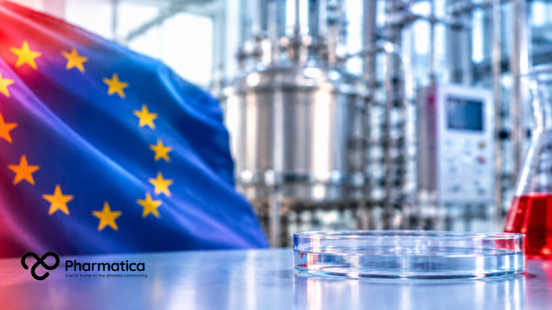
Europe’s biotechnology IPCEI aims to scale bio-based chemicals, materials, and food ingredients, backed by Germany’s proposed €400 million contribution.
The European biotechnology IPCEI aims to address a major weakness in Europe’s biotechnology sector: The gap between scientific innovation and industrial-scale production.
By coordinating investment across Member States, the initiative seeks to help promising bio-based technologies move beyond laboratory and pilot stages, strengthen European value chains, and reduce strategic dependencies.
Germany’s proposed IPCEI funding commitment could prove pivotal to turning this ambition into industrial capacity.
Image
How to Bridge the Gap for Biotechnology Scale-Ups in Europe
Europe has strong biotechnology research capabilities, but translating scientific advances into competitive industrial production remains difficult.
New processes can require substantial investment in specialised facilities, equipment, process development, and demonstration plants.
These costs, combined with technical and commercial uncertainty, can make projects difficult to finance through conventional investment alone.
The European biotechnology IPCEI (Important Project of Common European Interest) is designed to address this challenge through cross-border collaboration and public support.
An Important Project of Common European Interest brings together complementary projects across Member States to advance technologies that have strategic value for the wider European economy.
Under EU state aid rules, the European Commission can approve support where projects meet the relevant criteria, including the need to address market failures and generate benefits beyond individual companies or countries.
The biotechnology initiative has been developed around three related areas:
Bio-based chemicals: Developing processes that use renewable or circular carbon sources to produce chemicals and industrial intermediates.
Bio-based materials: Scaling innovative materials derived from biological, recycled, or other renewable resources.
Biotechnology for food and feed ingredients: Advancing production processes for ingredients such as proteins, amino acids, enzymes, and other functional components.
How AI Is Opening New Opportunities in Fertility Care for Pharma
"If I had to get great minds in a room, I'd be looking at it from a tech perspective. How can we take all this knowledge, apply it to policies that can be easily distributed?” Clara Toombs, Fertilia AI.
Image
Why Does Germany’s Participation in IPCEI Matter So Much?
Germany’s substantial involvement in IPCEI carries particular industrial significance.
It has one of Europe’s largest chemical industries and substantial manufacturing, engineering, and processing capabilities.
Its participation could help connect biotechnology developers with the infrastructure, industrial partners, and markets needed to move new processes towards commercial application.
Germany, Estonia, and Finland have been involved in developing the initiative since 2023. By September 2026, eight Member States were running or preparing national funding calls, with the Netherlands having opened the first call in May.
The European Biosolutions Coalition has warned that sustained participation by major industrial economies will be important to the programme’s success.
Germany’s funding position has also advanced. On 13 November 2026, the German industrial biotechnology association IWBio reported that the Bundestag Budget Committee had paved the way for €340 million in federal funding, with a further €60 million expected from participating federal states.
This would bring the proposed public contribution to €400 million. However, the state contributions still require further definition, and the final Bundestag decision on the federal budget is scheduled for 27 November 2026.
Image
How Will the IPCEI Regulatory Framework Shape Project Selection?
The IPCEI mechanism is not a general subsidy for biotechnology businesses. Projects must demonstrate substantial innovation, address a genuine market failure, and contribute to a wider European value chain.
They must also generate benefits that can extend beyond the participating companies, including knowledge-sharing and positive spillover effects.
A critical distinction is the focus on First Industrial Deployment (FID). This supports the transition from research and pilot-scale processes to initial industrial facilities and equipment.
It does not mean financing routine commercial production or simply expanding an existing manufacturing line. Finland’s 2026 national call, for example, specifies that projects should demonstrate significant innovation and the potential to form part of a strategic European value chain.
This creates important considerations for companies seeking to participate. Applicants will need to demonstrate technological novelty, credible scale-up plans, cross-border relevance, and a clear funding gap.
They must also consider how project knowledge and results can be disseminated in line with IPCEI requirements, while protecting legitimate intellectual property.
National funding calls and project selection will therefore be important stages. Even where national support is available, projects must still progress through the European assessment and state aid approval process before funding can be granted.
What Does the IPCEI Initiative Mean for Europe’s Industrial Future?
The biotechnology IPCEI could help Europe build production capabilities in areas where innovation has struggled to reach industrial scale.
Its potential impact extends beyond the bioeconomy. More resilient supply chains for chemicals, materials, and specialised ingredients could support pharmaceutical manufacturing, food production, cosmetics, and other industrial sectors.
For pharmaceutical and life sciences, the development of reliable European biomanufacturing capacity is particularly relevant.
Advances in fermentation, bioprocessing, and bio-based production can create new sources of ingredients and manufacturing inputs.
However, the three current IPCEI candidates are focused on industrial biotechnology, not directly on clinical development or the manufacture of medicines. Their relevance to pharma lies in the wider production ecosystem and supply chains they may help strengthen.
The initiative’s success will therefore depend on more than the size of national funding commitments. Member States must coordinate their calls, select complementary projects, and maintain investment through lengthy development and scale-up cycles.
Companies, meanwhile, need predictable frameworks to justify capital-intensive commitments.
Europe has identified the industrialisation gap. The biotechnology IPCEI now needs to demonstrate that coordinated public investment can close it.
Germany’s proposed €400 million contribution is an important development, but the decisive test will be whether the programme produces competitive industrial capacity and durable European value chains.
For Pharmatica, this is a significant development in the relationship between industrial policy, biotechnology investment, and the future competitiveness of Europe’s life sciences ecosystem.
Pharmatica: Insight. Connection. Impact.
Frequently Asked Questions
What is the European biotechnology IPCEI?
It is a proposed European initiative bringing together national projects and public investment to accelerate the development and industrial deployment of biotechnology innovations across participating Member States.
Which areas does the biotechnology IPCEI cover?
The initiative currently covers three areas: Bio-based chemicals, bio-based materials, and biotechnology for food and feed ingredients.
How much funding has Germany committed?
The German Budget Committee has paved the way for €340 million in federal funding, with a further €60 million expected from participating states. The final federal budget decision is scheduled for 27 November 2026.
Can pharmaceutical companies benefit from the biotechnology IPCEI?
Potentially. Although its current focus is industrial biotechnology rather than medicine development, projects could strengthen manufacturing technologies, bioprocessing capabilities, and supply chains relevant to the wider pharmaceutical and life sciences industries.
Does IPCEI funding support commercial-scale production?
The mechanism can support research, development, and First Industrial Deployment, including the initial industrial-scale implementation of innovative processes. It is not intended to subsidise routine mass production or conventional expansion of existing facilities.
Nicole (BSc Molecular Medicine, Honours Medical Biochemistry) has many years of pharmaceutical experience, having worked for top CROs and biopharma companies for more than a decade.
Did you enjoy the content?
2
Why not support
Nicole Dale
by giving this content a like
Clinical Trials and Real-World Evidence Need One Plan
Discover how integrating clinical trial data and real-world evidence can strengthen drug development, regulatory decisions, reimbursement, and patient outcomes.
The Latest on Pharmaceutical Freeze-Drying Technology
Pharmaceutical freeze-drying technology is becoming more controlled through PAT, digital twins, controlled ice nucleation, modelling, and continuous manufacturing.
Robotics and GMP: Building the Factory of Tomorrow
Robotics in pharmaceutical manufacturing is strengthening GMP through automation, contamination control, traceability, and more consistent production processes.
Why Formulation Development Now Starts With Manufacturing
Formulation development is moving beyond drug delivery to shape manufacturing, quality, scale-up, and supply resilience across modern pharmaceutical operations.







Comments (0)