Generative AI is transforming clinical trials, but a failure to distinguish between pseudonymised and anonymised data is creating costly regulatory gaps.
Ask Diana Andrade what keeps global pharma compliance teams up at night, and she doesn't start with regulation in clinical research. Instead, she addresses a misunderstanding.
"The biggest gap and risk," she says, is the assumption that key-coded, pseudonymised patient data is not personal data at all. People think it’s therefore safe to use in AI tools without caution. That’s in fact a misconception.
In an industry quickly adopting generative AI for tasks from protocol drafting to drug discovery, this misunderstanding is becoming one of the costliest compliance oversights in clinical research.
As the founder and lead at RD Privacy, Andrade serves as a data protection officer for biopharma and life sciences companies dealing with GDPR compliance, cross-border data transfers, and privacy governance across several jurisdictions.
Her career began in contracts at the contract research organisation (CRO) giant PPD clinical research business of Thermo Fisher Scientific. Eventually, she moved into privacy law, revealing a gap where many lawyers understood data protection, but few knew enough about clinical research to apply it correctly.
What’s the AI Misconception Costing Pharma Companies
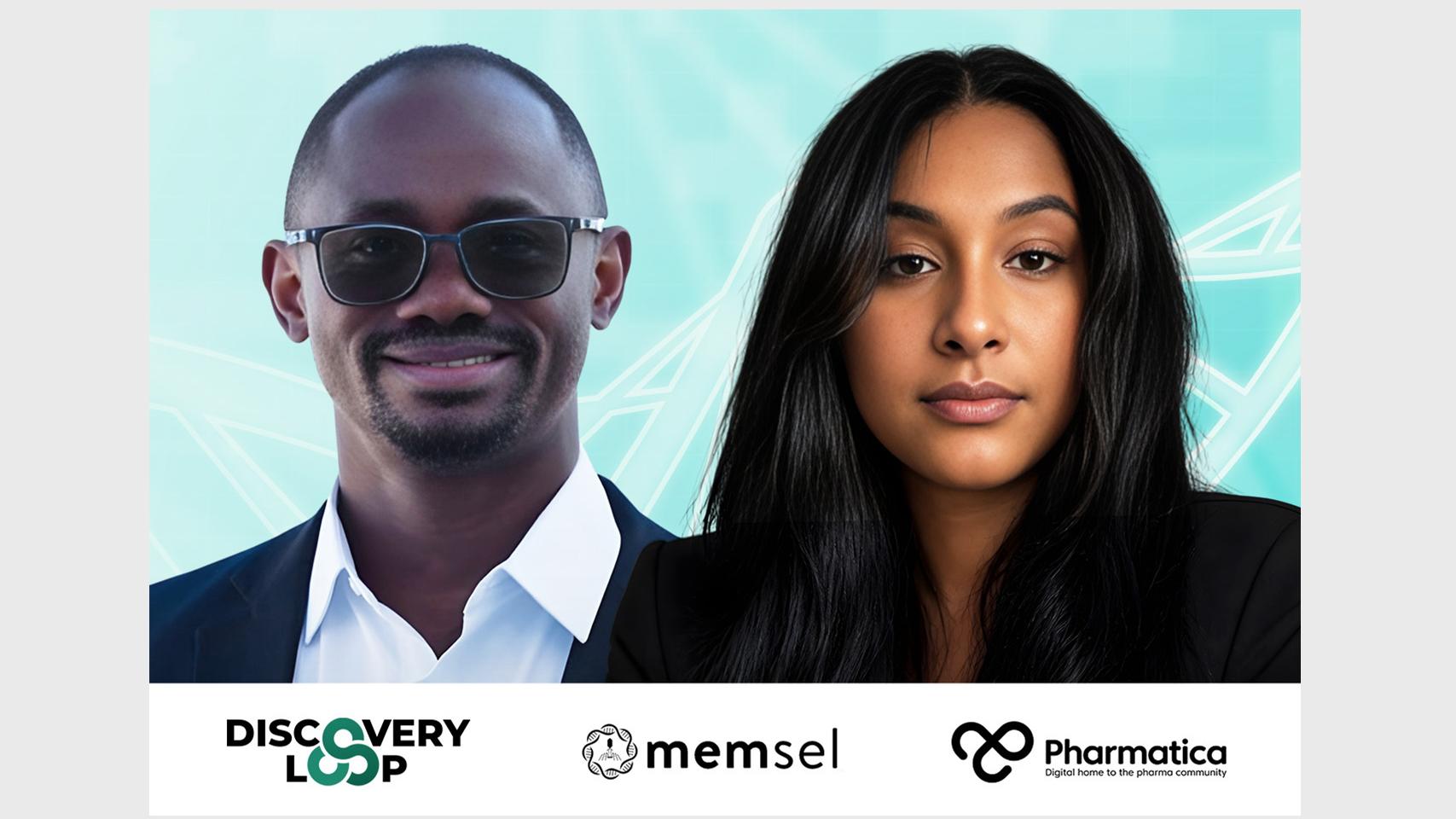
On the Pharmatica podcast with Dua, Andrade spotlighted two key AI misunderstandings she frequently sees among sponsors and CROs.
The first is technical. Teams confuse pseudonymization with anonymisation. Data that has been key-coded, stripped of clear identifiers but still traceable to an individual, is still considered personal data under GDPR. Using it in an AI tool does not change this classification, regardless of how the data is labelled internally.
The second is cultural and arguably more dangerous. Compliance teams are beginning to think AI can handle compliance on its own. "It's very hard with AI," Andrade says. AI adoption will continue to rise, and familiarity with these tools is now essential in the industry. However, this increases the need for strong governance.
Pharma enterprises still require major human oversight to establish guidelines and oversee AI's actions.
In practice, this requires internal processes defining how AI can be used and active human oversight of every output. Andrade told Dua that you can’t trust everything AI produces without verifying it first.
How AI Is Opening New Opportunities in Fertility Care for Pharma
"If I had to get great minds in a room, I'd be looking at it from a tech perspective. How can we take all this knowledge, apply it to policies that can be easily distributed?” Clara Toombs, Fertilia AI.
Image
Where AI Has Earned Its Place in Clinical Research
Andrade acknowledges significant value in AI tech across the clinical trial lifecycle. For instance, AI’s benefits include faster drafting of clinical research protocols, developing internal procedures that help smaller biopharma teams scale without increasing headcount, and analysing trial data for new drug development leads.
However, the RD Privacy Managing Director is wary of using AI without supervision. She noted that each of these use cases involves feeding an AI system with sensitive material from business-confidential information and personal data, despite the data being key-coded. This combination is why she argues that pharma compliance programs must go beyond GDPR and specifically address emerging AI regulations, rather than treating these as separate issues.
Why Every Pharma Company Needs a Dedicated DPO?
Andrade advises pharma leaders that every biopharma enterprise needs a data protection officer or someone specifically responsible for its global privacy program, no matter its size.
The reason is the structure of clinical trials, which can’t be contained in one country. They start in one controlled area and then expand rapidly. The legal basis for processing patient data can entirely change when moving from one country to another. In some markets, patient consent is necessary; in others, the sponsor's legal obligations and legitimate interests come into play, needing a documented legitimate interest assessment to ensure these interests do not violate patients' rights.
Andrade believes that while compliance may come across as a puzzle, it can be managed with one piece but becomes exponentially harder as trials move into new markets. Each new country adds pieces that must fit together. Without a DPO to manage this puzzle, she warns, "very quickly your clinical trial can become a mess."
She emphasises that the DPO role should be viewed as an ongoing necessity, not a one-time task. It's not about filing documentation away and forgetting it; it requires active involvement that evolves with clinical operations and needs support from every growing team within the organisation.
How to Stay Up-to-Date in Pharma Regulatory Space & GDPR?
To assist privacy professionals in keeping up with a regulatory environment that spans many jurisdictions, Andrade recently launched RD Privacy Watch. This platform aggregates and summarises data protection news and guidance from authorities worldwide, links to sources, and provides a weekly digest of the most relevant updates, which can be filtered by jurisdiction.
Andrade created it to address her own need to stay informed in a fragmented global regulatory market. Recognising its value to the broader privacy community, she made it publicly available.
She also runs the RD Privacy Global Academy, a training platform to help teams implement data protection controls in their daily work. She noted the training currently available is GDPR-focused, with plans to expand into other jurisdictions.
Takeaways
AI is transforming data protection in clinical trials.
Pseudonymized data still requires careful handling.
Human oversight is essential when using AI.
Global clinical trials face complex regulatory challenges.
Training is crucial for compliance and empowerment.
Data protection is an ongoing journey, not a one-time task.
Privacy should enable innovation, not hinder it.
Understanding local laws is vital for cross-border transfers.
Trust in data protection is key for patient recruitment.
RD Privacy Watch is a valuable resource for privacy professionals.
“This is one of the riskiest industries there is because you're dealing with human lives, you're dealing with experimental protocols, and you're dealing with regulatory bodies where you might not get another shot at that clinical trial."
Image
Chapters
00:00 Introduction to Data Protection in Pharma
04:00 The Impact of AI on Data Protection
11:50 Challenges in Cross-Border Data Transfers
17:28 The Importance of Training and Compliance
23:31 Launching RD Privacy Watch
30:16 Navigating Clinical Trials and Data Protection
A B2B journalist, Podcast Host and Producer with a PPA-accredited MA in Magazine Journalism from Cardiff University. Specialising in content strategy and execution for segments on healthcare technology, AI, emerging innovation, and life sciences at Pharmatica.io. Bringing lively, up-to-date conversations to life on camera. Hosted and produced enterprise podcasts for global technology enterprises, covered CES 2024, Infosec 2025 and 2026 and Big Data LDN 2025 and 206 live by hosting vox pop interviews on camera. Also, written for publications including Interesting Engineering and The Hindu.
Did you enjoy the content?
4
Why not support
Shubhangi Dua
by giving this content a like
Anthropic's new drug discovery programme marks a strategic shift from sole AI software provider to active R&D participant. Here's what it means for pharmaceutical innovation.
Anthropic’s Gates Foundation Partnership and Healthcare AI
See how Anthropic's Gates Foundation partnership and Long-Term Benefit Trust could lead the way in shaping responsible AI governance across healthcare innovation.
AI in Healthcare: OpenAI and Epic Integration Connects EHRs
OpenAI and Epic integration brings AI healthcare into EHR workflows, connecting patient records with ChatGPT for Healthcare to advance research and patient care.
<p>Founded in 2004, Ametris (formerly ActiGraph) is a global digital health solutions provider transforming real-world patient data into validated clinical evidence. Our end-to-end platform combines advanced wearables, regulatory-aligned analytics, and expert scientific support across every phase of a clinical trial. We serve leading pharmaceutical, biotech, and public health research organizations worldwide, backed by two decades of experience and a collaborative, science-first approach.</p><p>In 2026, Ametris joined Signant Health, uniting wearable-derived digital outcome measures with industry-leading eCOA solutions to give sponsors a single partner for integrated evidence generation, combining continuous sensor data with patient-reported outcomes.</p>
Image
Clinical Development
<p><a href="https://www.medidata.com/en/">Medidata </a>has been powering smarter treatments and healthier people by supporting clinical trials through groundbreaking technological innovations for over 25 years. Medidata is a leader in AI-powered solutions across the entire trial lifecycle to accelerate clinical breakthroughs, reduce patient and site burden, and bring new therapies to market faster. Supported by one of the largest clinical datasets in the industry of more than 38,000 trials and 12 million patients, Medidata's <a href="https://www.medidata.com/en/experiences/study-experience/">Study</a>, <a href="https://www.medidata.com/en/experiences/patient-experience/">Patient</a>, and <a href="https://www.medidata.com/en/experiences/data-experience/">Data</a> Experiences are trusted by more than 1 million registered users across approximately 2,300 customers. A Dassault Systèmes brand (Euronext Paris: FR0014003TT8, DSY.PA), Medidata is headquartered in New York City and is recognized as a leader by Everest Group and IDC. Discover more at <a href="https://www.medidata.com/">www.medidata.com</a><strong>. </strong>Listen to our latest podcast, <a href="https://www.medidata.com/en/from-dreamers-to-disruptors-podcast/"><em>from Dreamers to Disruptors</em></a>,<strong> </strong>and follow us at @medidata-solutions on LinkedIn.</p>
















Comments (0)